 뒤로
Digestive System - Anatomy & Physiology Chapter 23
 4:06

이 집합의 용어 (19)
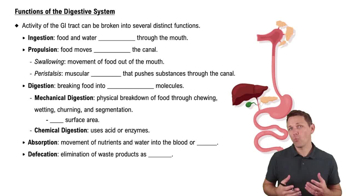
Ingestion, propulsion, mechanical digestion, chemical digestion, absorption, and defecation.
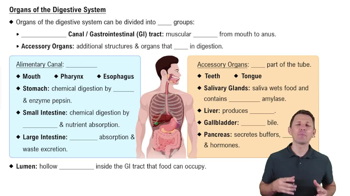
Mouth, pharynx, esophagus, stomach, small intestine, large intestine, plus accessory organs liver, pancreas, and gallbladder.
Four layers: mucosa, submucosa, muscularis externa, and serosa.
By segmentation (mixing) and peristalsis (propulsive contractions).
Includes mastication (chewing), saliva secretion for lubrication and digestion, and taste.
Crown, neck, root, enamel, dentin, pulp cavity, and periodontal ligament.
Contains water, enzymes (amylase), mucus, ions, and antibacterial agents. Functions include lubrication, digestion, and cleaning.
Pharynx parts: nasopharynx, oropharynx, laryngopharynx. Esophagus is a muscular tube connecting pharynx to stomach, facilitating swallowing.
Three phases: voluntary (oral), pharyngeal, and esophageal phases involving coordinated muscle contractions.
Muscular sac with regions: cardia, fundus, body, pylorus. Functions include storage, mechanical digestion, and chemical digestion.
Chief cells secrete pepsinogen (protein digestion), parietal cells secrete HCl (activates pepsin), and mucous cells secrete mucus (protection).
Regulated by neural and hormonal signals. Phases: cephalic, gastric, and intestinal. Hormones include gastrin.
Located behind stomach; has exocrine role (digestive enzymes) and endocrine role (hormones like insulin).
Contains enzymes (amylase, lipase, proteases) and bicarbonate. Secretion regulated by hormones secretin and CCK.
Liver produces bile, metabolizes nutrients, detoxifies; gallbladder stores and concentrates bile.
Bile contains bile salts, cholesterol, pigments. It emulsifies fats to aid digestion. Secretion regulated by CCK.
Main site of chemical digestion and nutrient absorption.
Carbohydrates by amylase, proteins by proteases, lipids by lipases, nucleic acids by nucleases.
Absorbs water and electrolytes, forms and stores feces, and houses gut microbiota.