 뒤로
Endocrine System and Hormones - Anatomy & Physiology
 7:06

이 집합의 용어 (21)
A ligand is a molecule that binds specifically to a receptor to trigger a biological response.
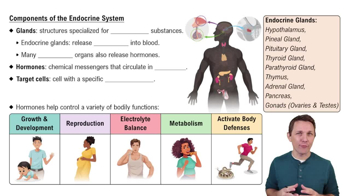
Hormones are secreted directly into the bloodstream by endocrine glands.
Endocrine hormones are secreted into the bloodstream; exocrine hormones are secreted into ducts leading to body surfaces or cavities.
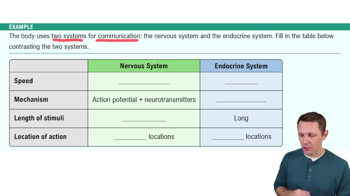
Both regulate body functions; the nervous system acts faster via electrical signals, while the endocrine system uses slower chemical hormone signals.
1. Endocrine: hormones travel through blood to distant targets.
2. Paracrine: signals affect nearby cells.
3. Autocrine: signals affect the same cell that secreted them.
Hypothalamus, Pituitary gland, Pineal gland, Thyroid gland, Parathyroid glands, Adrenal glands, Pancreas.
Heart (atrial natriuretic peptide), Kidneys (erythropoietin), Gonads (estrogen, testosterone), Adipose tissue (leptin).
An organ that has both nervous and endocrine functions, such as the hypothalamus, which secretes neurohormones.
Cancers or tumors can cause over secretion of hormones, disrupting normal endocrine balance.
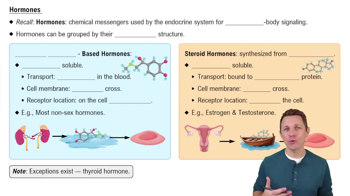
1. Peptide hormones: water-soluble, act on membrane receptors.
2. Steroid hormones: lipid-soluble, act on intracellular receptors.
3. Amino acid derivatives: vary in solubility and receptor location.
Hydrophilic hormones like peptides and amino acid derivatives travel freely in the blood without carriers.
Binding to carrier proteins increases hormone half-life by protecting them from degradation.
Receptors are found on the cell membrane for hydrophilic hormones and in the cytosol or nucleus for hydrophobic hormones.
Hormone receptors are generally highly specific to their hormone ligands.
The hypothalamus produces releasing hormones and inhibiting hormones that regulate the pituitary gland.
No, hydrophilic molecules cannot easily cross the lipid plasma membrane and bind to surface receptors.
Hydrophobic hormones like steroids bind to receptors in the cytosol or nucleus.
Upregulation is the increase in receptor number on a cell, enhancing sensitivity to a hormone.
Downregulation is the decrease in receptor number, reducing cell sensitivity to a hormone.
The half-life is the time it takes for half the amount of hormone in the blood to be degraded or eliminated.
Hydrophobic hormones usually have longer half-lives due to binding with carrier proteins.