 뒤로
Hierarchy of Biological Organization
 05:04

이 집합의 용어 (6)
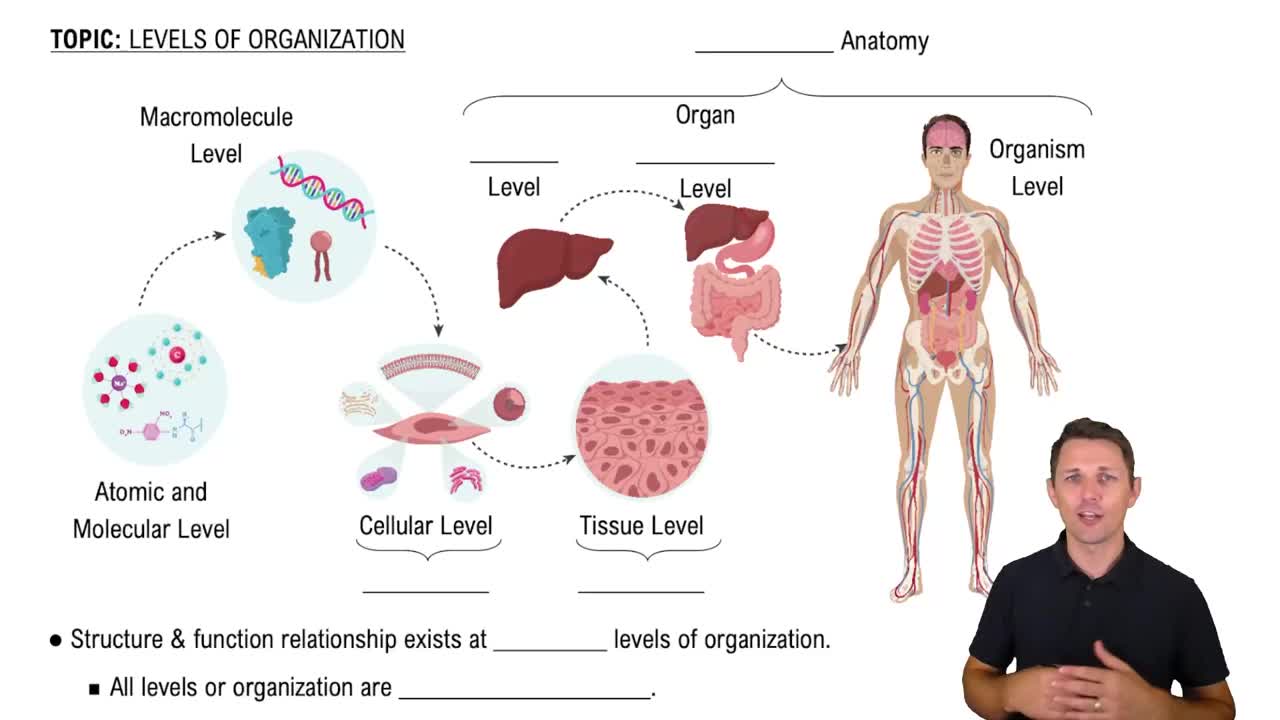
The chemical level includes atoms and molecules essential for life, such as proteins, lipids, carbohydrates, and nucleic acids.
The Macromolecules, including Proteins, Carbs, Lipids, Neucleic acids.
The cellular level consists of cells, the basic structural and functional units of life, formed by molecules working together.
Organelles
The tissue level is made up of groups of similar cells performing a common function, such as muscle or nervous tissue.
The organ level consists of different tissues combined to perform specific functions, like the heart or lungs.
The organ system level includes groups of organs working together to perform complex functions, such as the digestive or respiratory system.
The organism level is the highest level, representing a complete living being made up of all organ systems functioning together.