 뒤로
Homeostasis and Anatomical Terms in Anatomy & Physiology
 01:59

이 집합의 용어 (20)
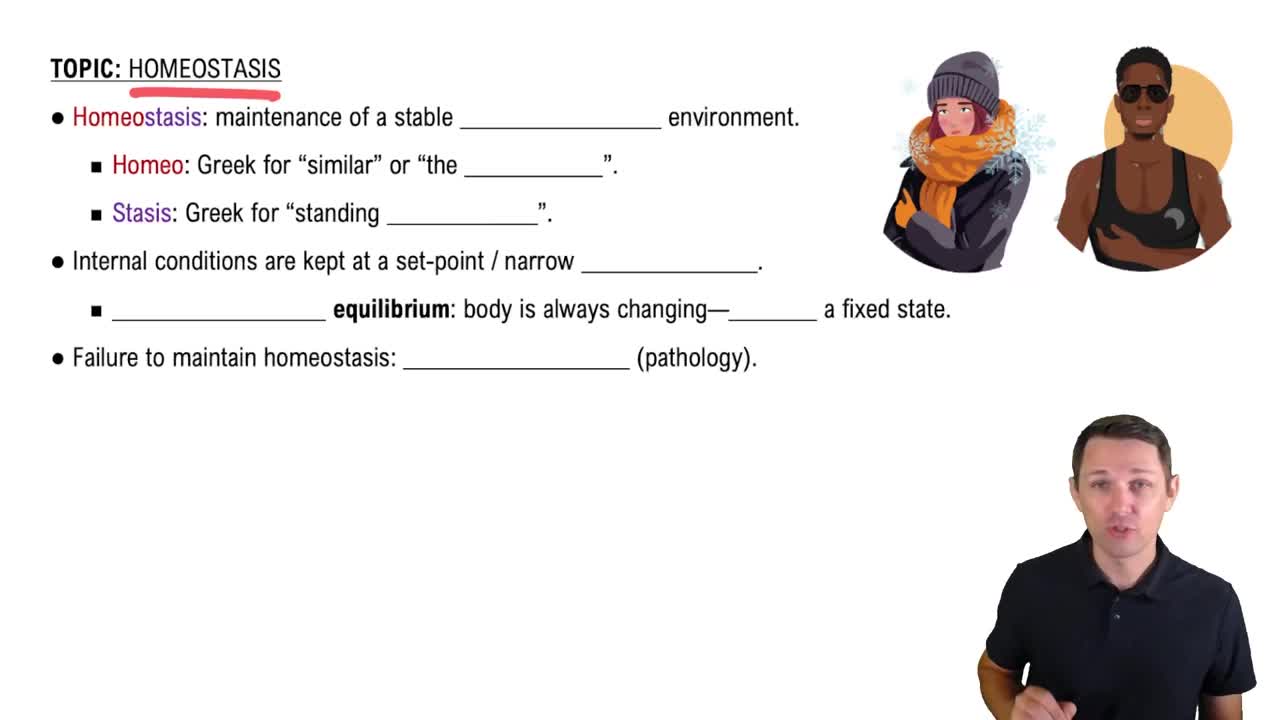
Homeostasis is the maintenance of a stable internal environment despite external changes, ensuring optimal functioning of cells and organs.
Receptor (sensor), Control center (integration center), Set point (desired value), and Effector (responds to commands opposing stimulus).
The receptor detects changes in the environment and sends input signals to the control center.
The control center processes information from the receptor and sends output commands to effectors to maintain the set point.
The set point is the desired or optimum value that the control center aims to maintain for a physiological variable.
The effector carries out responses that oppose the original stimulus to restore homeostasis.
Negative feedback opposes the original stimulus, minimizing change and maintaining homeostasis, e.g., body temperature regulation.
Positive feedback amplifies the original stimulus and is not homeostatic; it is used for rapid processes like blood clotting.
Structure and function are closely related; the form of a structure enables its function.
They are imaginary lines dividing the abdomen into four parts to help clinicians describe locations of pain or injury.
The nine regions provide a more precise anatomical description of internal organ locations than the four quadrants.
An eponym is a name for a structure or condition derived from a person’s name, often the discoverer or describer.
Intracellular fluid is inside cells; extracellular fluid surrounds cells and includes plasma and interstitial fluid.
Mass balance means that what enters the body must leave or be stored to maintain homeostasis.
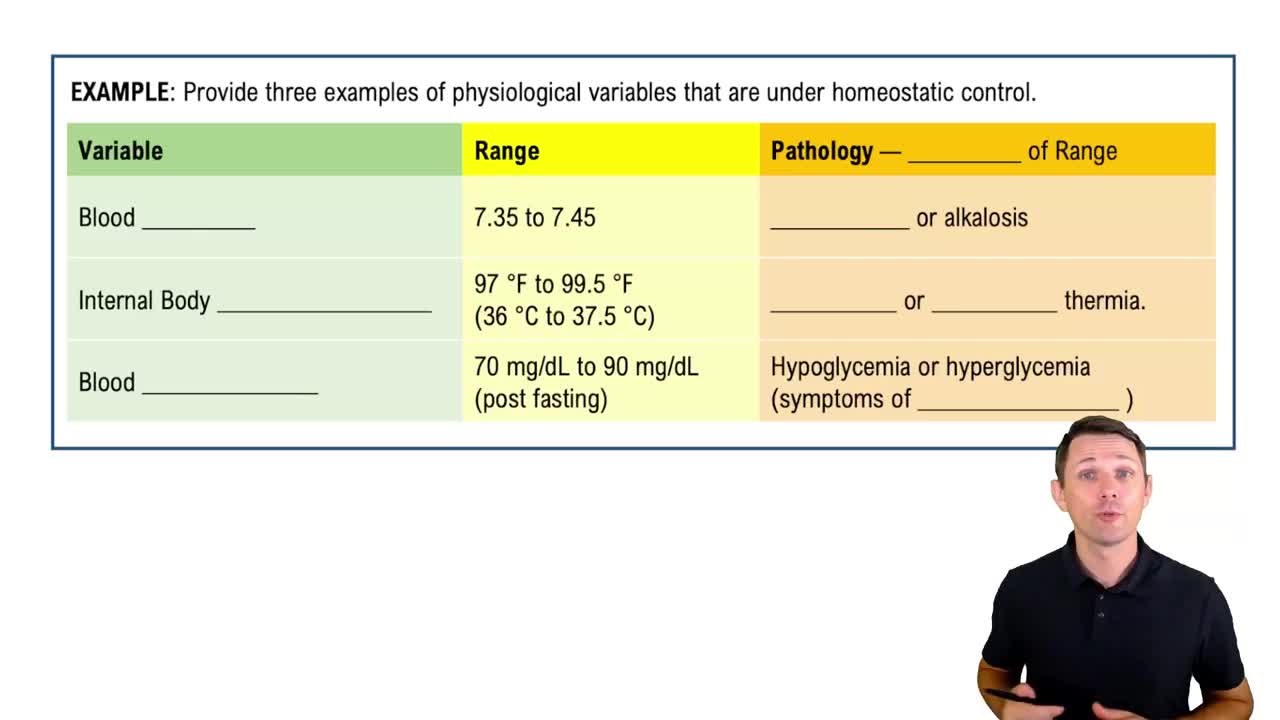
Homeostasis is a dynamic steady state, meaning internal conditions fluctuate within a normal range, not static equilibrium.
Failure to compensate leads to illness or disease, while successful compensation restores wellness.
Temperature receptors send signals to the control center, which activates effectors like blood vessels and sweat glands to cool or warm the body.
Feedback loops detect changes and trigger responses to maintain or restore homeostasis.
The set point is the desired temperature; the thermostat activates heating or cooling to keep the room within a normal range.
Homeostasis maintains variables within a normal range around the set point, allowing for minor fluctuations.