 뒤로
Homeostasis and Feedback Loops in Anatomy & Physiology
 01:59

이 집합의 용어 (44)
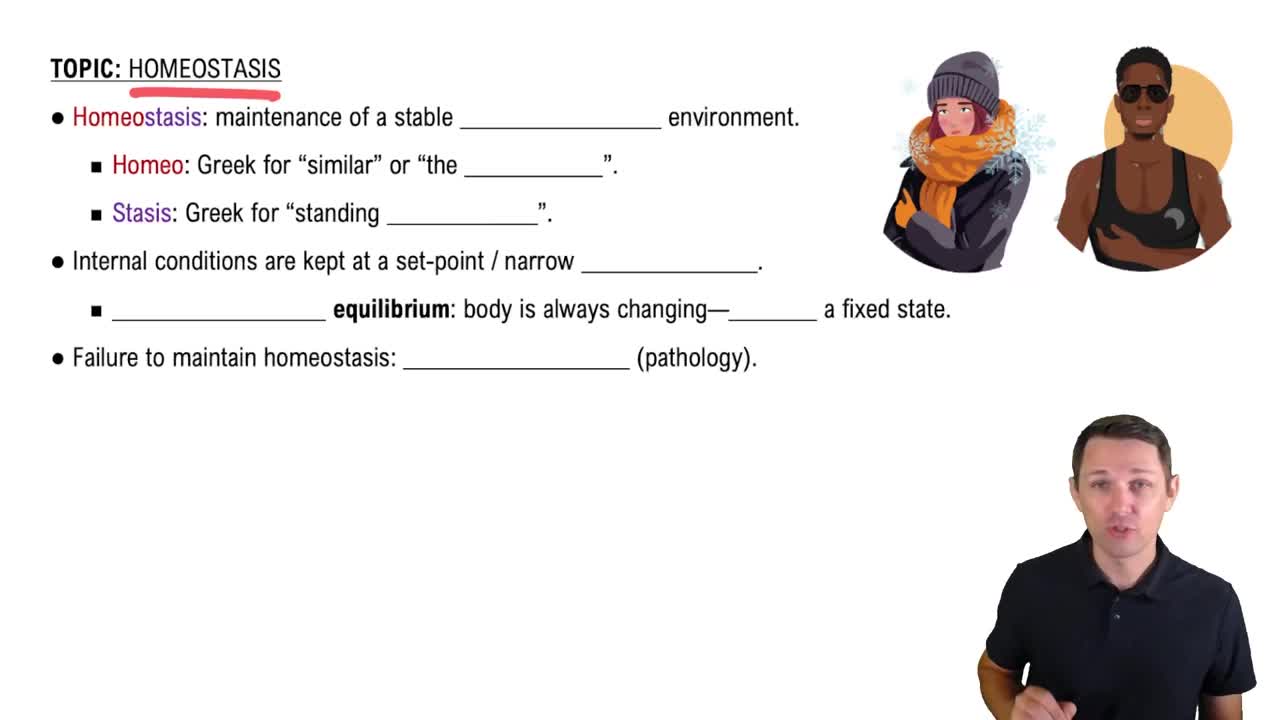
Homeostasis is the body's ability to maintain a stable internal environment despite external changes.
Homeostasis maintains a stable internal environment.
The two main types are negative feedback and positive feedback.
Negative feedback reverses a change to return the system to its set point.
Positive feedback amplifies a process until a specific goal is achieved.
An internal or external change called a stimulus triggers the response.
Receptors detect the stimulus.
The control center processes information from receptors and directs the response.
Effectors are organs or cells that carry out the response.
The response is the action taken by effectors to adjust the condition.
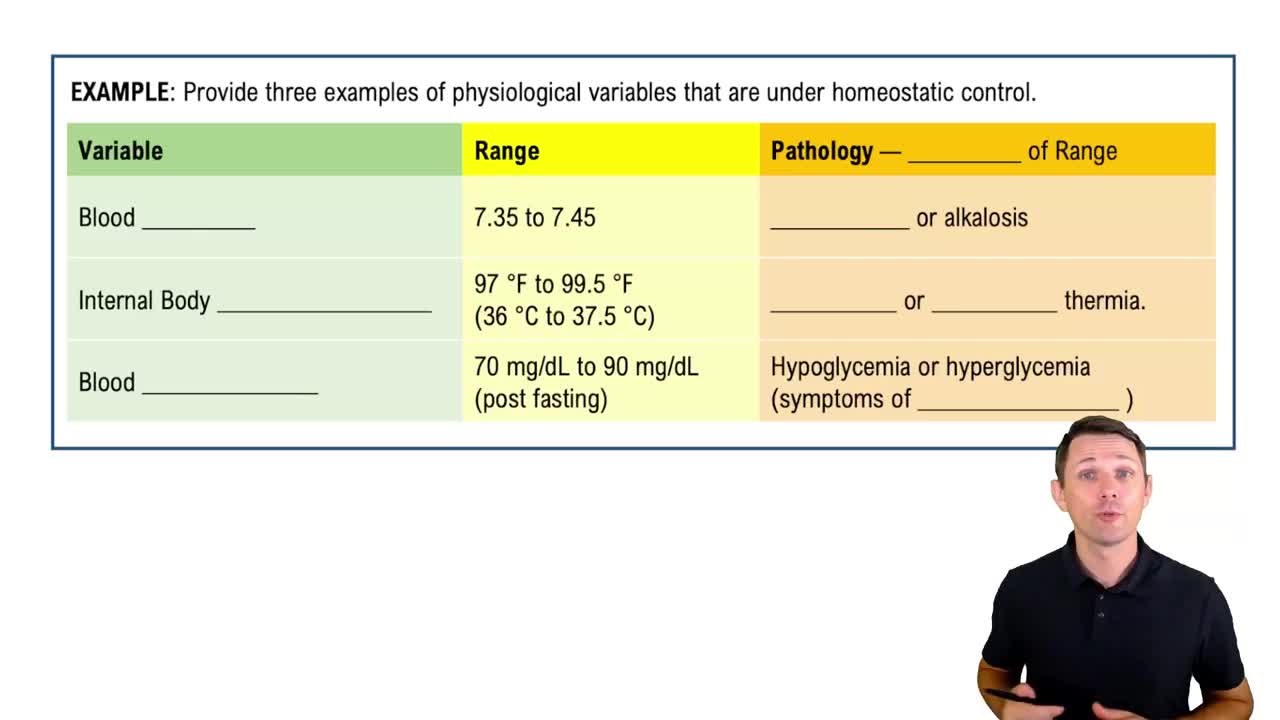
Negative feedback regulates blood sugar levels.
Thermoregulation is an example of negative feedback.
Thermoreceptors act as sensors; the hypothalamus is the control center.
Effectors include sweat glands, blood vessels, and skeletal muscles (for shivering).
It increases sweating and dilates blood vessels to cool the body.
It constricts blood vessels and initiates shivering to generate heat.
It is an example of positive feedback.
The stretching of the cervix acts as the initial stimulus.
They are sent to the brain to trigger a response.
The pituitary gland secretes oxytocin.
Oxytocin causes uterine contractions to progress labor.
Blood clotting is a positive feedback mechanism.
A tear in a blood vessel initiates the loop.
Platelets act as sensors detecting the tear.
Platelets release chemicals that attract more platelets to the site.
The formation of a blood clot stops the feedback loop.
Positive feedback amplifies a process until completion; negative feedback reverses changes to maintain balance.
Cortisol increases to help maintain alertness.
Chronic high cortisol can cause immune suppression and other health issues.
Symptoms include fatigue and low blood pressure.
Stress suppresses the immune system, allowing dormant varicella-zoster virus to reactivate.
Usually a 1% hydrocortisone cream is used.
Stimulus → Receptor → Control Center → Effector → Response
Dilation increases blood flow to the skin, promoting heat loss.
Shivering generates heat through muscle contractions to raise body temperature.
The set point is the value or range maintained by negative feedback.
This is an example of positive feedback.
To restore balance and return conditions to the set point.
The uterus is the effector carrying out contractions.
Thermoreceptors detect temperature changes.
A paper cut or blood vessel injury acts as the stimulus.
The removal of the stimulus (cervix stretching) ends the loop.
Cortisol increases in response to stress.
It is an example of negative feedback.