Skip to main content
Anatomy & Physiology
나의 코스
배우기
시험 준비
AI 튜터
학습 가이드
교과서적 해결책
플래시카드
탐험해 보세요
앱을 사용해 보세요
나의 코스
배우기
시험 준비
AI 튜터
학습 가이드
교과서적 해결책
플래시카드
탐험해 보세요
앱을 사용해 보세요
뒤로
Immunity and Lymphatic System Key Concepts
카드를 뒤집기 위해 탭할 수 있습니다.
Adaptive (acquired) defense system
카드를 뒤집기 위해 탭할 수 있습니다.
👆
Adaptive (acquired) defense system
The third line of defense that targets specific pathogens with tailored immune responses involving lymphocytes.
진행 상황 추적
컨트롤 버튼이 '내비게이션' 모드로 변경되었습니다.
1/29
추천 영상
VideoThumbView.guidedCourse
5:52
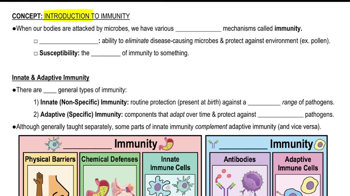
Introduction to Immunity
4956
views
96
rank
VideoThumbView.guidedCourse
2:58
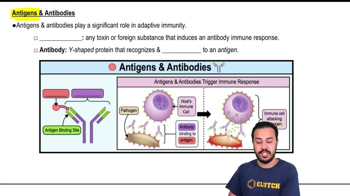
Antigens & Antibodies
3669
views
128
rank
이 집합의 용어 (29)
하이드의 정의
Adaptive (acquired) defense system
The third line of defense that targets specific pathogens with tailored immune responses involving lymphocytes.
Antibody (immunoglobulin, Ig)
Proteins produced by plasma cells that specifically bind to antigens to neutralize or mark them for destruction.
Antigen (foreign/heteroantigen)
A molecule recognized as foreign by the immune system that triggers an immune response.
Humoral (antibody-mediated) immunity
Immunity involving B cells that produce antibodies circulating in body fluids to fight pathogens.
Cellular (cell-mediated) immunity
Immunity involving T cells that directly attack infected or abnormal cells.
B cells (B lymphocytes)
Lymphocytes that mature in bone marrow and produce antibodies as part of humoral immunity.
T cells (T lymphocytes)
Lymphocytes that mature in the thymus and mediate cellular immunity.
Helper T cells (TH)
T cells that activate B cells, cytotoxic T cells, and macrophages to coordinate the immune response.
Cytotoxic T cells (TC)
T cells that kill infected or cancerous cells by inducing apoptosis.
Regulatory T cells (TReg)
T cells that suppress immune responses to maintain self-tolerance and prevent autoimmune diseases.
Memory B and T cells
Long-lived lymphocytes that provide faster and stronger responses upon re-exposure to the same antigen.
Major histocompatibility complex (MHC) proteins
Cell surface proteins that present antigen fragments to T cells to initiate immune responses.
Phagocytes
Cells like macrophages and neutrophils that engulf and digest pathogens and debris.
Natural killer (NK) cells
Lymphocytes that kill virus-infected and tumor cells without prior sensitization.
Innate (nonspecific) defense system
The first and second lines of defense providing immediate, general protection against pathogens.
Inflammation
A nonspecific response to tissue injury characterized by redness, heat, swelling, and pain.
Complement proteins
Plasma proteins that enhance inflammation, opsonize pathogens, and form membrane attack complexes.
Lymphatic vessels (lymphatics)
Network of vessels that transport lymph from tissues to the bloodstream.
Lymph nodes
Small lymphoid organs that filter lymph and house immune cells to detect pathogens.
Spleen
An organ that filters blood, removes old red blood cells, and mounts immune responses.
Thymus
Primary lymphoid organ where T cells mature and become immunocompetent.
Bone marrow
Primary lymphoid tissue where B cells mature and blood cells are produced.
Mucosa-associated lymphoid tissue (MALT)
Lymphoid tissues in mucous membranes that protect against pathogens entering via mucosa.
Peyer’s patches
Aggregated lymphoid nodules in the small intestine that monitor intestinal bacteria.
Autoimmune diseases
Conditions where the immune system attacks self-antigens, causing tissue damage.
Fever
A systemic response to infection that raises body temperature to inhibit pathogen growth.
Histamine
A chemical released by basophils and mast cells that increases blood vessel permeability during inflammation.
Heparin
An anticoagulant released by basophils to prevent blood clotting at inflammation sites.
White blood cells types
Include basophils, eosinophils, lymphocytes, monocytes, and neutrophils, each with specific immune roles.
 뒤로뒤로
 5:52