Skip to main content
Anatomy & Physiology
나의 코스
배우기
시험 준비
AI 튜터
학습 가이드
교과서적 해결책
플래시카드
탐험해 보세요
앱을 사용해 보세요
나의 코스
배우기
시험 준비
AI 튜터
학습 가이드
교과서적 해결책
플래시카드
탐험해 보세요
앱을 사용해 보세요
뒤로
Innate and Adaptive Immune Defenses - Anatomy & Physiology
카드를 뒤집기 위해 탭할 수 있습니다.
What are the two main intrinsic systems of the immune system?
카드를 뒤집기 위해 탭할 수 있습니다.
👆
What are the two main intrinsic systems of the immune system?
Innate (nonspecific) defense system
and
Adaptive (specific) defense system
.
진행 상황 추적
컨트롤 버튼이 '내비게이션' 모드로 변경되었습니다.
1/20
추천 영상
VideoThumbView.guidedCourse
5:52
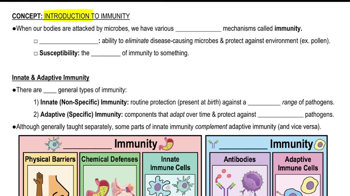
Introduction to Immunity
4965
views
96
rank
VideoThumbView.guidedCourse
2:58
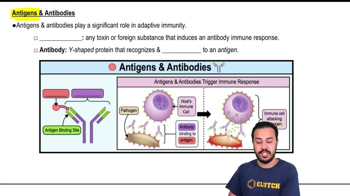
Antigens & Antibodies
3678
views
128
rank
이 집합의 용어 (20)
하이드의 정의
What are the two main intrinsic systems of the immune system?
Innate (nonspecific) defense system
and
Adaptive (specific) defense system
.
What constitutes the first line of defense in innate immunity?
External body membranes such as
skin
and
mucous membranes
.
Name some protective chemicals produced by skin and mucous membranes.
Acid (acid mantle), enzymes (lysozyme), mucin, defensins, lipids in sebum, and dermicidin in sweat.
How do respiratory system modifications help stop pathogens?
Mucus-coated hairs trap particles; cilia sweep mucus with trapped dust and bacteria toward the mouth.
What triggers the second line of defense in innate immunity?
Breaches in surface barriers such as nicks or cuts that allow microorganisms to invade deeper tissues.
List the main components of the second line of defense.
Phagocytes, natural killer cells, inflammatory response, antimicrobial proteins, and fever.
What are Toll-like receptors (TLRs)?
Pattern recognition receptors on immune cells that recognize specific classes of microbes and trigger immune responses.
What is the role of phagocytes in innate immunity?
White blood cells that ingest and digest foreign invaders by phagocytosis.
Describe the process of phagocytosis.
Phagocyte adheres to pathogen, engulfs it into a phagosome, fuses with lysosome to form phagolysosome, digests pathogen, and expels waste.
What is opsonization?
Coating of pathogens by antibodies or complement proteins to enhance phagocytosis.
What are natural killer (NK) cells and their function?
Large granular lymphocytes that kill cancer and virus-infected cells by inducing apoptosis before adaptive immunity activates.
Name the four cardinal signs of acute inflammation.
Redness, heat, swelling, and pain.
What are the benefits of inflammation?
Prevents spread of damaging agents, disposes of debris and pathogens, alerts adaptive immunity, and sets stage for repair.
What causes redness and heat during inflammation?
Vasodilation causing hyperemia (increased blood flow) to the injured area.
Explain the role of edema in inflammation.
Fluid containing clotting factors and antibodies leaks into tissue, causing swelling that isolates injured area and delivers immune components.
List the steps of phagocyte mobilization during inflammation.
Leukocytosis, margination, diapedesis, and chemotaxis.
What are interferons and their function?
Proteins released by virus-infected cells that warn neighboring cells and activate NK cells and macrophages.
What is the complement system?
A group of ~20 blood proteins that enhance inflammation, promote phagocytosis, and cause cell lysis of pathogens.
How is the complement system activated?
By classical (antibody binding), lectin (lectin binding sugars), or alternative (spontaneous) pathways.
What is the role of fever in innate immunity?
Systemic response raising body temperature to inhibit microbial growth and increase repair rate.
 뒤로뒤로
 5:52