 뒤로
Innate and Adaptive Immunity in Anatomy & Physiology
 5:52

이 집합의 용어 (21)
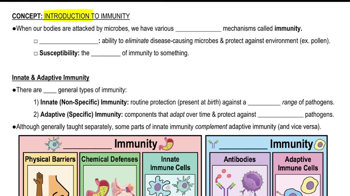
Surface membrane barriers include the skin and mucous membranes that act as the body's first line of defense by physically blocking pathogens and producing protective secretions like mucus and acids.
Phagocytosis is the process where certain white blood cells engulf and digest pathogens, helping to eliminate infections early.
Natural killer cells detect and destroy virus-infected or cancerous cells by inducing apoptosis without needing prior activation.
Fever raises body temperature to inhibit pathogen growth and enhances immune system efficiency.
Inflammation is a protective response involving redness, heat, swelling, and pain caused by increased blood flow and immune cell activity to isolate and repair damaged tissue.
Histamine increases blood vessel permeability; kinins attract immune cells; prostaglandins enhance pain and swelling; all promote inflammation.
Substances like complement proteins destroy pathogens, interferons inhibit viral replication, and defensins disrupt microbial membranes.
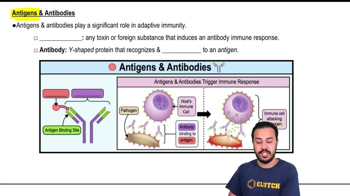
An antigen is any substance that triggers an adaptive immune response by being recognized as foreign.
A complete antigen can trigger immune response alone; a hapten is incomplete and needs to bind to a protein; antigenic determinants are specific parts recognized by immune cells.
B cells mature in bone marrow and produce antibodies; T cells mature in thymus and directly attack infected cells or regulate immunity.
Immunocompetence is the ability to recognize specific antigens; self-tolerance is the ability to avoid attacking the body’s own cells.
Dendritic cells migrate to lymph nodes to initiate primary T-cell responses, macrophages present antigens to activate and recruit helper T cells at sites of local infection, and B cells present antigens to T cells to initiate adaptive immunity.
Humoral immunity involves B cells producing antibodies that circulate in body fluids to neutralize pathogens.
Upon antigen binding, a B cell clones itself; plasma cells secrete antibodies, and memory cells provide long-term immunity.
Active immunity is produced by the body after exposure; passive immunity is gained by receiving antibodies from another source.
Antibodies have variable regions that bind antigens also known as immunoglobulins—are Y-shaped protective proteins produced by the immune system to bind and eliminate foreign invaders, categorized into five main classes; classes are IgG, IgA, IgM, IgE, and IgD, each with specific roles in immunity.
Cellular immunity involves T cells recognizing infected cells; activation requires antigen presentation and co-stimulation leading to clonal expansion.
Helper T cells activate other immune cells; cytotoxic T cells kill infected cells; regulatory T cells suppress immune responses.
T cells coordinate immune responses, kill infected or abnormal cells, and maintain immune system balance.
Examples include AIDS (immunodeficiency) and allergies or autoimmune diseases (hypersensitivity).
Autoimmune diseases result from loss of self-tolerance, genetic predisposition, and environmental triggers causing immune attack on self tissues.