 뒤로
Integumentary System - Anatomy & Physiology
 06:54

이 집합의 용어 (29)
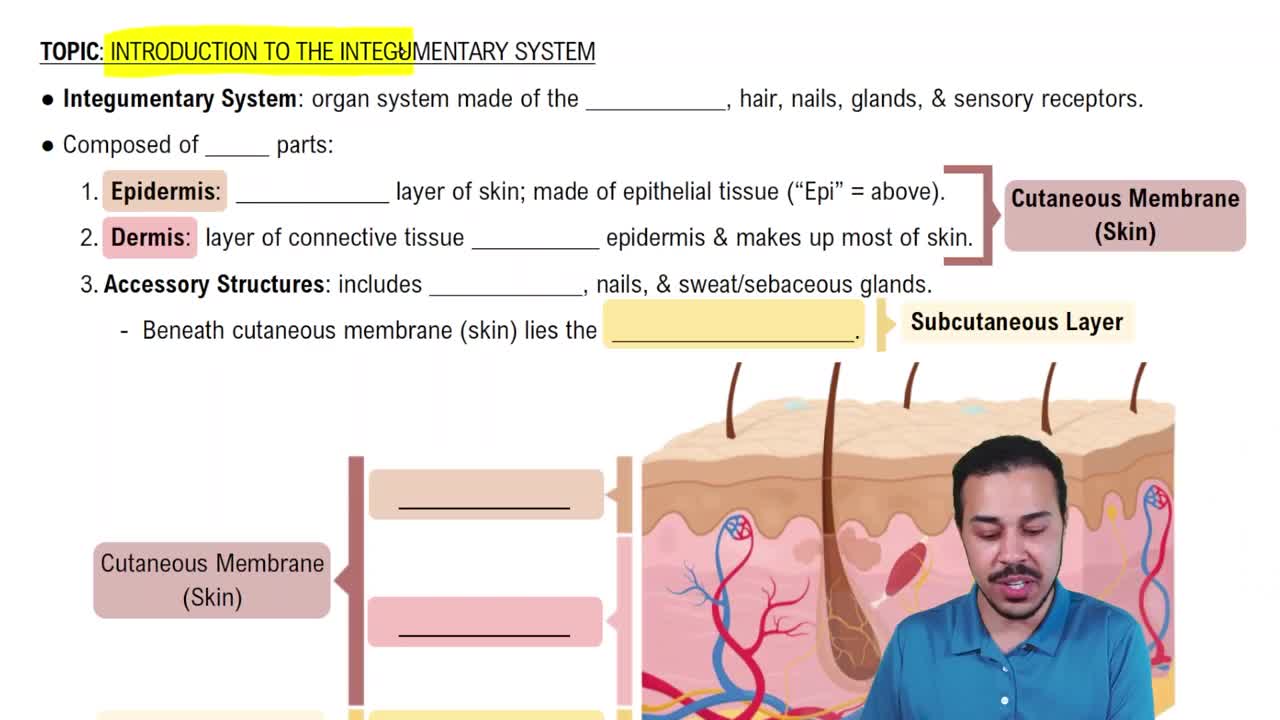
Skin, sweat glands, sebaceous glands, hair, and nails (though hair and nails are not studied here).
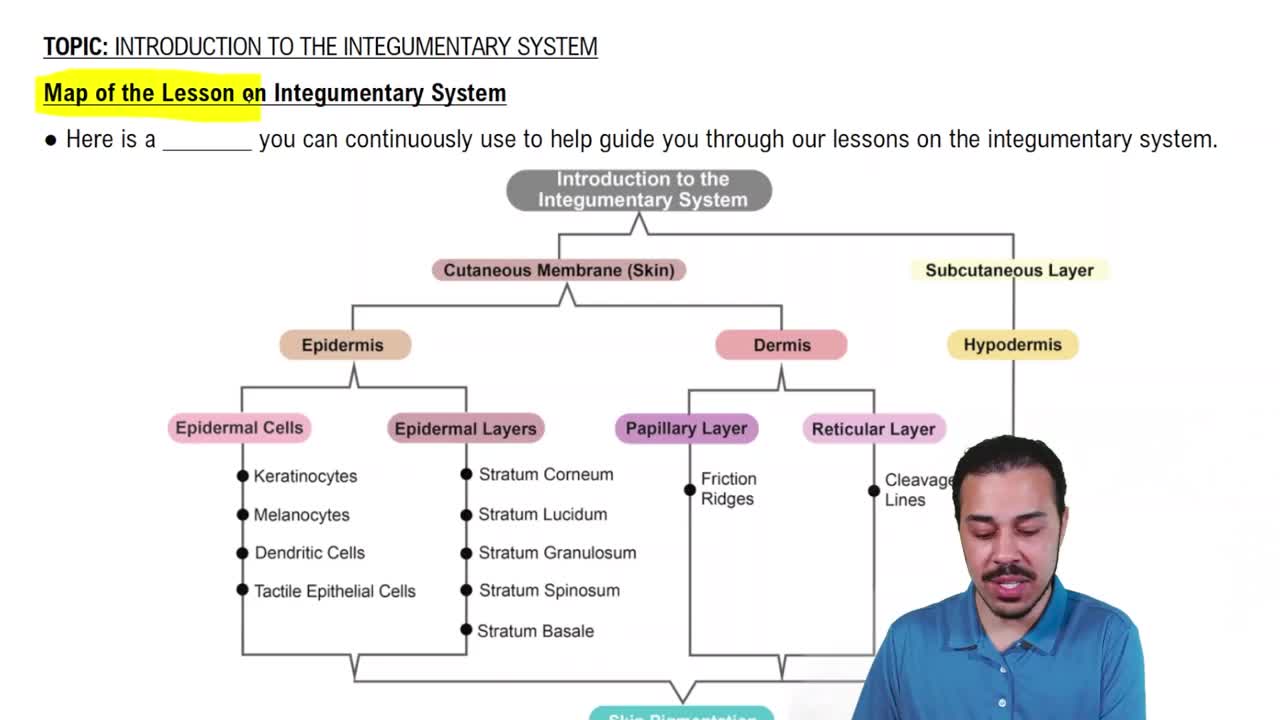
Epidermis (superficial, avascular) and dermis (deep, vascular).
Keratinocytes, melanocytes, dendritic (Langerhans) cells, and tactile (Merkel) cells.
Produce fibrous keratin, providing protective properties to the skin; connected by desmosomes.
Produce melanin pigment, which is packaged into melanosomes and transferred to keratinocytes to protect nuclei from UV damage.
Star-shaped macrophages that patrol the epidermis and activate the immune system.
Sensory receptors for touch located in the epidermis.
Stratum basale, stratum spinosum, stratum granulosum, stratum lucidum (only in thick skin), stratum corneum.
Deepest epidermal layer; mitotic stem cells attach to dermis; contains melanocytes; cells migrate upward over 25-45 days.
Several cell layers thick; keratinocytes connected by desmosomes; contains abundant melanosomes and dendritic cells; resists tension.
Cells flatten, nuclei and organelles disintegrate; keratinization begins with keratohyaline granules; lamellar granules create water-resistant barrier.
Only in thick skin (hands and feet); 2-3 rows of dead, translucent keratinocytes above stratum granulosum.
20-30 rows of dead, keratinized, anucleated cells; protects against environmental damage, prevents water loss, and resists abrasion.
Fibrous connective tissue with fibroblasts, macrophages, mast cells, and white blood cells; contains blood vessels, lymphatics, and nerves.
Papillary layer: superficial, areolar connective tissue with capillaries and tactile corpuscles; Reticular layer: dense fibrous connective tissue with collagen and elastic fibers.
Subcutaneous layer beneath skin; mostly adipose tissue that absorbs shock, insulates, and anchors skin to muscles.
Melanin (made by melanocytes), carotene (yellow-orange pigment), and hemoglobin (pinkish hue in fair skin).
Blue skin color due to low oxygenation of hemoglobin.
Eccrine glands: thermoregulation, watery sweat; Apocrine glands: axillary/genital areas, viscous sweat with fatty substances, begin at puberty.
Oil glands associated with hair follicles; secrete sebum, an oily holocrine secretion that softens skin and hair and has bactericidal properties.
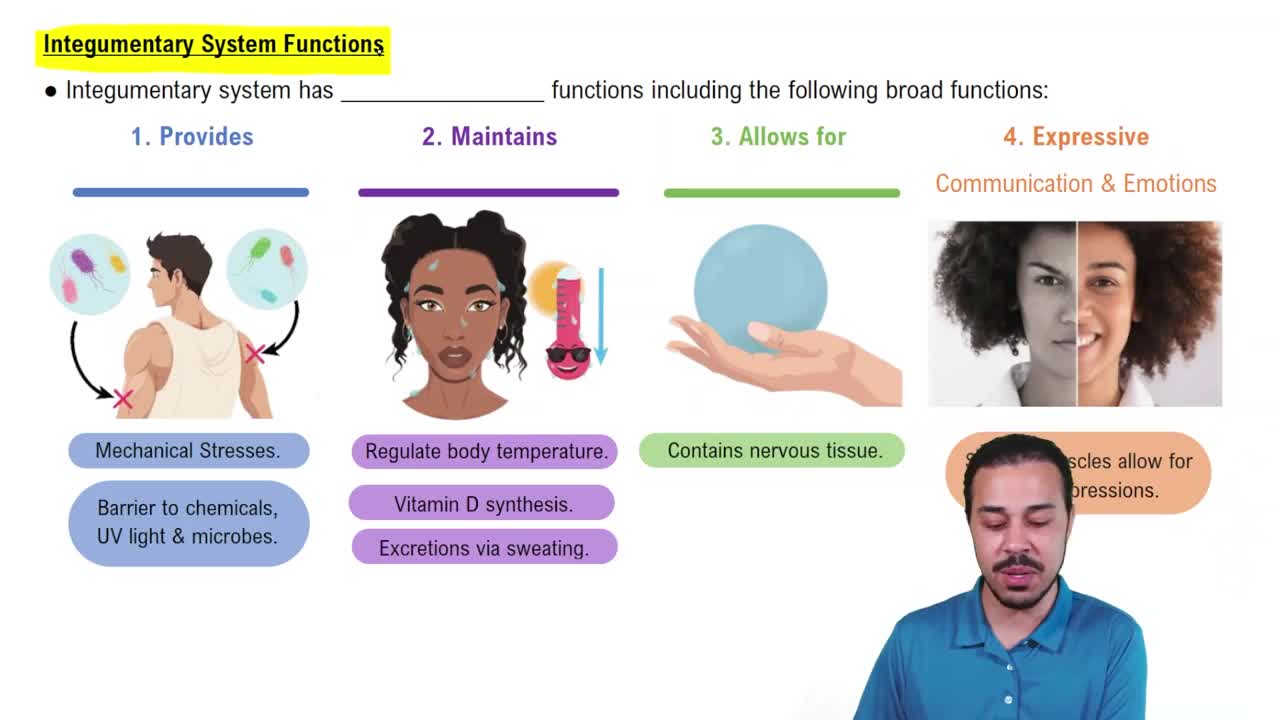
Chemical barrier (antimicrobial secretions, low pH, melanin), physical barrier (keratinized cells and glycolipids), and biological barrier (immune cells and DNA protection).
By sweating (insensible and sensible perspiration) and adjusting blood flow via dilation or constriction of dermal vessels.
Synthesizes vitamin D, disarms carcinogens, activates hormones, and produces collagenase to prevent wrinkles.
Basal cell carcinoma (least malignant), squamous cell carcinoma (can metastasize), and melanoma (most dangerous, from melanocytes).
A: asymmetry; B: border irregularity; C: color variation; D: diameter larger than 6 mm.
1st degree: epidermal damage; 2nd degree: epidermal and upper dermal damage with blisters; 3rd degree: full thickness skin damage, no pain, requires grafting.
Body divided into 11 sections each representing 9% of total body surface area to estimate fluid loss and burn severity.
More than 25% second-degree burns, more than 10% third-degree burns, or third-degree burns on face, hands, or feet.
Debridement, antibiotics, temporary coverings, and skin grafts.