Skip to main content
Anatomy & Physiology
나의 코스
배우기
시험 준비
AI 튜터
학습 가이드
교과서적 해결책
플래시카드
탐험해 보세요
앱을 사용해 보세요
나의 코스
배우기
시험 준비
AI 튜터
학습 가이드
교과서적 해결책
플래시카드
탐험해 보세요
앱을 사용해 보세요
뒤로
Integumentary System - Anatomy & Physiology
카드를 뒤집기 위해 탭할 수 있습니다.
What are the two main regions of the skin?
카드를 뒤집기 위해 탭할 수 있습니다.
👆
What are the two main regions of the skin?
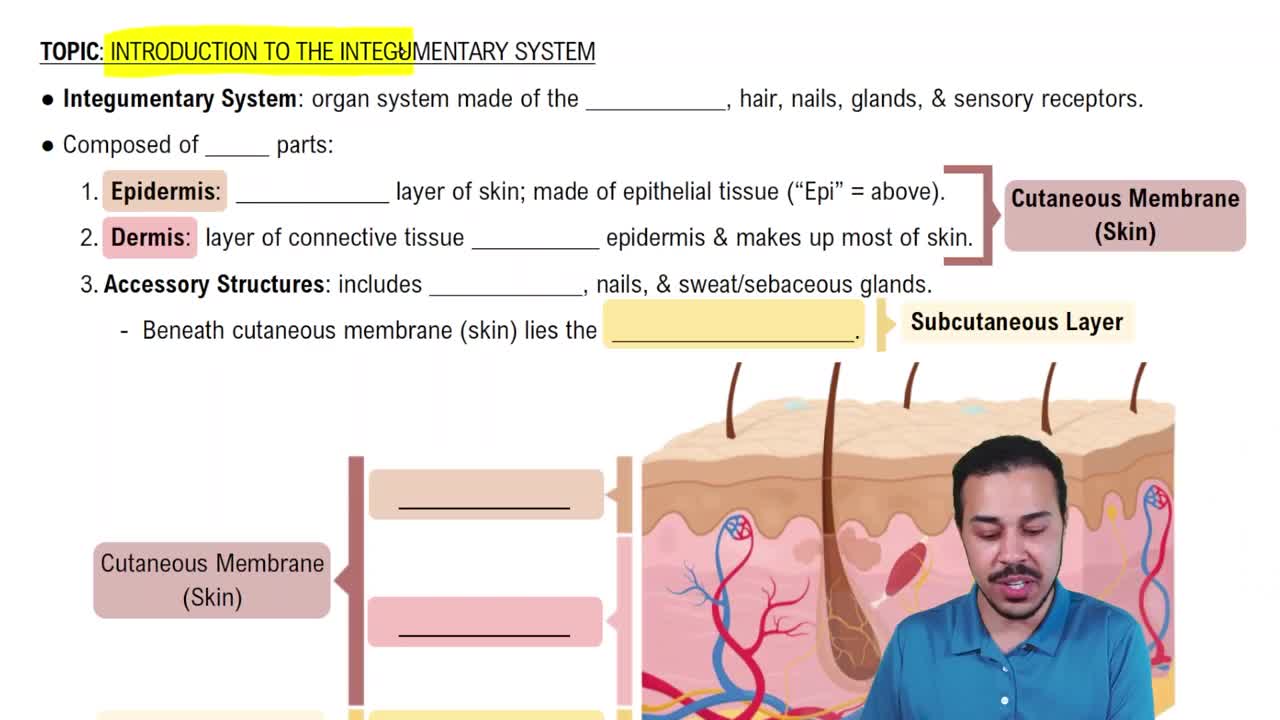
The skin has two main regions: the
epidermis
(keratinized stratified squamous epithelium) and the
dermis
(connective tissue, vascularized).
진행 상황 추적
컨트롤 버튼이 '내비게이션' 모드로 변경되었습니다.
1/25
추천 영상
VideoThumbView.guidedCourse
06:54
Introduction to the Integumentary System
24117
views
820
rank
3
comments
VideoThumbView.guidedCourse
03:40
Integumentary System Functions
15654
views
395
rank
1
comments
VideoThumbView.guidedCourse
02:47
Map of the Lesson on Integumentary System
13801
views
649
rank
6
comments
이 집합의 용어 (25)
하이드의 정의
What are the two main regions of the skin?
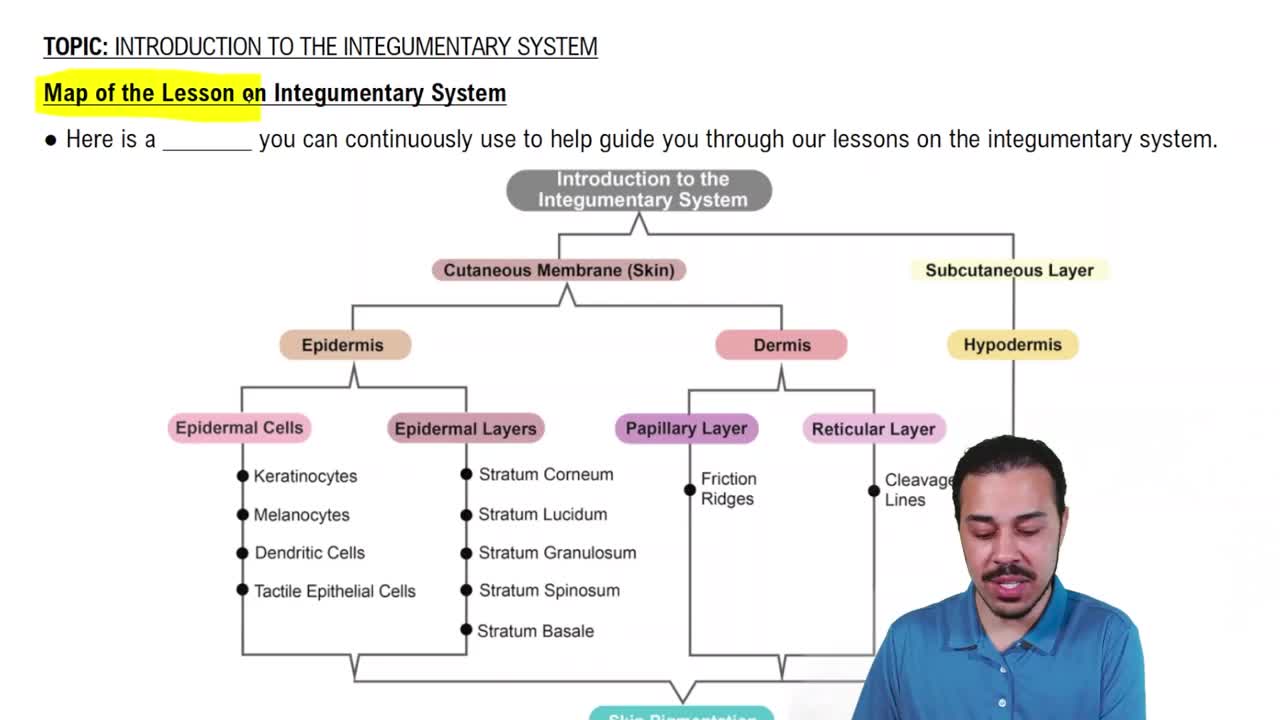
The skin has two main regions: the
epidermis
(keratinized stratified squamous epithelium) and the
dermis
(connective tissue, vascularized).
What are the four major cell types in the epidermis?
Keratinocytes
,
melanocytes
,
dendritic (Langerhans') cells
, and
tactile (Merkel) cells
.
What is the main function of keratinocytes?
Keratinocytes produce
keratin
, a fibrous protein that provides protection and waterproofing to the skin.
What is the role of melanocytes?
Melanocytes produce
melanin
, a pigment that protects against UV radiation by absorbing harmful rays.
What is the function of dendritic (Langerhans') cells?
They are
macrophages
that activate the immune system by detecting pathogens in the epidermis.
What are tactile (Merkel) cells responsible for?
They function as
touch receptors
located at the epidermis-dermis boundary.
Name the five layers of the epidermis from superficial to deep.
Stratum
corneum
,
lucidum
(only in thick skin),
granulosum
,
spinosum
, and
basale
.
What is the stratum lucidum and where is it found?
A clear, thin layer of dead keratinocytes found only in
thick skin
such as palms and soles.
What protein makes the stratum lucidum clear and waterproof?
Eleidin, a transparent, lipid-rich intermediate protein between keratohyalin and keratin.
What are the two layers of the dermis?
The
papillary layer
(areolar connective tissue with capillaries and nerve endings) and the
reticular layer
(dense irregular connective tissue).
What are dermal papillae and their function?
Projections of the papillary dermis that indent the epidermis, containing capillaries and nerve endings for touch and pain.
What are friction ridges and where do they form?
Raised epidermal ridges over dermal papillae on thick skin (palms, soles) that enhance grip and form fingerprints.
What are cleavage (tension) lines in the skin?
Lines in the reticular dermis formed by collagen fiber orientation; important for surgical incisions to minimize scarring.
What is the subcutaneous tissue (hypodermis)?
A layer of areolar connective tissue and adipose below the dermis that anchors skin, stores fat, and provides insulation.
What are the three pigments contributing to skin color?
Melanin
(made in skin),
carotene
(from diet), and
hemoglobin
(from blood circulation).
What are the main functions of hair?
Sensing insects, protecting the head from trauma and heat loss, shielding eyes, and filtering inhaled particles.
What determines hair texture and thickness?
Hair texture is determined by follicle shape; thickness is determined by follicle size.
What is the structure of a hair follicle?
Includes the hair shaft, root, bulb (with papilla and root hair plexus), follicle sheaths, arrector pili muscle, and sebaceous gland.
What causes male pattern baldness?
A genetically influenced altered response to androgens that shortens hair growth cycles, leading to hair thinning.
What are nails and their main parts?
Nails are scale-like modifications of the epidermis consisting of the nail plate, nail bed, proximal nail fold, nail matrix, and lunula.
What are the two main types of sweat glands?
Eccrine glands
(thermoregulation, watery sweat) and
apocrine glands
(axillary, secrete fatty sweat, activated by stress).
What are the three types of barriers provided by the skin?
Chemical
(acid mantle, antimicrobial secretions),
physical
(waterproofing, keratin), and
biological
(immune cells).
What are the six major functions of the skin?
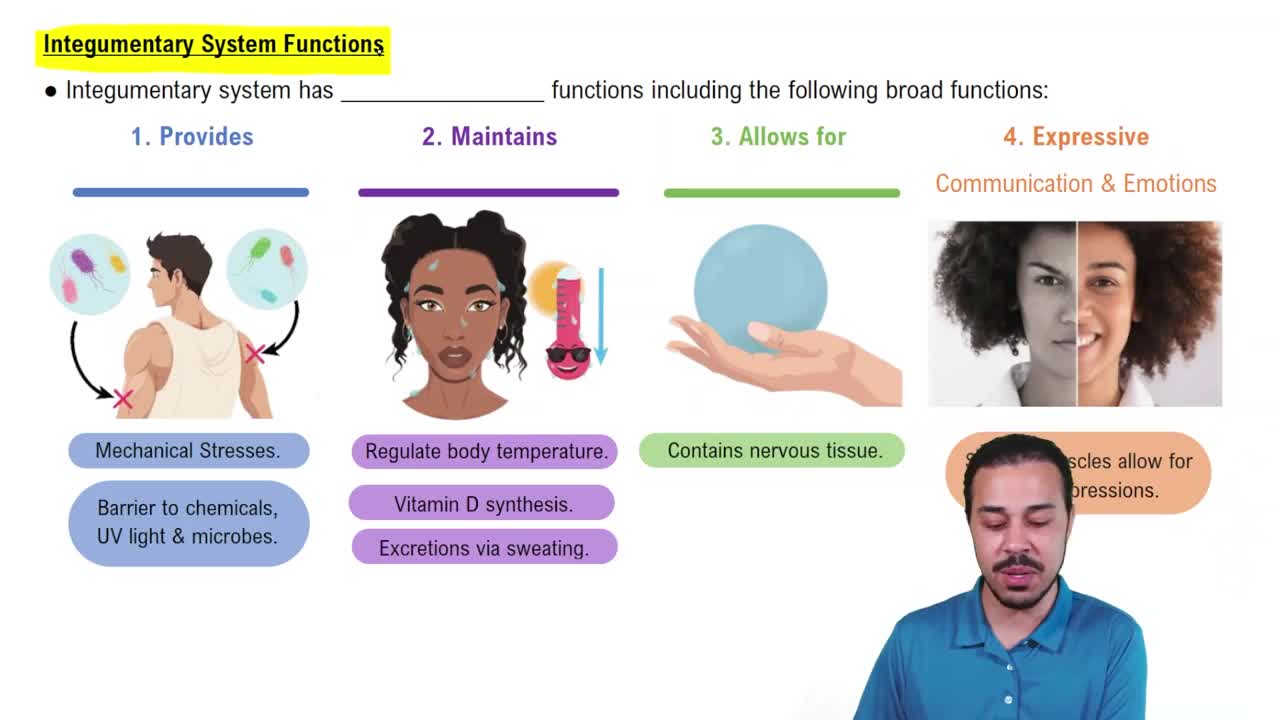
Protection, body temperature regulation, cutaneous sensation, metabolic functions, blood reservoir, and excretion.
What are the degrees of burns and their characteristics?
First degree: epidermis only; second degree: epidermis and superficial dermis; third degree: full thickness of skin.
What is the Rule of Nines?
A method to estimate the percentage of body surface area affected by burns for treatment planning.
 뒤로뒤로
 06:54