What are the main components of the integumentary system?
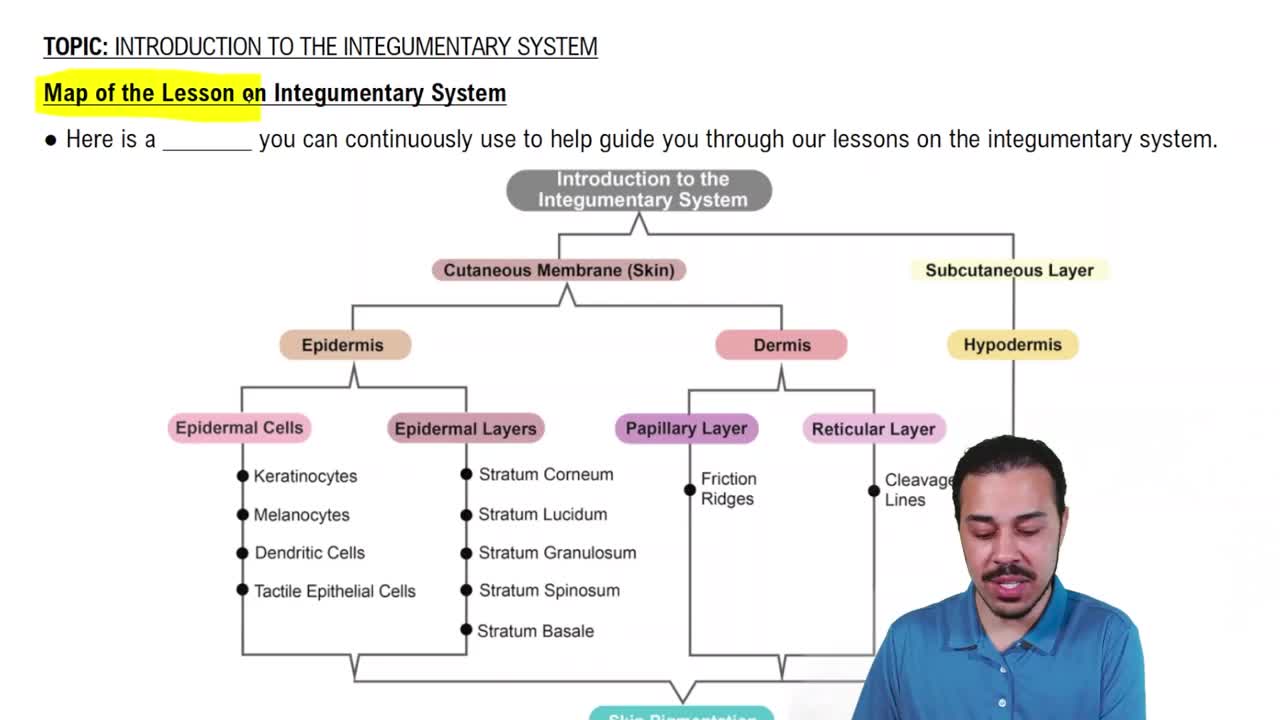
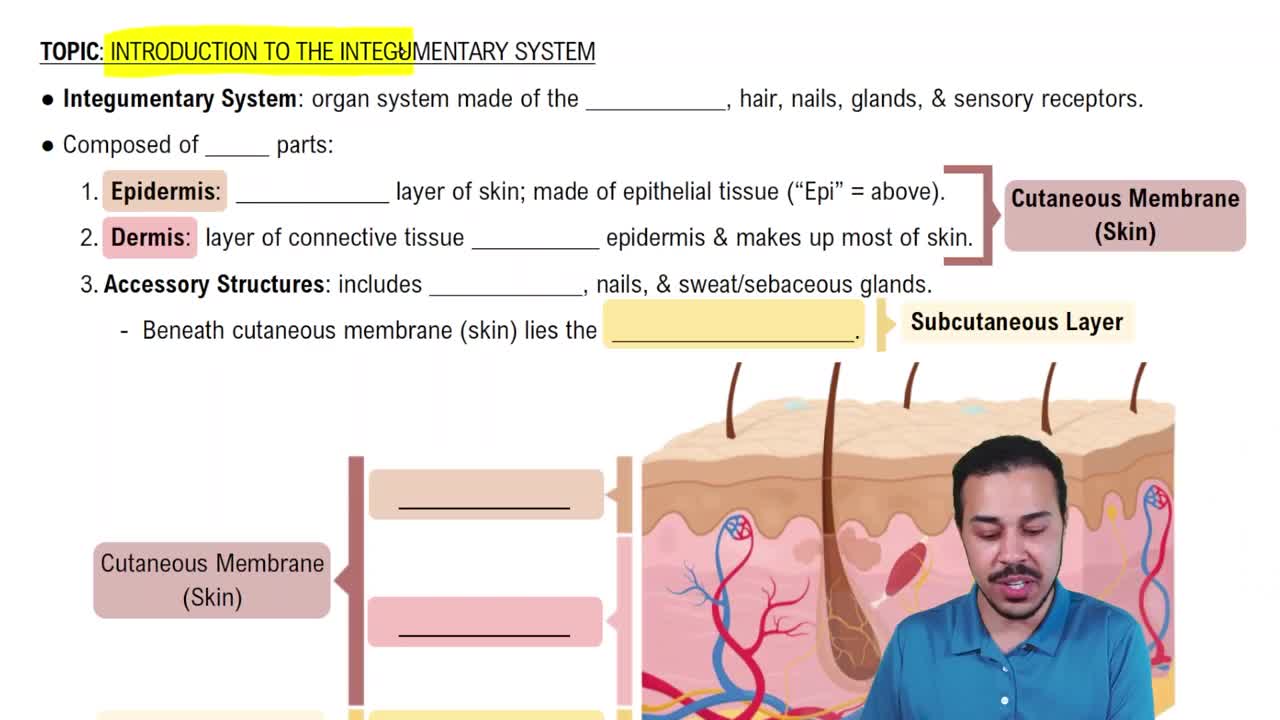
The integumentary system consists of the skin, sudoriferous (sweat) glands, sebaceous (oil) glands, hairs, nails, and subcutaneous tissue.
What are the three main layers of the skin?
The three main layers are the epidermis (outermost), dermis (middle), and hypodermis (subcutaneous layer beneath the dermis).
What type of tissue composes the epidermis?
The epidermis is composed mostly of keratinized stratified squamous epithelium and is avascular.
What are keratinocytes and their function?
Keratinocytes are the major cells of the epidermis that produce fibrous keratin, providing protective properties to the skin.
What role do melanocytes play in the skin?
Melanocytes produce melanin pigment, which is transferred to keratinocytes to protect their nuclei from UV damage.
Name the five layers of the epidermis from deepest to most superficial.
Stratum basale, stratum spinosum, stratum granulosum, stratum lucidum (only in thick skin), and stratum corneum.
What is the function of the stratum basale?
It is the deepest epidermal layer with mitotically active stem cells that produce new keratinocytes and contains melanocytes.
Describe the stratum spinosum.
Several layers thick with keratinocytes connected by desmosomes, giving a spiny appearance; contains melanosomes and dendritic cells.
What happens in the stratum granulosum?
Cells flatten, nuclei and organelles disintegrate, keratinization begins, and cells above this layer die due to lack of nutrients.
Where is the stratum lucidum found and what is its characteristic?
Found only in thick skin, it is a thin, translucent layer of dead keratinocytes above the stratum granulosum.
What is the stratum corneum and its function?
The outermost layer of 20-30 rows of dead, keratinized cells that protect deeper layers, prevent water loss, and act as a barrier.
What are the two layers of the dermis and their tissue types?
The papillary dermis (areolar connective tissue) and the reticular dermis (dense irregular connective tissue).
What is the function of dermal papillae?
They are fingerlike projections in the papillary dermis that contain capillaries and sensory receptors, enhancing nutrient delivery and sensation.
What are friction ridges and their purpose?
Ridges formed by dermal papillae that enhance gripping ability and contribute to fingerprint patterns.
What are cleavage lines and why are they important clinically?
Cleavage lines are separations between collagen fiber bundles in the reticular dermis; incisions parallel to these lines heal better.
What causes flexure lines in the skin?
Dermal folds at joints where the dermis is tightly secured to underlying structures, causing visible creases.
Name the three pigments that contribute to skin color.
Melanin, carotene, and hemoglobin.
How does melanin protect the skin?
Melanin shields keratinocyte DNA from UV radiation damage by absorbing harmful rays.
What clinical conditions can changes in skin color indicate?
Cyanosis (bluish, low oxygen), pallor (pale, anemia or stress), erythema (redness, inflammation), jaundice (yellow, liver issues), bruising, and hyperpigmentation.
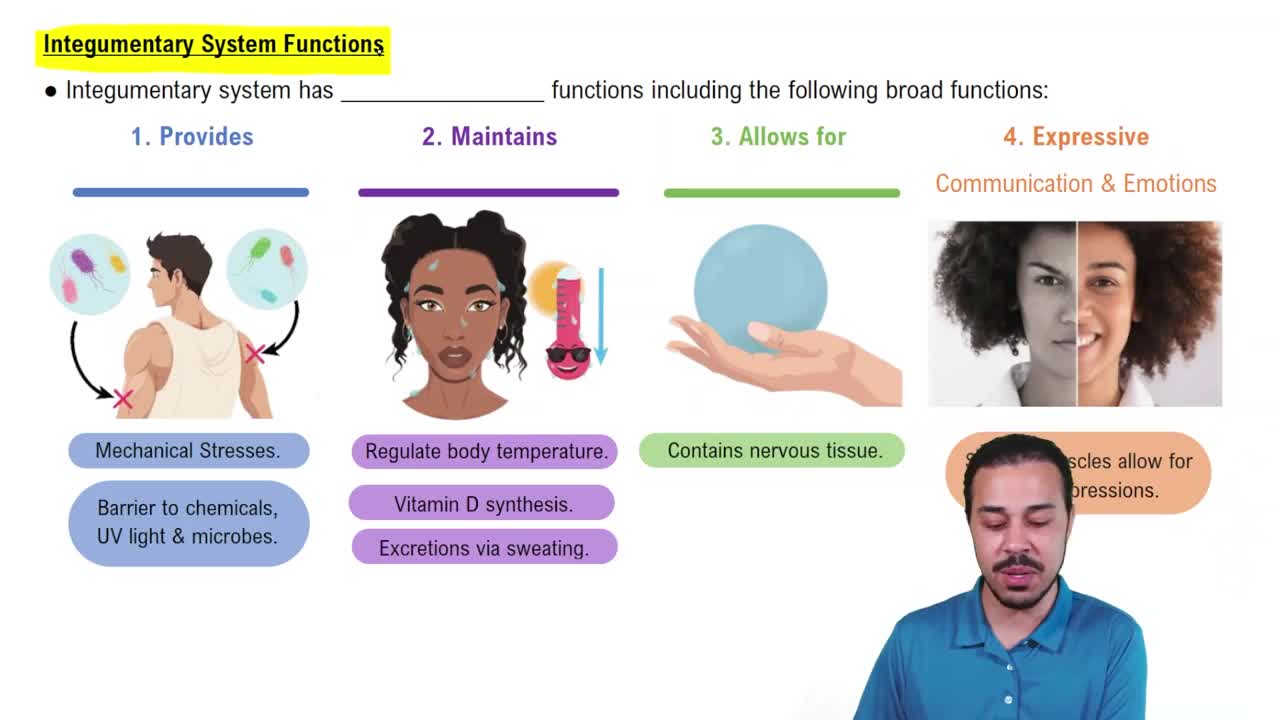
List the main functions of the skin as an organ system.
Protection, body temperature regulation, cutaneous sensation, metabolic functions, blood reservoir, and excretion of wastes.
What are the three types of barriers the skin provides?
Chemical barriers (acid mantle, antimicrobial secretions), physical barriers (keratinized cells and glycolipids), and biological barriers (immune cells like dendritic cells and macrophages).
How does the skin regulate body temperature?
By dilating or constricting dermal blood vessels and activating sweat glands to cool the body through evaporation.
What metabolic functions does the skin perform?
Synthesizes vitamin D for calcium absorption and produces collagenase to aid collagen turnover.
What is the role of sweat glands in the integumentary system?
Sweat glands help control body temperature by producing sweat; eccrine glands regulate thermoregulation, apocrine glands produce scent-related sweat.
What are sebaceous glands and their function?
Oil glands that secrete sebum to soften hair and skin and have bactericidal properties; mostly associated with hair follicles.
What is alopecia and what are some causes?
Hair thinning or baldness caused by genetics, hypothyroidism, protein deficiency, or certain drugs.
How can nail appearance indicate health issues?
Yellow thickened nails may indicate fungal infection; spoon nails suggest iron deficiency; clubbing may indicate respiratory disease; Beau's lines indicate severe illness.
 뒤로
 06:54