Anatomy & Physiology
나의 코스
배우기
시험 준비
AI 튜터
학습 가이드
교과서적 해결책
플래시카드
탐험해 보세요
앱을 사용해 보세요
나의 코스
배우기
시험 준비
AI 튜터
학습 가이드
교과서적 해결책
플래시카드
탐험해 보세요
앱을 사용해 보세요
뒤로
Integumentary System - Anatomy & Physiology
카드를 뒤집기 위해 탭할 수 있습니다.
Order the layers of the skin from superficial to deep.
카드를 뒤집기 위해 탭할 수 있습니다.
👆
Order the layers of the skin from superficial to deep.
Stratum corneum
Stratum lucidum
Stratum granulosum
Stratum spinosum
Stratum basale
Papillary layer
Reticular layer
Subcutaneous layer
진행 상황 추적
컨트롤 버튼이 '내비게이션' 모드로 변경되었습니다.
1/32
추천 영상
VideoThumbView.guidedCourse
06:54
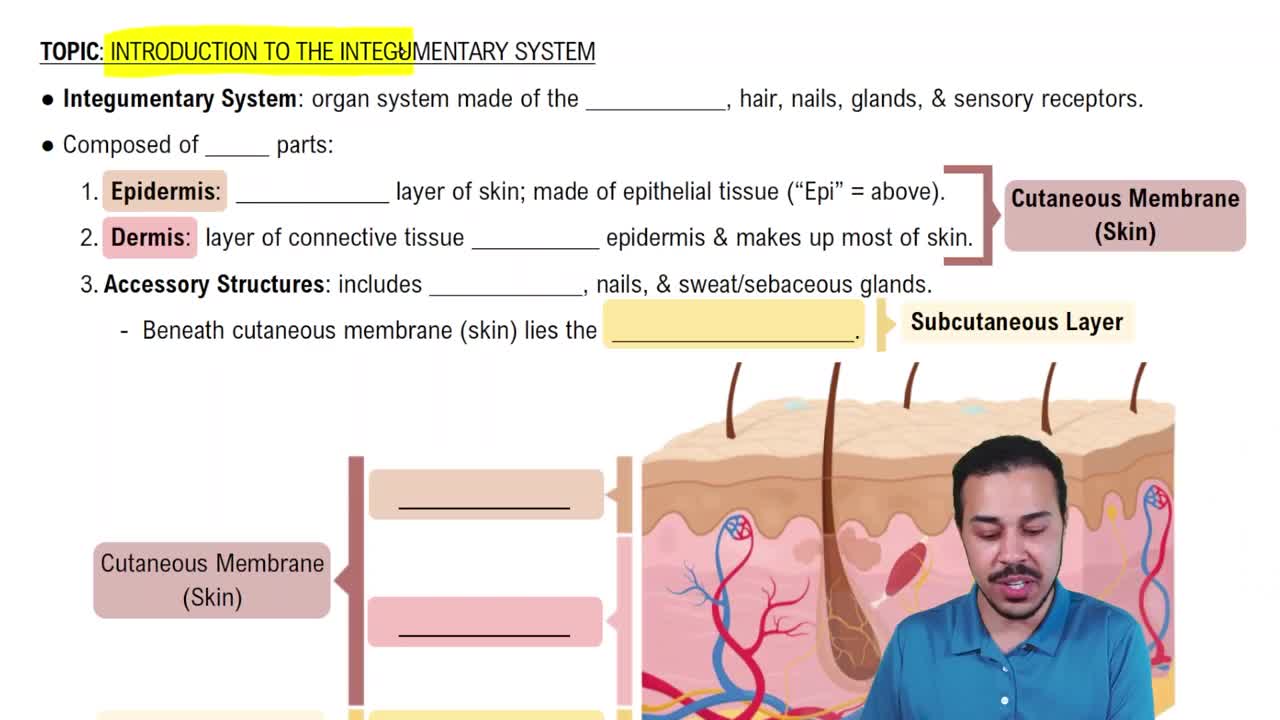
Introduction to the Integumentary System
23097
views
791
rank
3
comments
VideoThumbView.guidedCourse
03:40
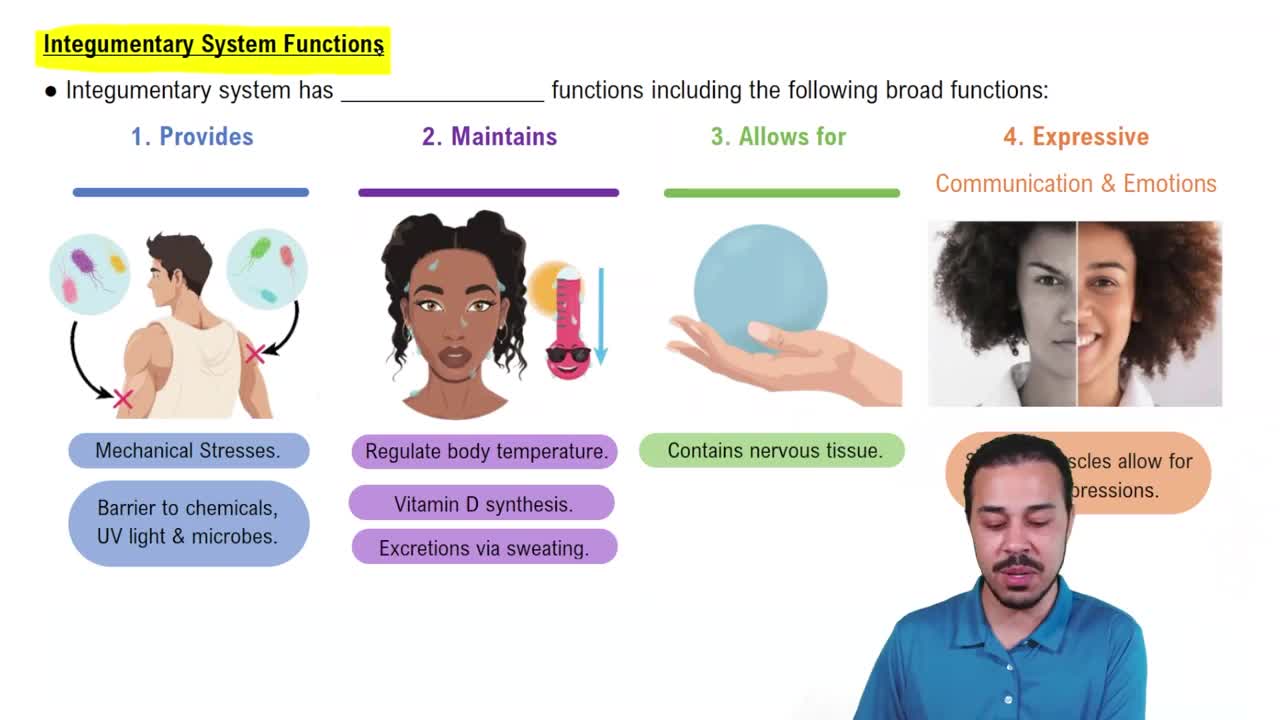
Integumentary System Functions
15040
views
385
rank
1
comments
VideoThumbView.guidedCourse
02:47
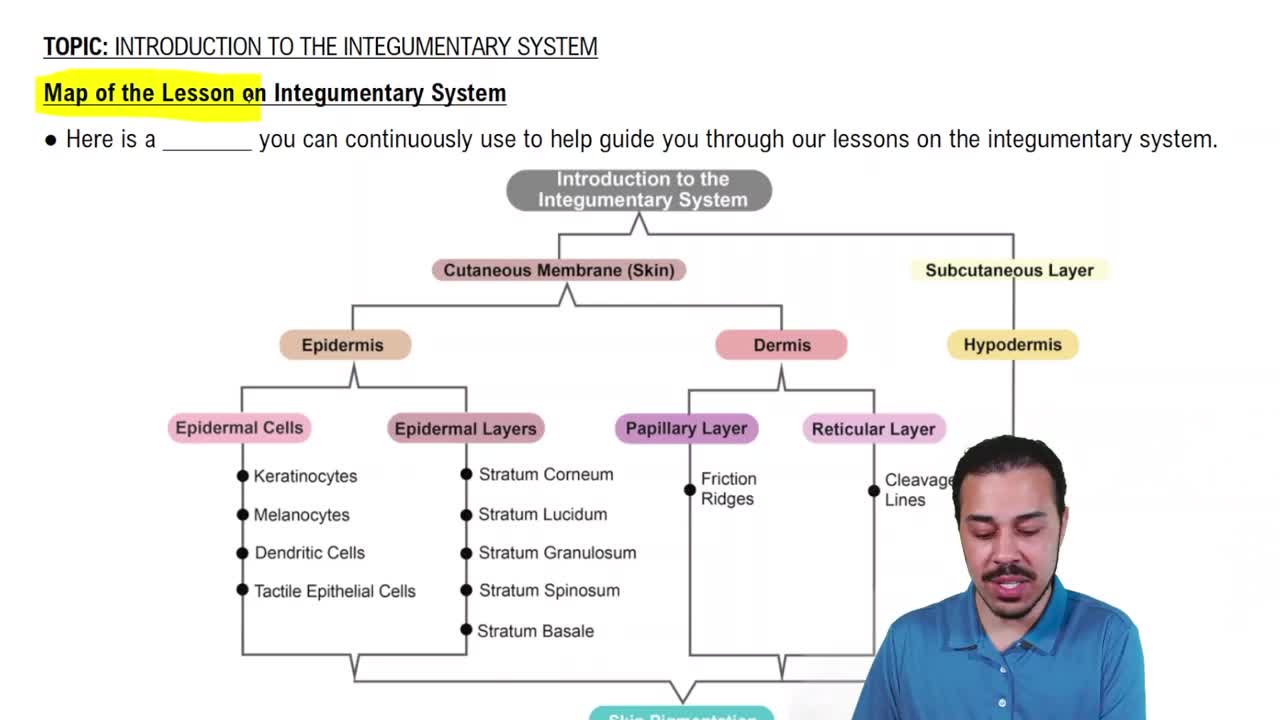
Map of the Lesson on Integumentary System
13209
views
624
rank
6
comments
이 집합의 용어 (32)
하이드의 정의
Order the layers of the skin from superficial to deep.
Stratum corneum
Stratum lucidum
Stratum granulosum
Stratum spinosum
Stratum basale
Papillary layer
Reticular layer
Subcutaneous layer
What type of tissue is found in the epidermis and its function?
The epidermis is composed of
keratinized stratified squamous epithelium
, which provides a protective barrier against environmental damage.
What type of tissue is found in the reticular layer of the dermis and its function?
The reticular layer contains
dense irregular connective tissue
, providing strength and elasticity to the skin.
What type of tissue is found in the subcutaneous layer and its function?
The subcutaneous layer is made of
areolar connective tissue and adipose tissue
, which insulates and cushions the body.
Match the epidermal layer: Stratum basale
One cell layer thick, contains youngest keratinocytes and stem cells that continuously divide.
Match the epidermal layer: Stratum corneum
Upper layer, continuously shed, composed of dead keratinized cells.
Match the epidermal layer: Stratum spinosum
Several layers thick with spiky appearance of cells due to desmosomes.
Match the epidermal layer: Stratum lucidum
Only found in thick skin, a clear layer between stratum corneum and granulosum.
Match the epidermal layer: Stratum granulosum
Layer named for obvious granules containing keratin.
What cells produce keratin and where are they found?
Keratinocytes
produce keratin and are found throughout all epidermal layers.
What cells produce melanin and where are they found?
Melanocytes
produce melanin pigment and are located in the stratum basale.
Describe the secretion and location of eccrine sweat glands.
Eccrine sweat glands secrete watery sweat directly onto the skin surface and are found all over the body.
Describe the secretion and location of apocrine sweat glands.
Apocrine sweat glands secrete a thicker sweat into hair follicles, found mainly in axillary and genital regions.
Describe the secretion and location of sebaceous glands.
Sebaceous glands secrete oily sebum into hair follicles, found throughout the skin except palms and soles.
Characteristics of a first-degree burn
Damage only to the epidermis, redness and pain without blistering, e.g., mild sunburn.
Characteristics of a second-degree burn
Damage to epidermis and upper dermis, redness, pain, and blisters.
Characteristics of a third-degree burn
Damage to epidermis and entire dermis, may be black or grey-white, may not be painful, often requires grafting.
What is the nail body?
The visible, hard part of the nail that protects the fingertip.
What is the nail root?
The part of the nail embedded under the skin where nail growth occurs.
What is the lunula?
The crescent-shaped white area at the base of the nail body.
Describe the appearance and tissue affected in Stage 1 pressure injury.
Non-blanchable redness of intact skin, affecting only the epidermis.
Describe the appearance and tissue affected in Stage 2 pressure injury.
Partial thickness skin loss with exposed dermis, blister or shallow ulcer.
Describe the appearance and tissue affected in Stage 3 pressure injury.
Full thickness skin loss involving damage or necrosis of subcutaneous tissue.
Describe the appearance and tissue affected in Stage 4 pressure injury.
Full thickness tissue loss with exposed bone, tendon, or muscle.
Why is a partial thickness burn more painful than a full thickness burn?
Partial thickness burns damage nerve endings causing pain; full thickness burns destroy nerve endings, reducing pain.
Would you see blood if you scratch only the upper skin surface? Why or why not?
No, because the epidermis is avascular and blood vessels are located deeper in the dermis.
Why do skin cancers not begin in cells of the stratum corneum?
Because stratum corneum cells are dead and lack nuclei, so they cannot mutate or divide.
What pigment is lacking in a person with albinism?
Melanin pigment is lacking, causing reduced skin and hair pigmentation.
How do blood vessels help thermoregulation when too hot?
Blood vessels dilate (vasodilation) to increase blood flow and release heat.
How do blood vessels help thermoregulation when too cold?
Blood vessels constrict (vasoconstriction) to reduce blood flow and conserve heat.
How do sweat glands help thermoregulation when too hot?
Sweat glands produce sweat that evaporates to cool the body.
How do arrector pili muscles help thermoregulation when too cold?
Arrector pili muscles contract to cause hair to stand up, trapping heat.