 뒤로
Integumentary System - Anatomy & Physiology
 06:54

이 집합의 용어 (20)
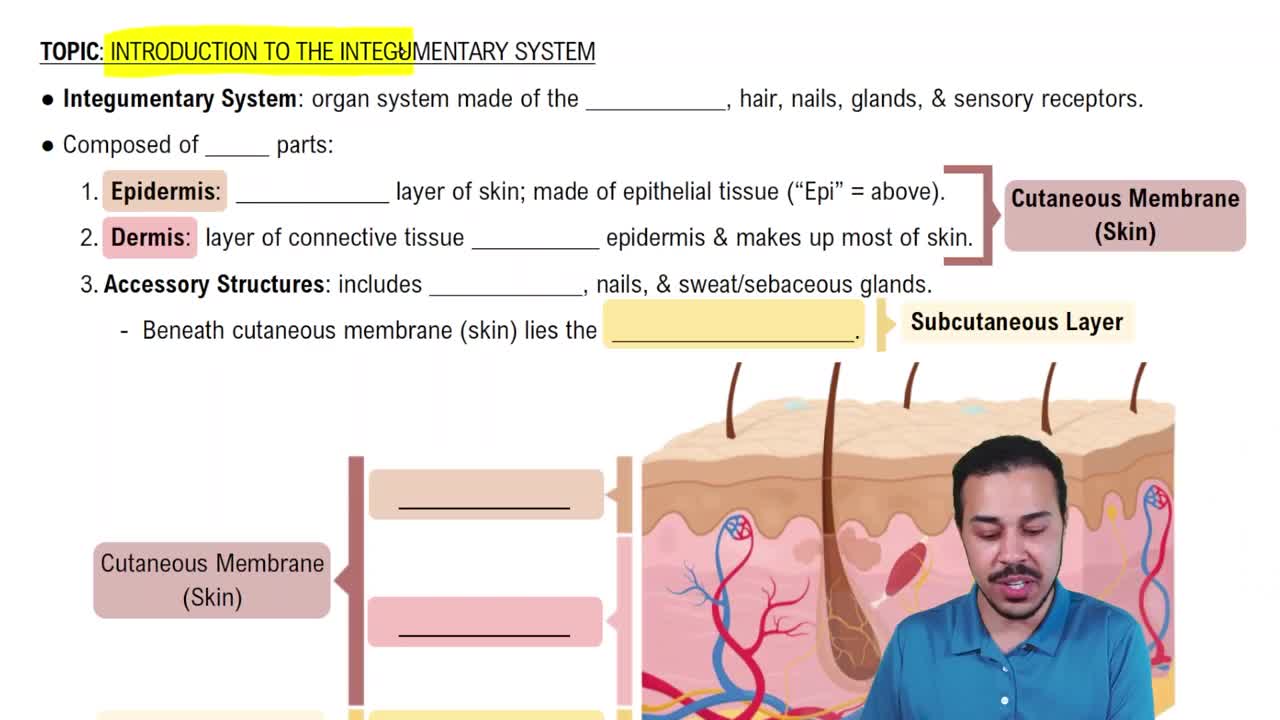
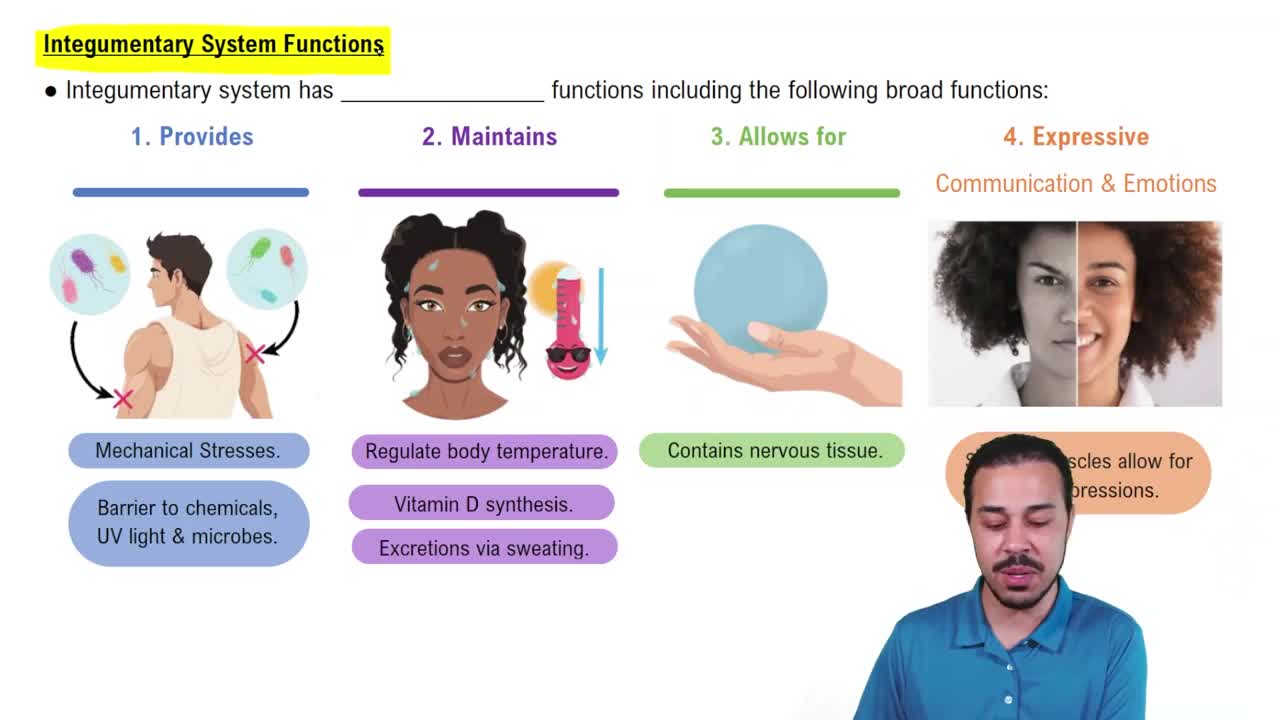
The integumentary system protects the body, regulates temperature, prevents water loss, synthesizes vitamin D, and provides sensory information.
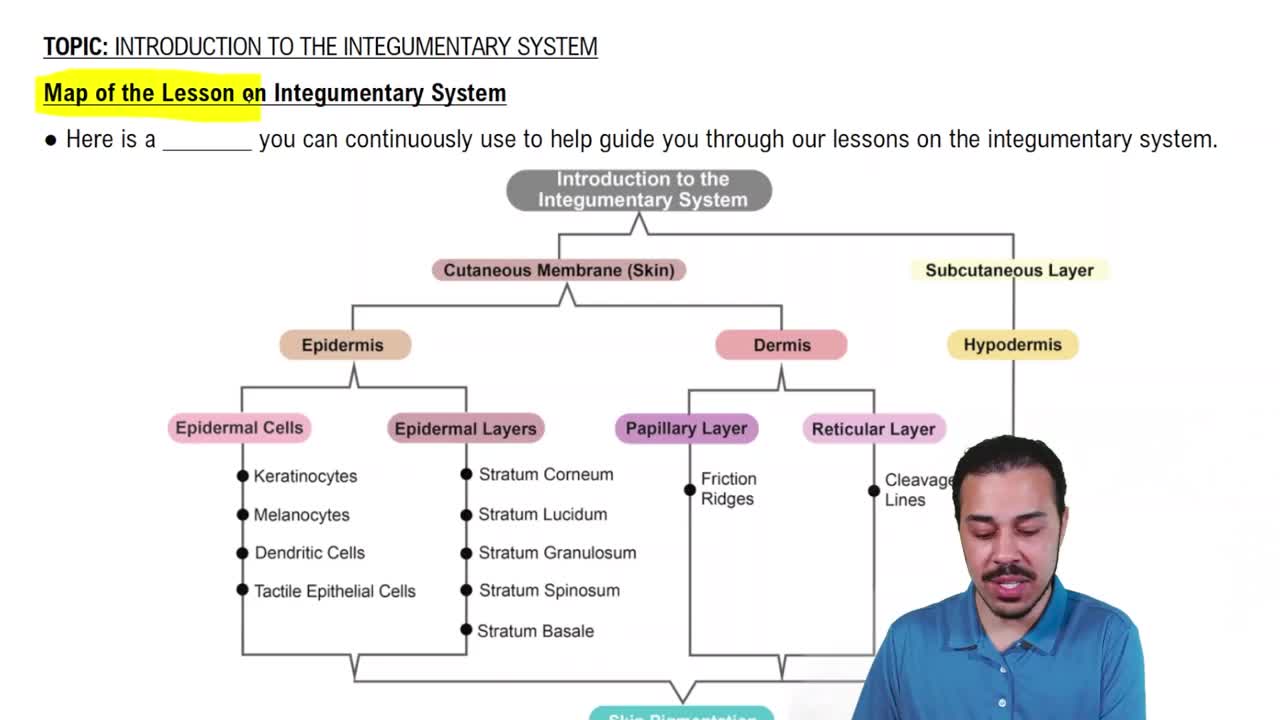
The epidermis, dermis, and hypodermis (subcutaneous layer).
Keratinized stratified squamous epithelium.
They produce keratin, a protein that strengthens and waterproofs the skin.
Stratum basale, stratum spinosum, stratum granulosum, stratum lucidum, stratum corneum.
The stratum lucidum.
Langerhans cells act as antigen-presenting immune cells.
Melanin, produced by melanocytes in the stratum basale.
Dense irregular connective tissue containing collagen and elastin fibers.
The papillary layer (superficial) and the reticular layer (deep).
Blood vessels, nerves, hair follicles, sweat glands, and sebaceous glands.
Loose connective tissue and adipose tissue; it cushions, insulates, and anchors the skin.
Eccrine sweat glands.
They secrete sebum, an oily substance that lubricates and waterproofs the skin and hair.
Hair provides protection, sensory input, and helps regulate body temperature.
The region of actively dividing cells that produce new nail cells.
UV light converts 7-dehydrocholesterol in the skin to vitamin D3, which is then activated in the liver and kidneys.
They act as mechanoreceptors for touch sensation in the epidermis.
Increased melanin production by melanocytes to protect against UV damage.
Thick skin has a thicker epidermis with a stratum lucidum and no hair follicles; thin skin has hair and lacks a stratum lucidum.