What are the four main cell types in the epidermis and their functions?
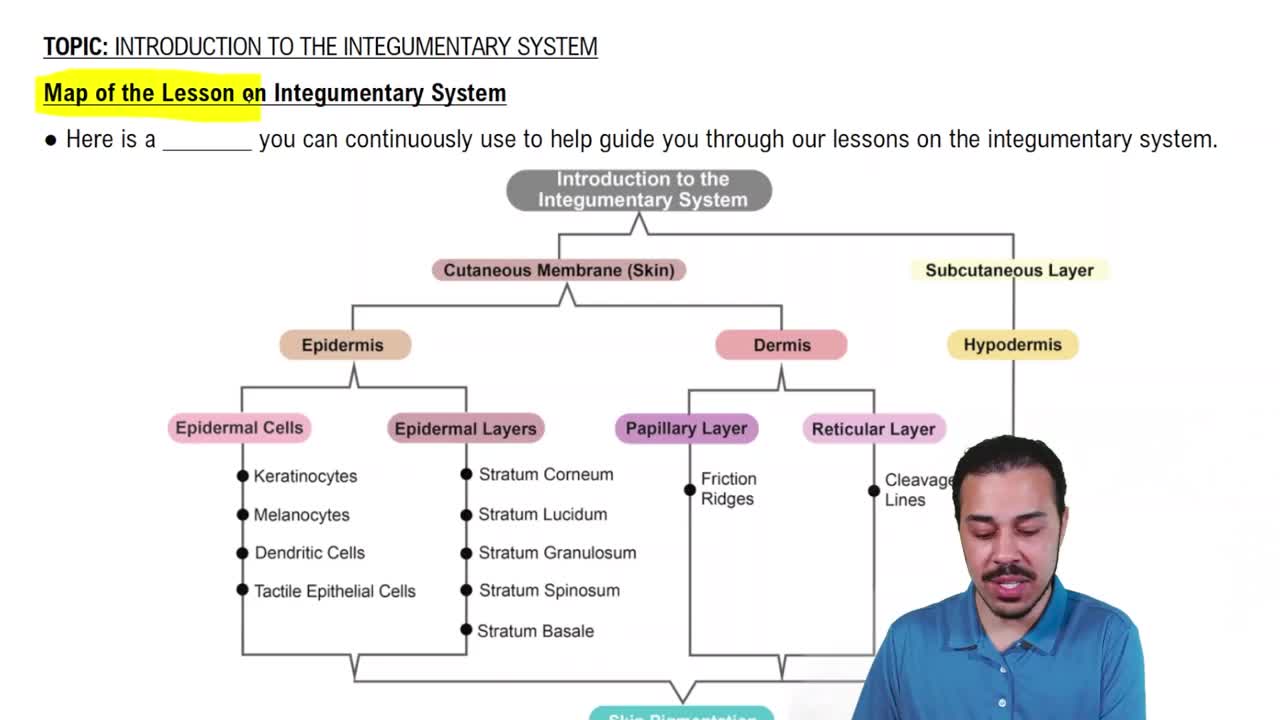
Keratinocytes produce keratin; Melanocytes produce melanin; Langerhans cells provide immunity; Merkel cells form touch receptors.
Describe the process of keratinization in the epidermis.
Stem cells in stratum basale divide to produce keratinocytes, which move upward filling with keratin over about 4 weeks, forming a tough protective layer.
What tissues compose the dermis and what structures does it contain?
Connective tissue with collagen and elastic fibers, fibroblasts, macrophages, fat cells; contains hair follicles, glands, nerves, and blood vessels.
What is the papillary region of the dermis and its functions?
Top 20% of dermis made of areolar connective tissue with dermal papillae; anchors epidermis, contains capillaries and touch/pain receptors.
What characterizes the reticular region of the dermis?
Dense irregular connective tissue with collagen and elastic fibers; contains oil glands, sweat ducts, fat, hair follicles; provides skin strength and elasticity.
What is the difference between thick and thin skin?
Thick skin has a thick epidermis with stratum lucidum, no hair follicles or sebaceous glands, found on palms and soles; thin skin covers most body with thinner epidermis and hair.
How is melanin produced and what affects its production?
Produced by melanocytes converting tyrosine to melanin; UV light increases production; amount varies causing skin color differences.
What are the clinical conditions related to skin pigmentation?
Freckles (patches of melanocytes), albinism (lack of tyrosinase enzyme), vitiligo (autoimmune loss of melanocytes causing white patches).
Name the accessory structures of the skin.
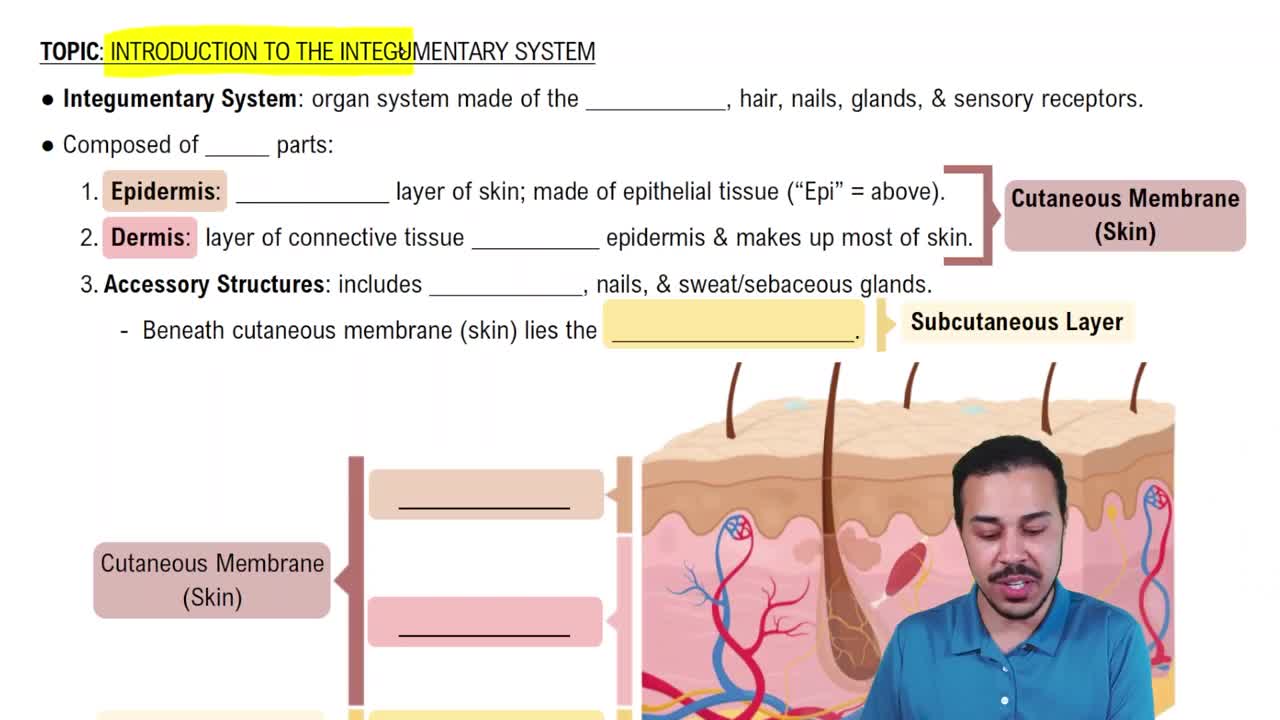
Hair, glands (sebaceous, sudoriferous, ceruminous, mammary), and nails.
What are the parts of a hair shaft and follicle?
Shaft has medulla, cortex, cuticle; follicle surrounds root with external and internal root sheaths; base is bulb with blood vessels and germinal cells.
What is the function of the arrector pili muscle?
Smooth muscle that contracts to pull hair vertically causing goosebumps in response to cold or fear.
What are the types and functions of sweat glands?
Eccrine glands regulate body temperature via sweat; apocrine glands in armpits and pubic area produce thicker secretions onto hair follicles.
What is the role of sebaceous glands?
Secrete sebum to keep hair and skin soft, inhibit bacterial and fungal growth; often open onto hair shafts.
Describe the structure and function of nails.
Composed of tightly packed keratinized cells; nail body is pink from capillaries; lunula is white; nail matrix produces growth at ~1 mm/week.
How does the skin regulate body temperature?
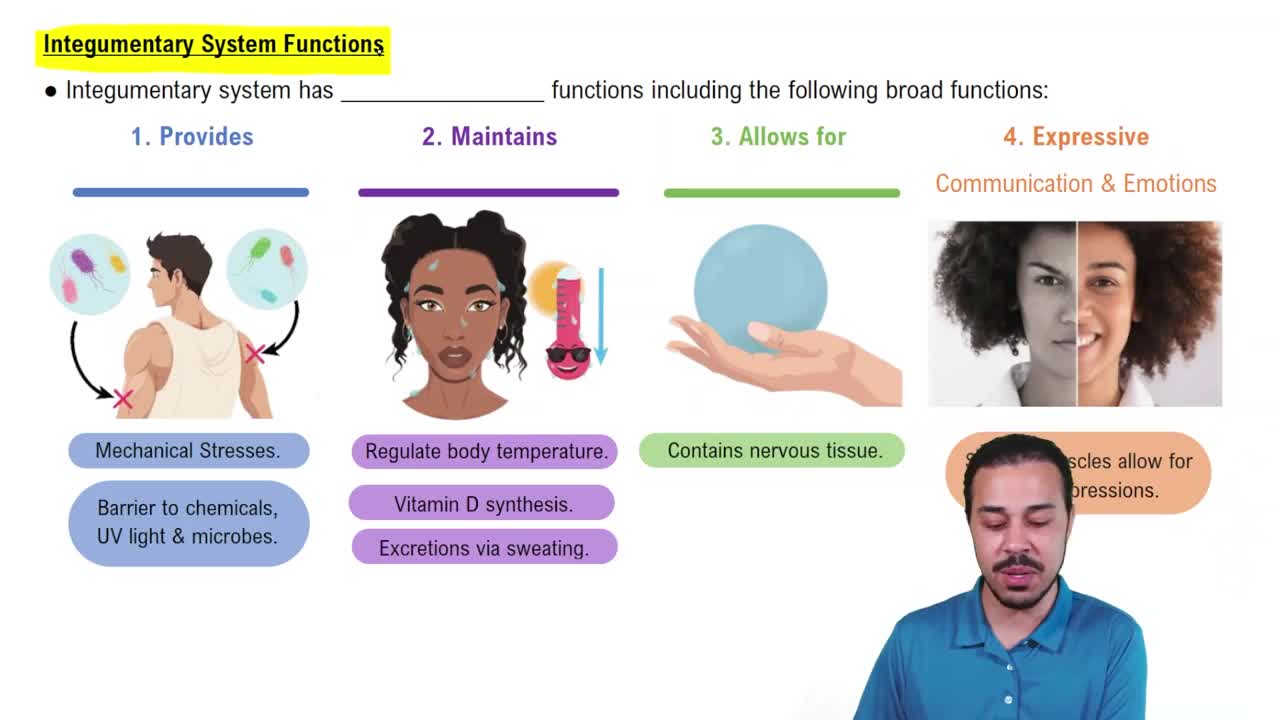
By releasing sweat for evaporative cooling, adjusting blood flow to skin surface, and shivering/constricting vessels to raise temperature.
What are the skin's barrier functions?
Physical, chemical, and biological barrier preventing bacterial invasion, reducing evaporation, and protecting against UV light.
What substances can be absorbed through the skin?
Lipid-soluble substances like vitamins A, D, E, K, oxygen, CO2, acetone, some toxins, and poisons.
What sensations does the skin detect?
Touch, temperature, pressure, vibration, tickling, and some pain.
How does the skin contribute to vitamin D synthesis?
Sunlight activates a precursor in skin; liver and kidneys convert it to calcitriol, essential for calcium absorption.
What are the three major types of skin cancer?
Basal cell carcinoma, squamous cell carcinoma, and melanoma.
 뒤로
 06:54