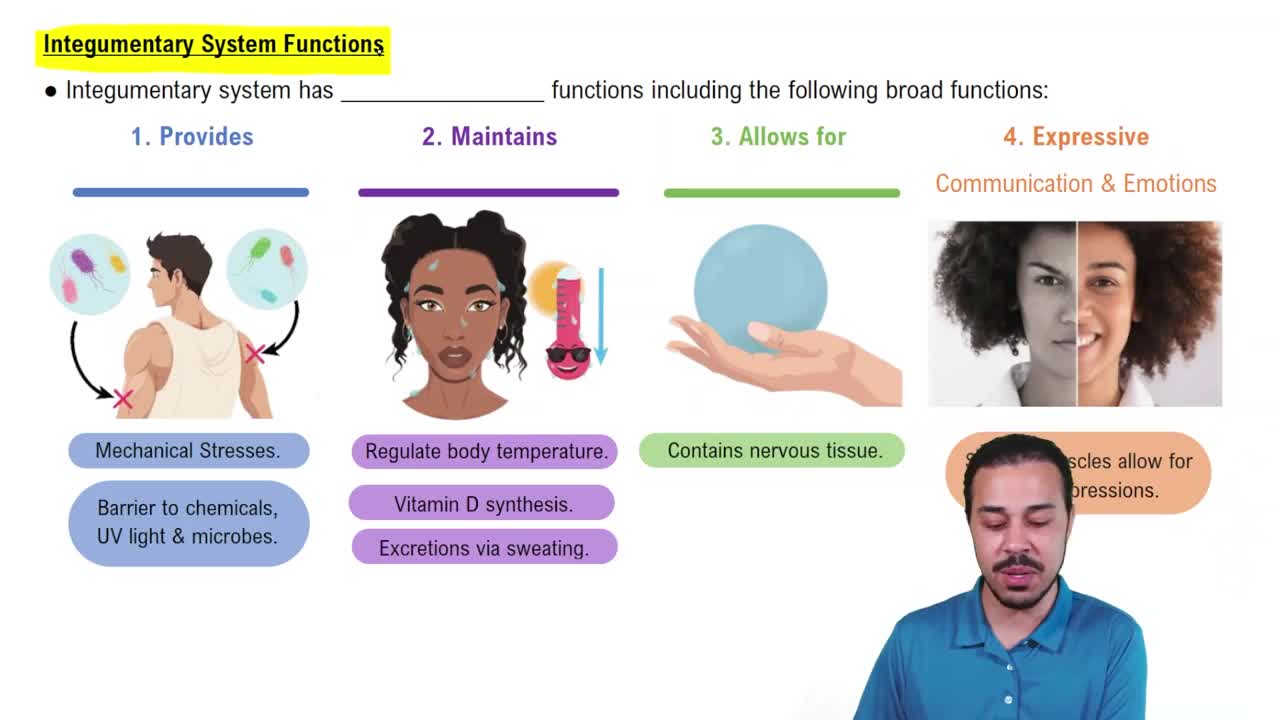
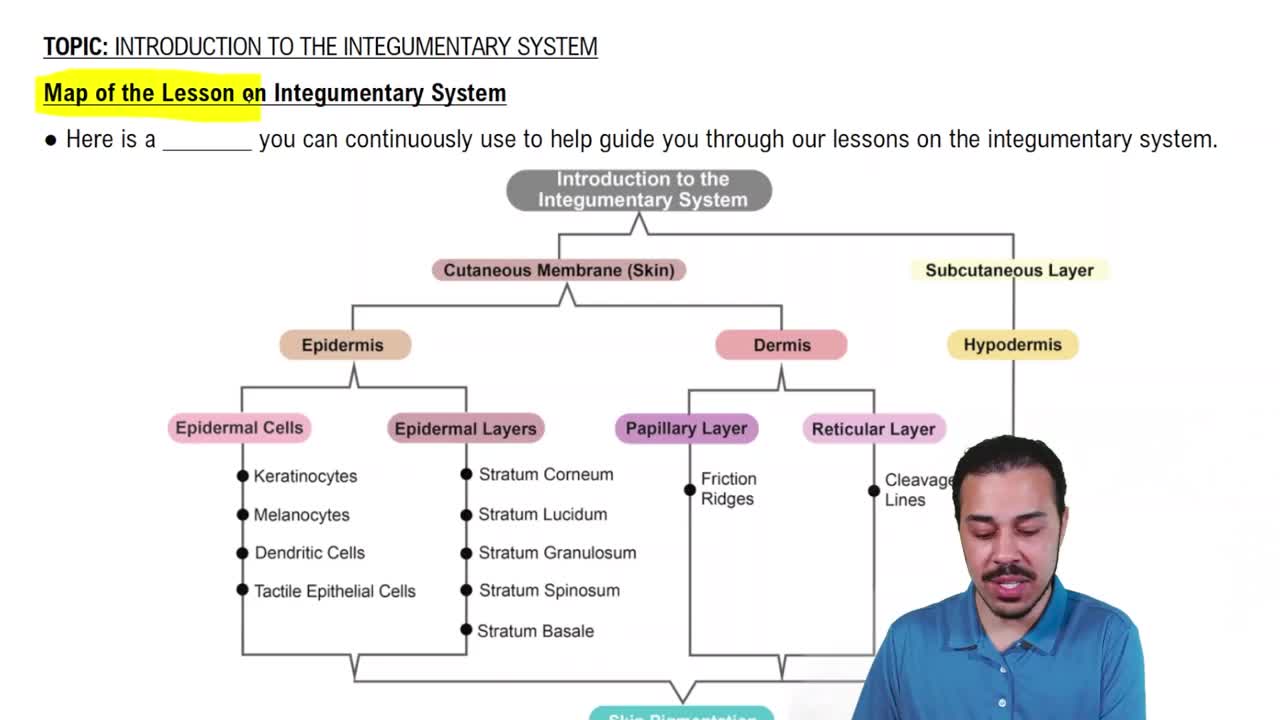
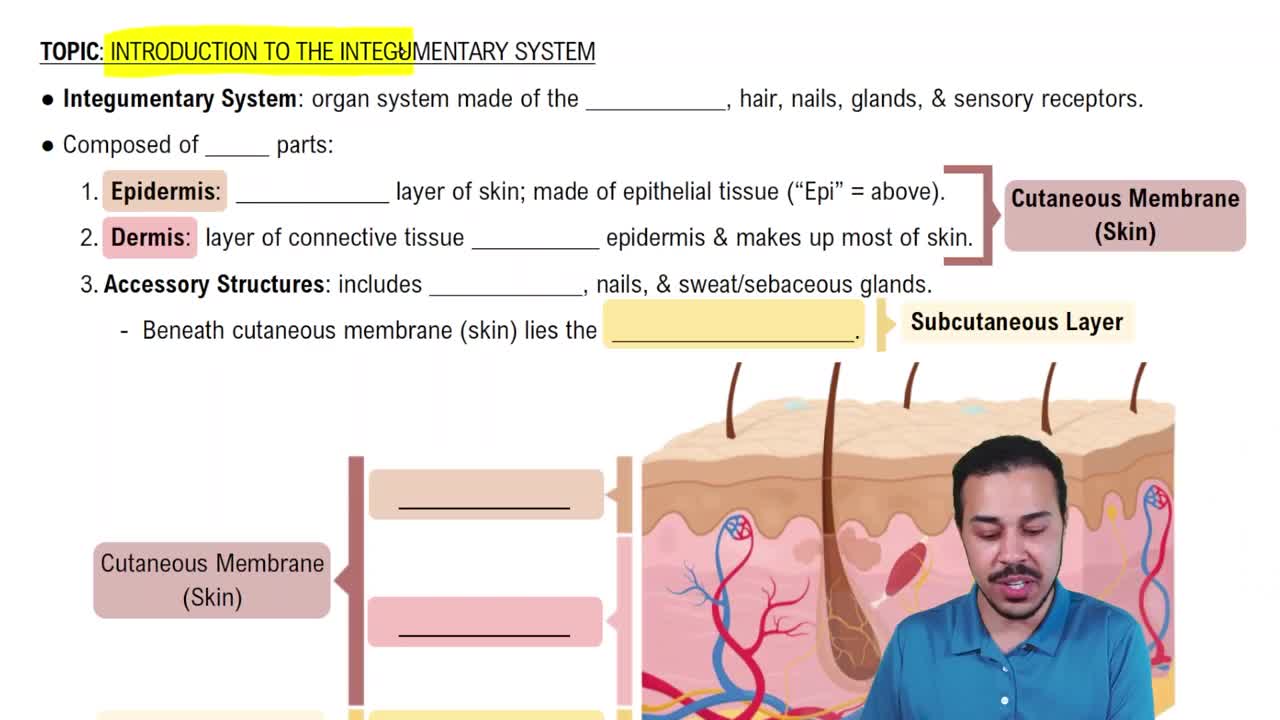
Epidermis (epithelial tissue from ectoderm) and Dermis (connective tissue from mesoderm), with the Hypodermis beneath as subcutaneous fascia and fat.
What is the function of the stratum basale in the epidermis?
It is a single layer of cuboidal/columnar cells containing keratinocytes, stem cells, melanocytes, and Merkel cells, attached to the basement membrane.
What cells produce melanin and where are they located?
Melanocytes located in the basal layer produce melanin pigment, which protects against UV radiation.
What is the role of Langerhans cells in the skin?
They assist in immunity by identifying harmful microbes and presenting antigens, migrating to lymph nodes upon antigen stimulus.
What sensory function do Merkel cells serve?
Located in the basal layer and hair follicles, Merkel cells detect touch stimuli and transmit signals to sensory nerves.
Describe the layers of the epidermis from deepest to most superficial.
What is the function of lamellar bodies in the stratum granulosum?
They are lipid-filled vesicles that provide the skin with water-repellent properties.
What are the two layers of the dermis and their main features?
Papillary layer: loose connective tissue with Meissner's corpuscles for fine touch. Reticular layer: dense connective tissue with sweat glands, hair follicles, and Pacinian corpuscles for deep pressure.
What type of sensory receptors are found in the papillary layer of the dermis?
Meissner's corpuscles, which detect fine touch.
What sensory receptors are located in the reticular layer of the dermis?
Pacinian corpuscles, which detect deep pressure and vibration.
What is the difference between eccrine and apocrine sweat glands?
Eccrine glands produce thin sweat for thermoregulation and open directly onto the skin surface; apocrine glands produce thick sweat, open into hair follicles, and are found in axilla, areola, and genital areas.
How do apocrine sweat glands secrete their product?
By pinching off a portion of the cell containing the secretion (apocrine secretion).
What is the role of sebaceous glands?
They secrete sebum (oil) that lubricates and waterproofs the skin and hair.
What causes skin inflammation after injury?
Release of histamine causes dilation and increased permeability of local capillaries, allowing immune cells to migrate to the area.
What are the main stages of wound healing?
Bleeding, inflammatory phase, proliferative phase (fibroblast proliferation and granulation tissue formation), and remodeling (scar tissue formation).
How does UVA radiation affect the skin?
UVA penetrates the dermis, damages fibroblasts, promotes collagen degradation, causes DNA damage, photoaging, skin cancer, and immune suppression.
What is the primary effect of UVB radiation on the skin?
UVB is absorbed mainly by the epidermis, causing sunburn by damaging DNA in epidermal cells and contributing to skin cancer.
What are skin tension lines and their clinical relevance?
They represent the direction of maximal skin tension due to collagen fiber arrangement; incisions parallel to these lines heal with minimal scarring.
What is the origin of cutaneous squamous cell carcinoma?
It arises from uncontrolled proliferation of keratinocytes in the stratum spinosum.
Why is melanoma considered the most serious skin cancer?
It is highly metastatic and aggressive, originating from melanocytes.
Where do blisters form in the skin and what is the source of the fluid?
Blisters form between epidermal layers or between epidermis and dermis; fluid comes from plasma leaking from dermal capillaries since epidermis lacks capillaries.
 뒤로
 06:54