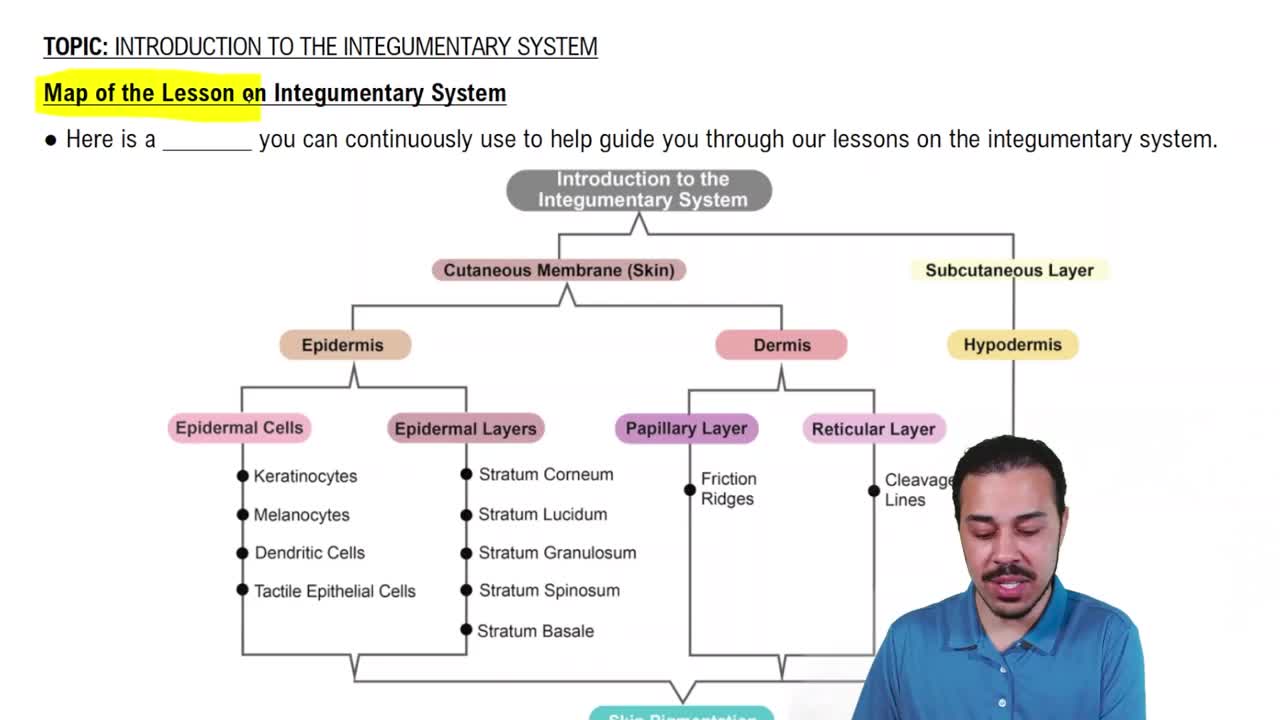
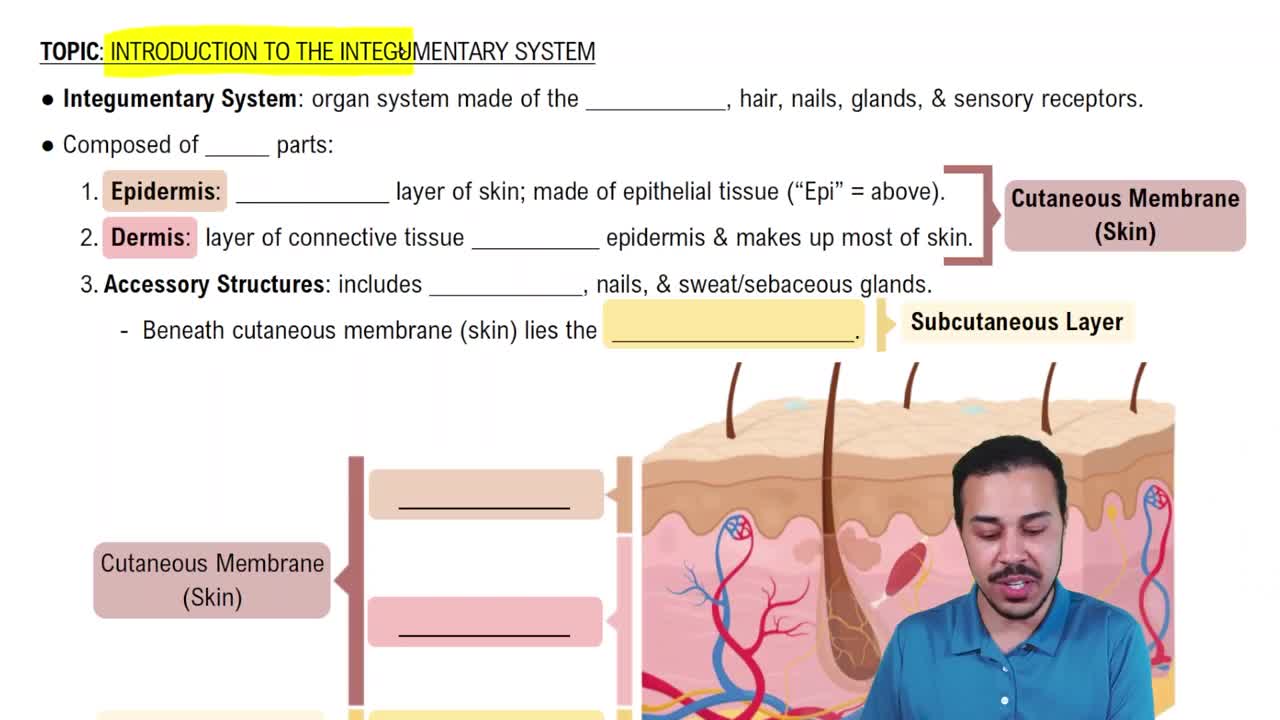
The deepest epidermal layer, consisting of a single row of mitotically active stem cells firmly attached to the dermis.
Describe the stratum granulosum.
4-6 cell layers thick; cells flatten, nuclei disintegrate, keratinization begins, and cells accumulate keratohyaline granules and water-resistant glycolipids.
What is unique about the stratum lucidum?
It is a thin, translucent layer found only in thick skin (palms and soles) consisting of 2-3 rows of clear, flat, dead keratinocytes.
What are the main functions of the stratum corneum?
Protect deeper cells, prevent water loss, protect from abrasion and penetration, and act as a barrier against biological, chemical, and physical assaults.
Fingerlike projections in the papillary layer that contain capillaries, nerve endings, and touch receptors; they form friction ridges for grip and fingerprints.
What pigments contribute to skin color?
Melanin, carotene, and hemoglobin.
What are the functions of hair?
Warn of insects, protect against physical trauma, prevent heat loss, and shield skin from sunlight.
What are the two main types of hair?
Vellus hair (fine, pale body hair) and terminal hair (coarse, long hair found on scalp, eyebrows, and after puberty in axillary and pubic regions).
What are nails composed of and what is their function?
Scale-like modifications of epidermis containing hard keratin; they protect the distal dorsal surface of fingers and toes.
What are the two main types of sweat glands?
Eccrine (merocrine) sweat glands and apocrine sweat glands.
Where are eccrine sweat glands most abundant and what is their function?
Abundant on palms, soles, and forehead; function in thermoregulation by secreting sweat.
What distinguishes apocrine sweat glands from eccrine glands?
Apocrine glands are confined to axillary and anogenital areas, secrete viscous sweat containing fatty substances and proteins, and begin functioning at puberty.
What is the function of sebaceous (oil) glands?
Secrete sebum, an oily substance that softens hair and skin and has bactericidal properties.
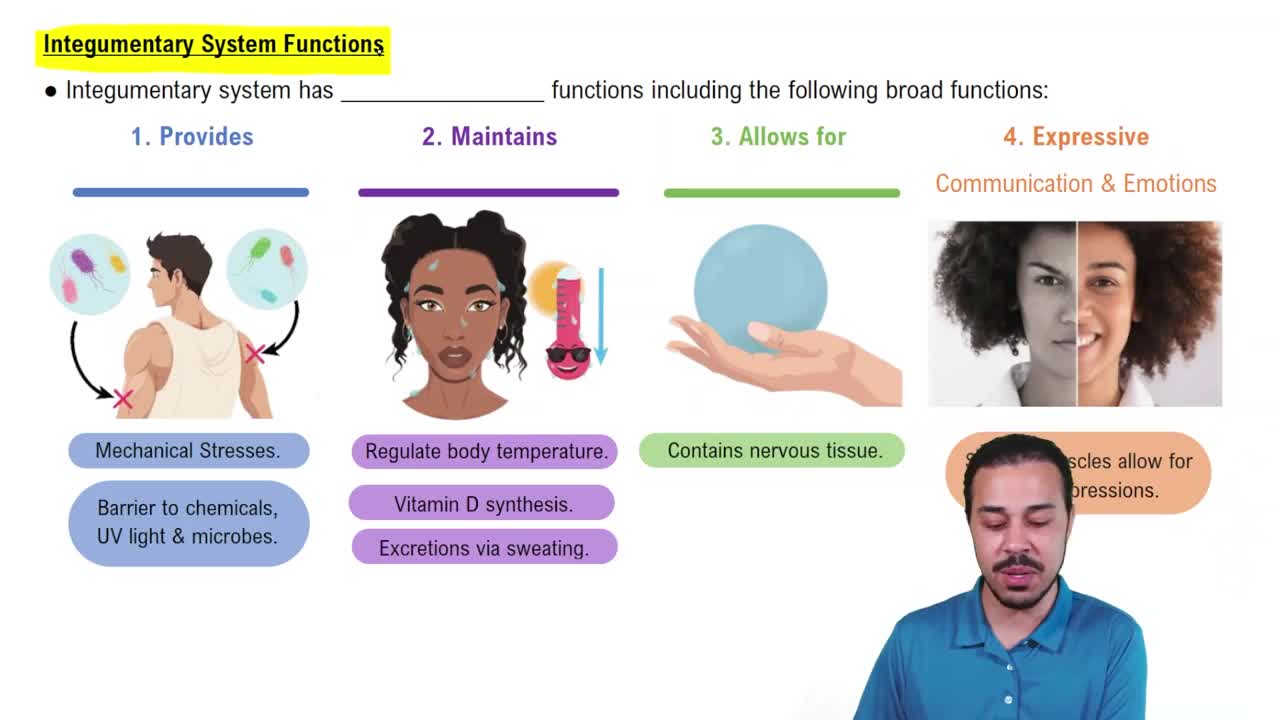
List the main functions of the skin.
Protection, body temperature regulation, cutaneous sensations, metabolic functions, blood reservoir, and excretion of wastes.
What are the three types of barriers the skin provides for protection?
Chemical barrier (sweat, sebum, acid mantle), physical barrier (keratinized cells), and biological barrier (phagocytic cells in epidermis and dermis).
How does the skin regulate body temperature?
Sweat glands secrete sweat that evaporates to cool the body; blood vessels constrict or dilate to regulate heat loss.
What sensory functions does the skin provide?
Contains cutaneous sensory receptors that detect temperature, touch, and pain via free nerve endings and specialized cells.
How does the skin act as a blood reservoir?
It can hold up to 5% of the body's blood volume and constrict vessels to shunt blood to other organs.
What wastes can the skin excrete?
Limited amounts of nitrogenous wastes such as ammonia, urea, and uric acid through sweating.
 뒤로
 06:54