 뒤로
Integumentary System - Anatomy & Physiology
 06:54

이 집합의 용어 (20)
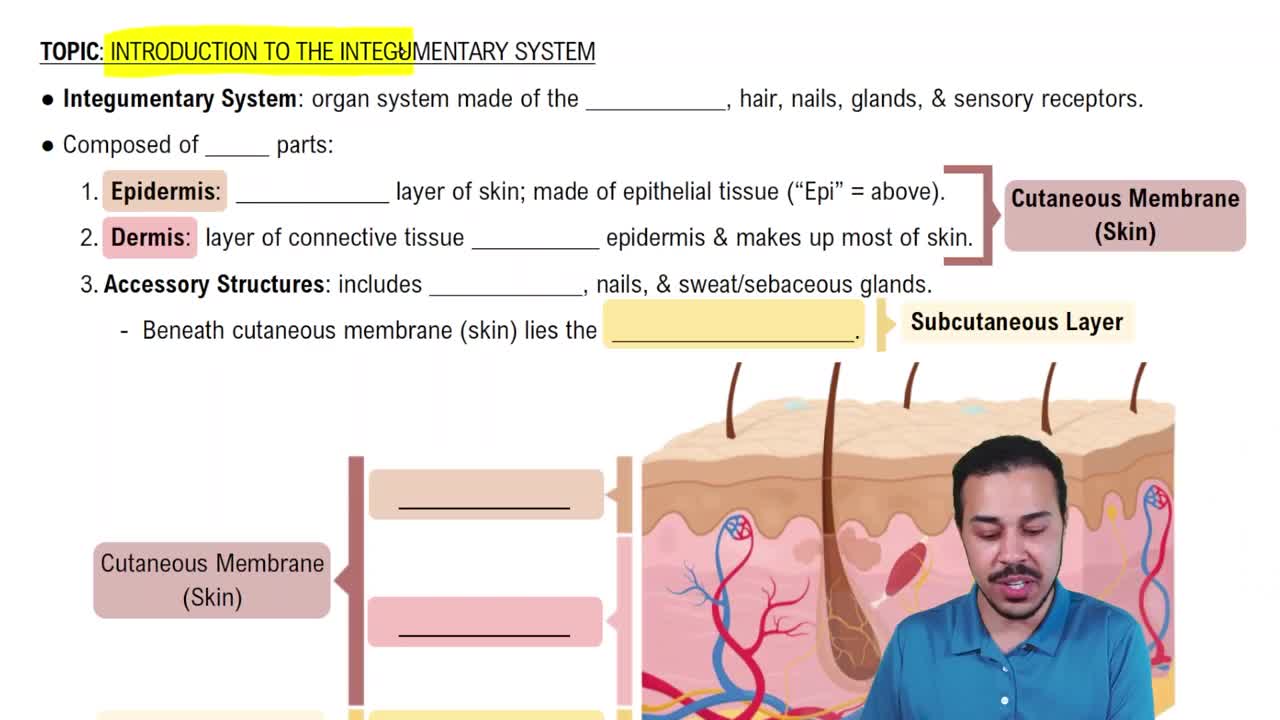
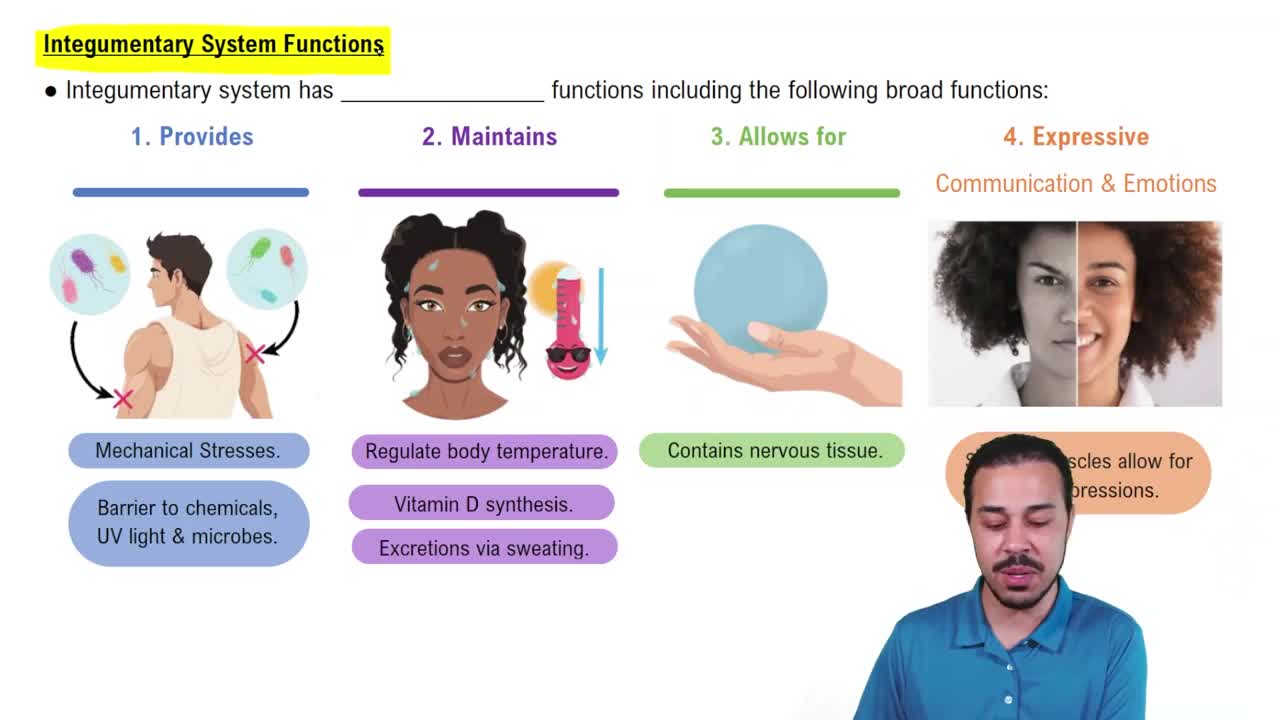
The integumentary system protects the body, regulates temperature, prevents water loss, and provides sensory information.
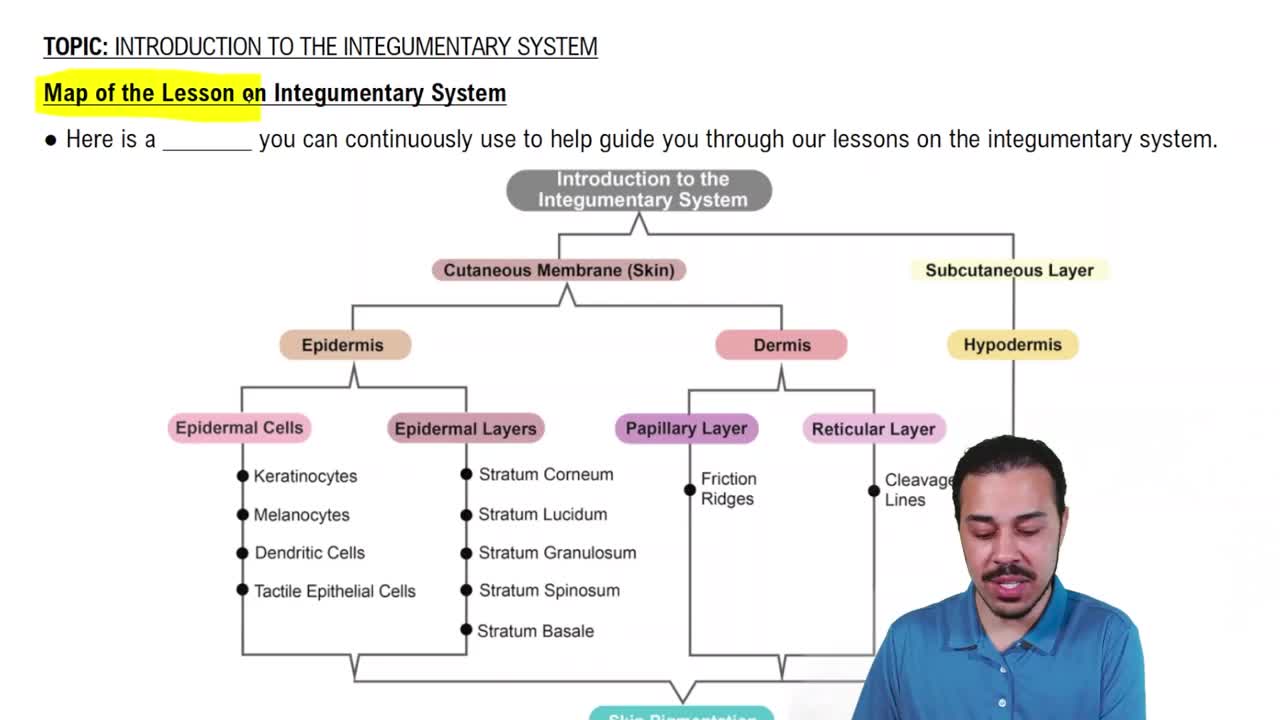
The epidermis, dermis, and hypodermis (subcutaneous layer).
Keratinized stratified squamous epithelium.
Keratin provides strength and waterproofing to the skin.
Melanocytes produce melanin, the pigment that protects against UV radiation.
Langerhans cells act as immune cells that detect pathogens.
The dermis contains blood vessels, nerves, hair follicles, and glands.
The papillary layer (superficial) and the reticular layer (deep).
Dense irregular connective tissue predominates in the dermis.
The hypodermis is mainly composed of loose connective tissue and adipose tissue.
It provides insulation, cushioning, and energy storage.
Eccrine glands (thermoregulation) and apocrine glands (associated with hair follicles).
Sebaceous glands secrete sebum to lubricate and waterproof the skin and hair.
Hair provides protection, sensory input, and helps regulate body temperature.
A hair follicle is a tubular invagination of the epidermis that surrounds the hair root.
Nails protect the distal phalanges and enhance fine touch and manipulation.
Through sweat secretion and blood vessel dilation or constriction in the dermis.
Melanin is the primary pigment determining skin color.
Keratinization is the formation of a tough, protective layer of dead skin cells filled with keratin.
The stratum corneum is the outermost layer of the epidermis.