 뒤로
Integumentary System - Anatomy & Physiology
 06:54

이 집합의 용어 (20)
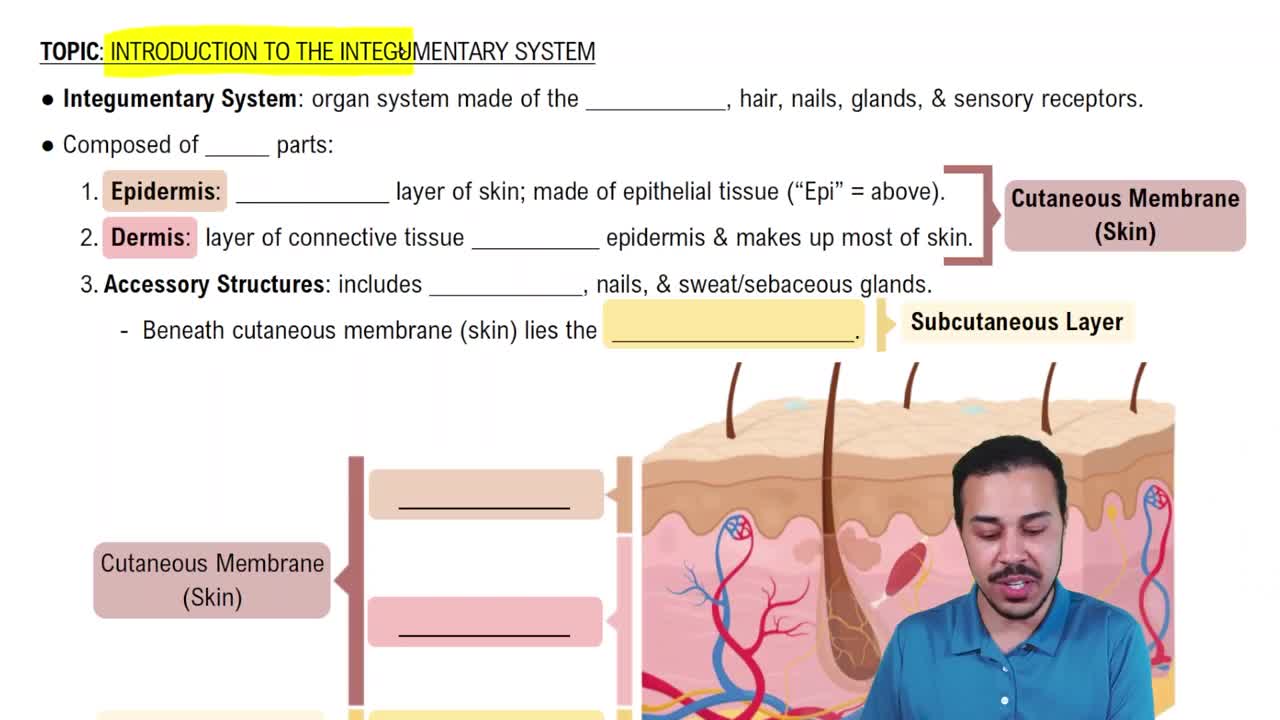
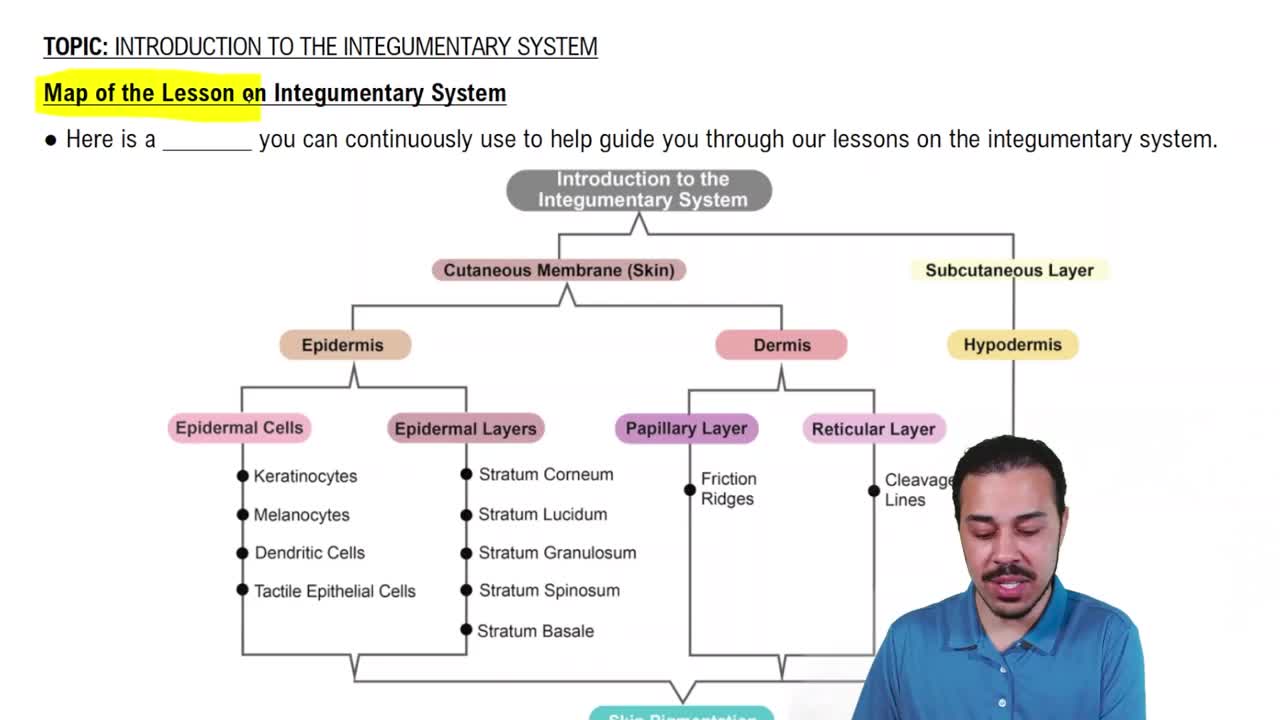
The skin has three main layers: epidermis (keratinized epithelial cells), dermis (dense irregular connective tissue), and hypodermis (loose connective and fatty tissue).
The epidermis is composed of keratinized, stratified squamous epithelium.
Keratinocytes (produce keratin), melanocytes (produce melanin), Merkel cells (touch receptors), and Langerhans cells (immune function, not detailed here).
Keratinocytes produce keratin, a tough protein that prevents water loss and pathogen entry.
Melanocytes produce melanin, which gives skin and hair color and protects against UV radiation damage.
The stratum basale is the deepest epidermal layer, a single layer of cuboidal basal stem cells that produce keratinocytes and attach epidermis to dermis.
The stratum lucidum is a smooth, translucent layer found only in thick skin of palms, soles, and digits, containing densely packed eleidin protein.
The stratum corneum is the outermost layer with 15-30 layers of dead, keratinized cells that prevent microbial penetration and dehydration.
The dermis has two layers: the papillary layer (loose areolar connective tissue with dermal papillae) and the reticular layer (dense irregular connective tissue).
Dermal papillae increase the connection strength between epidermis and dermis and form fingerprints.
Skin color is influenced by melanin, carotene (yellow-orange pigment), and hemoglobin (pinkish color from blood).
Melanin absorbs UV radiation, protecting living epidermal cells from DNA damage.
Lower melanin levels allow the pink color of hemoglobin in blood to show through the more transparent skin.
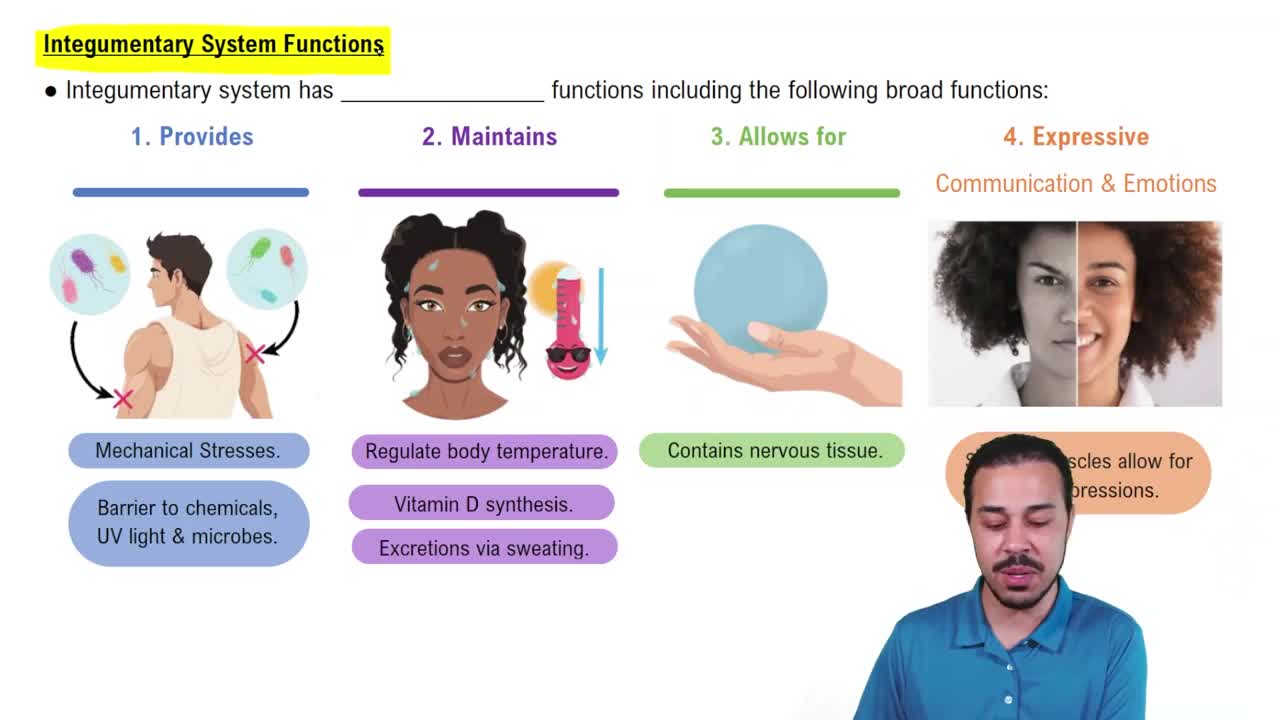
Hair provides protection, sensory input, thermoregulation, and communication.
The arrector pili is a smooth muscle attached to hair follicles that contracts to make hair stand, trapping air for insulation and closing sweat pores.
Eccrine (merocrine) glands produce sweat for thermoregulation; apocrine glands are associated with hair follicles in hairy areas and produce thicker sweat activated at puberty.
They secrete sebum, an oily substance that lubricates and waterproofs skin and hair, and has antibacterial properties.
It regulates body temperature by sweating and by dilating or constricting dermal blood vessels to dissipate or retain heat.
The epidermis synthesizes vitamin D when exposed to UV radiation, essential for calcium and phosphorus absorption for healthy bones.
Burns are classified as first-degree (epidermis only), second-degree (epidermis and part of dermis), third-degree (full thickness of epidermis and dermis), and fourth-degree (extends to muscle and bone).