What are the two main layers of the integumentary system?
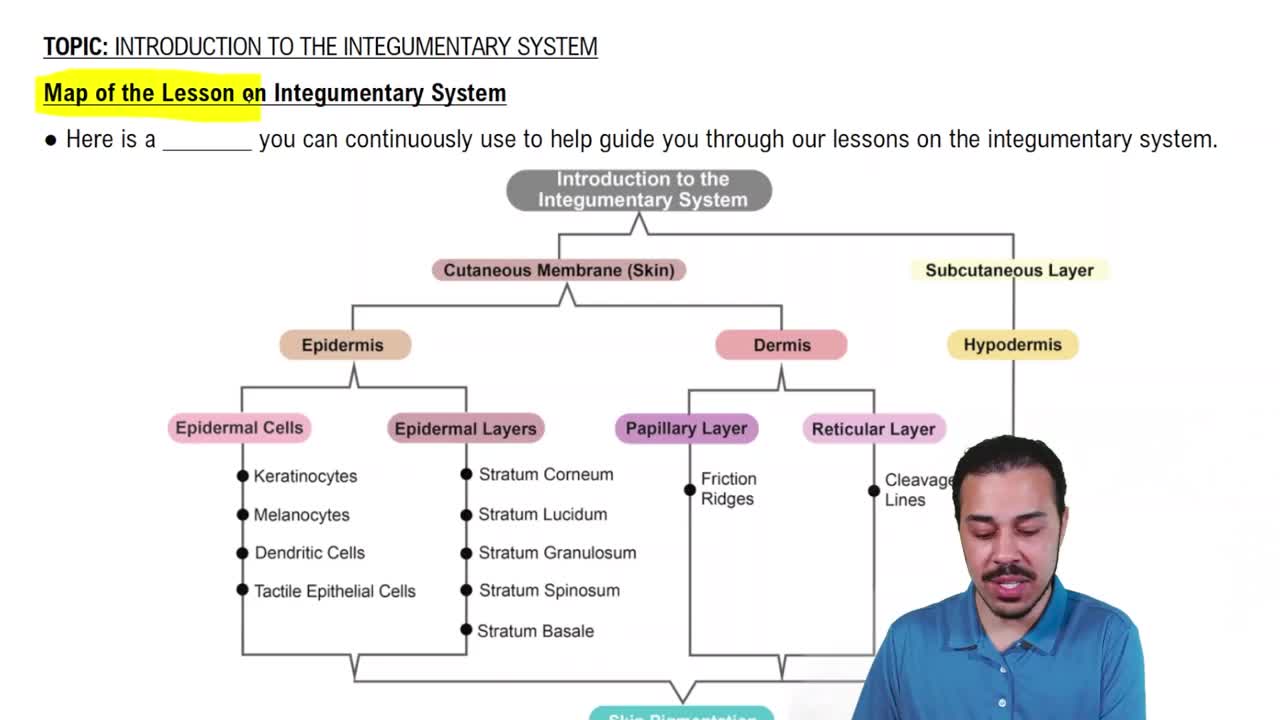
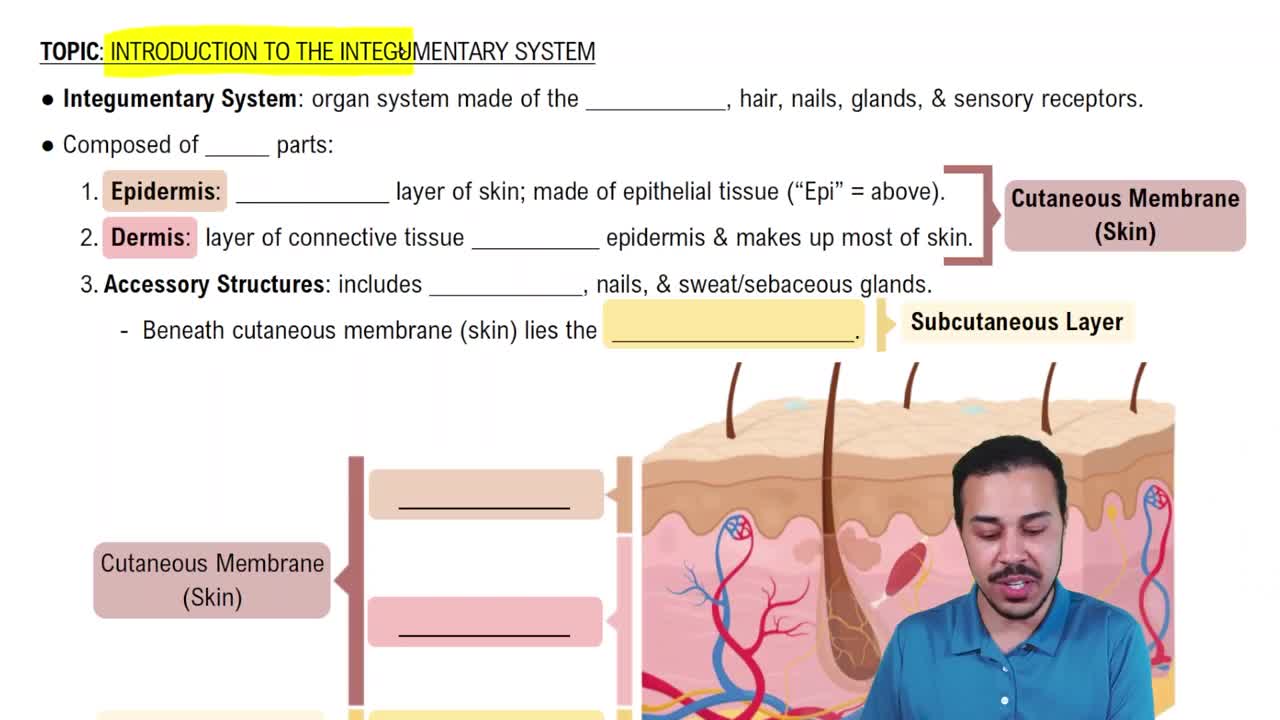
The integument consists of the epidermis and the dermis.
What type of epithelium composes the epidermis?
The epidermis is made of keratinized stratified squamous epithelium.
Name the three main cell types found in the stratum basale.
Keratinocytes (most abundant), melanocytes (produce melanin), and Merkel cells (tactile cells sensitive to touch).
What is the function of Langerhans cells in the stratum spinosum?
Langerhans cells are epidermal dendritic cells that help with immune surveillance.
What key process occurs in the stratum granulosum?
Keratinization becomes prominent; cells produce keratin, flatten, and organelles degenerate, contributing to the water-resistant barrier.
Where is the stratum lucidum found and what is its characteristic?
Found only in thick skin (palms and soles); it is a thin, translucent layer of flattened, pale cells.
Describe the stratum corneum.
The most superficial epidermal layer with 20-30 layers of dead, flattened keratinocytes packed with keratin, providing strength and abrasion resistance.
What are the two layers of the dermis and their connective tissue types?
The papillary layer (loose areolar connective tissue) and the reticular layer (dense irregular connective tissue).
What is the function of dermal papillae?
They interlock with epidermal ridges, contain capillaries to supply nutrients, and house sensory nerve endings.
What is the subcutaneous layer and its functions?
Also called hypodermis; contains areolar and adipose tissue, anchors skin to underlying structures, provides padding, energy storage, and thermal insulation.
What pigments contribute to skin color?
Hemoglobin, melanin (eumelanin and pheomelanin), and carotene.
How does melanin protect the skin?
Melanin absorbs UV radiation, protecting DNA from damage.
What are freckles and nevi?
Freckles are localized areas of increased melanin production; nevi (moles) are localized growths of melanocytes.
What is the role of keratin and lipids in the epidermis?
Keratin provides strength and abrasion resistance; extracellular lipids create a water-resistant barrier.
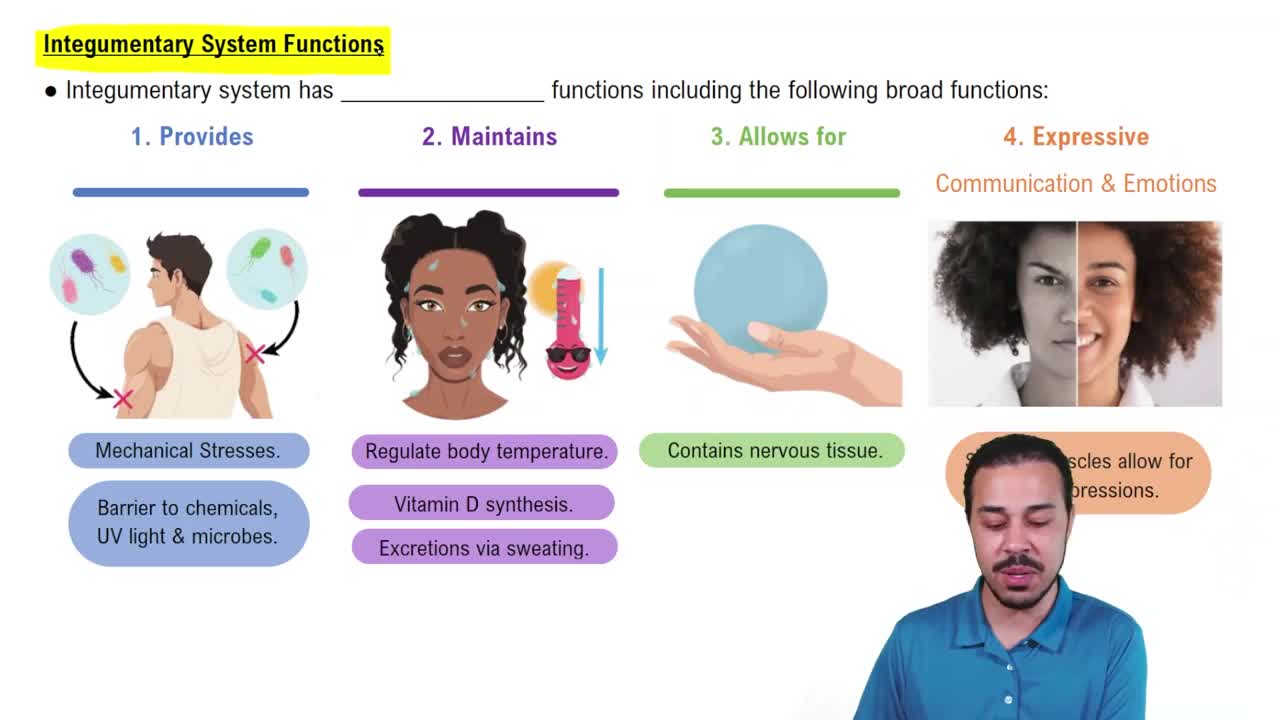
How does the skin regulate body temperature?
Through vasodilation to increase heat loss and vasoconstriction to reduce heat loss, plus sweat secretion for evaporative cooling.
What cells detect touch and pressure in the skin?
Merkel cells, free nerve endings, and Pacinian corpuscles.
What is the function of sebaceous glands?
They secrete sebum to lubricate and protect skin and hair.
Name the three zones of a hair follicle.
Hair bulb (mitotically active cells), root (extends to skin surface), and shaft (extends beyond skin).
What causes piloerection (goosebumps)?
Contraction of arrector pili muscles attached to hair follicles.
What is epidermolysis bullosa?
A rare inherited skin disease causing fragility and blistering due to structural defects between dermis and epidermis.
What are the three main types of skin cancer and their origins?
 뒤로
 06:54