 뒤로
Integumentary System - Anatomy & Physiology
 06:54

이 집합의 용어 (28)
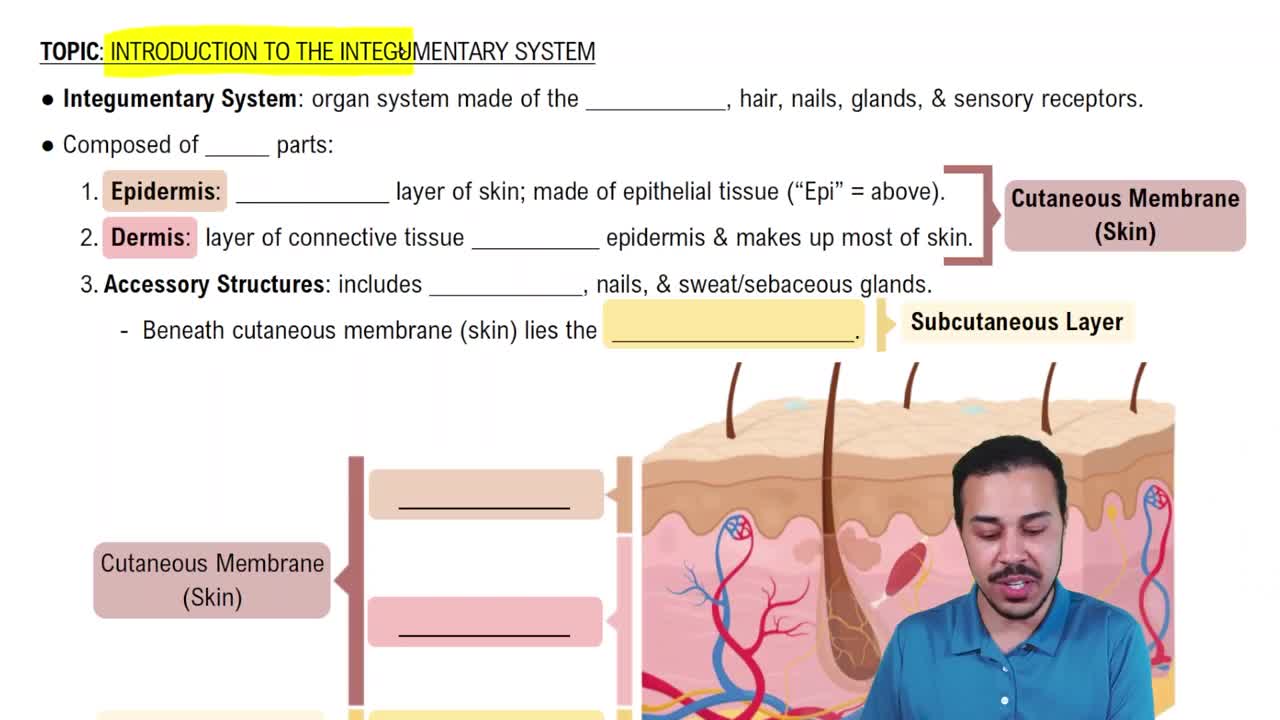
The integumentary system consists of skin, hair, nails, sweat glands, and sebaceous (oil) glands.
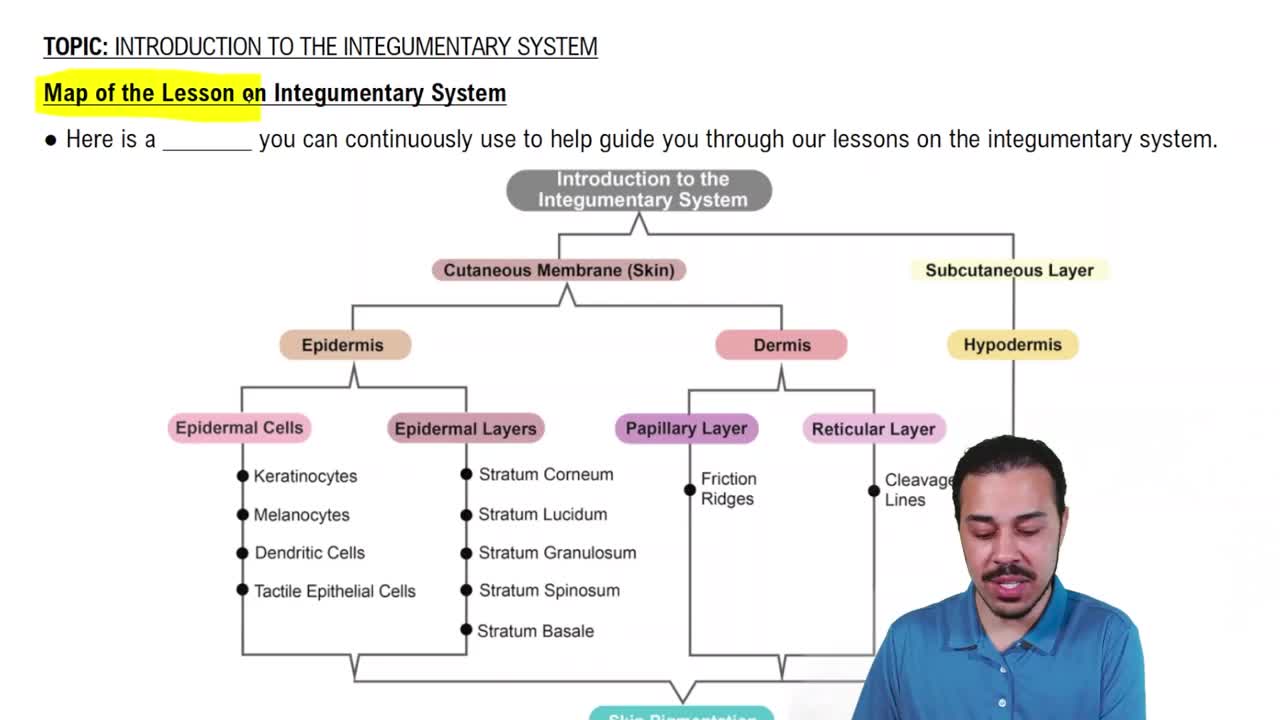
The skin has three layers: epidermis (superficial, epithelial, avascular), dermis (underlying, fibrous connective tissue, vascular), and hypodermis (subcutaneous layer, mostly adipose tissue, not part of skin).
The epidermis is composed mostly of keratinized stratified squamous epithelium.
1. Keratinocytes (produce keratin)
2. Melanocytes (produce melanin)
3. Dendritic (Langerhans) cells (immune cells)
4. Tactile (Merkel) cells (touch receptors)
1. Stratum basale
2. Stratum spinosum
3. Stratum granulosum
4. Stratum lucidum (only in thick skin)
5. Stratum corneum
The stratum basale is the deepest epidermal layer with actively dividing stem cells producing new keratinocytes; it also contains melanocytes.
Several layers thick with keratinocytes connected by desmosomes; cells appear spiky and contain melanosomes and dendritic cells.
Cells flatten, nuclei and organelles disintegrate, keratinization begins, and cells accumulate keratohyaline and lamellar granules to form a water-resistant barrier.
Found only in thick skin; it is a thin, translucent layer of dead keratinocytes above the stratum granulosum.
It consists of 20–30 layers of dead, keratinized cells that protect against abrasion, water loss, and environmental damage.
The dermis has two layers: papillary layer (areolar connective tissue) and reticular layer (dense irregular connective tissue).
Dermal papillae are fingerlike projections in the papillary layer that contain capillaries and sensory receptors, enhancing nutrient delivery and touch sensation.
Cleavage lines are separations between collagen fiber bundles in the reticular dermis; incisions parallel to these lines heal better.
Extreme stretching of skin causes dermal tears, resulting in silvery white scars called striae or stretch marks.
1. Melanin (made by melanocytes)
2. Carotene (yellow-orange pigment)
3. Hemoglobin (pinkish hue from blood)
Melanin protects keratinocyte DNA from UV damage by absorbing harmful radiation.
Hair warns of insects, protects against physical trauma, reduces heat loss, and shields skin from sunlight.
Medulla (central core), cortex (surrounding layers), and cuticle (outer layer of overlapping cells).
A small band of smooth muscle attached to hair follicles that causes hair to stand up, producing goosebumps.
Eccrine (merocrine) glands for thermoregulation and apocrine glands found in axillary and anogenital areas, producing milky sweat.
Sebum is an oily holocrine secretion produced by sebaceous glands that softens hair and skin and has bactericidal properties.
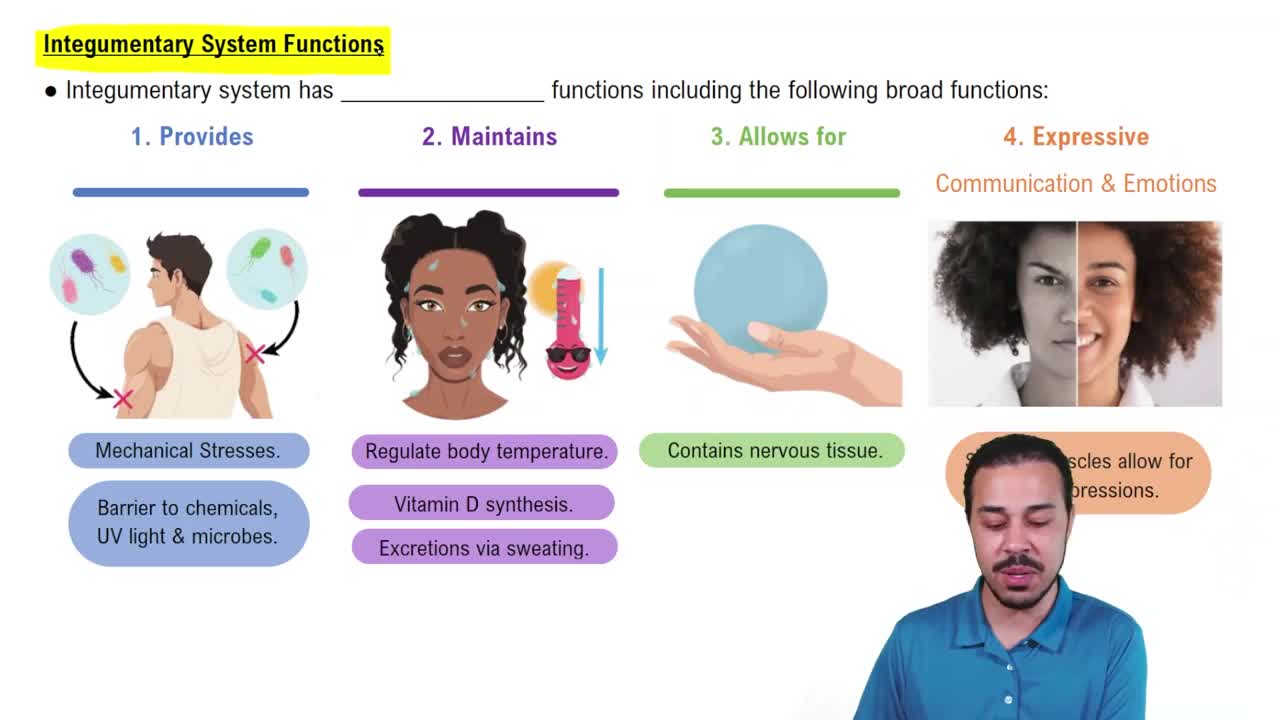
Protection, body temperature regulation, cutaneous sensations, metabolic functions, blood reservoir, and excretion of wastes.
Chemical barrier (acid mantle, antimicrobial secretions), physical barrier (keratinized cells and glycolipids), and biological barrier (immune cells and DNA protection).
By sweating (insensible and sensible perspiration) and adjusting blood flow through dermal vessels.
A: asymmetry, B: border irregularity, C: color variation, D: diameter > 6 mm, E: evolution or change over time.
First-degree: epidermal damage only; second-degree: epidermal and upper dermal damage; third-degree: full thickness skin damage.
The body is divided into 11 areas each representing 9% of total body surface to estimate burn extent and fluid loss.
Slower epidermal replacement, thinner and drier skin, decreased subcutaneous fat and elasticity, increased cancer risk, and hair thinning.