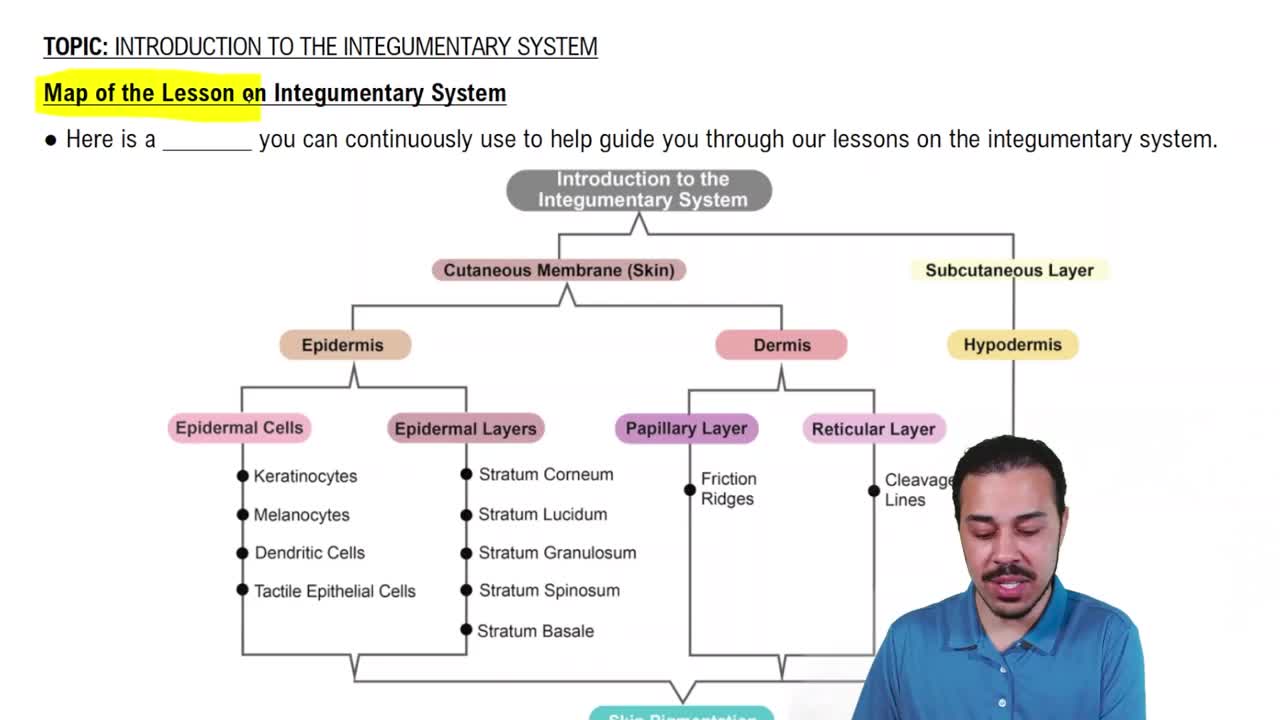
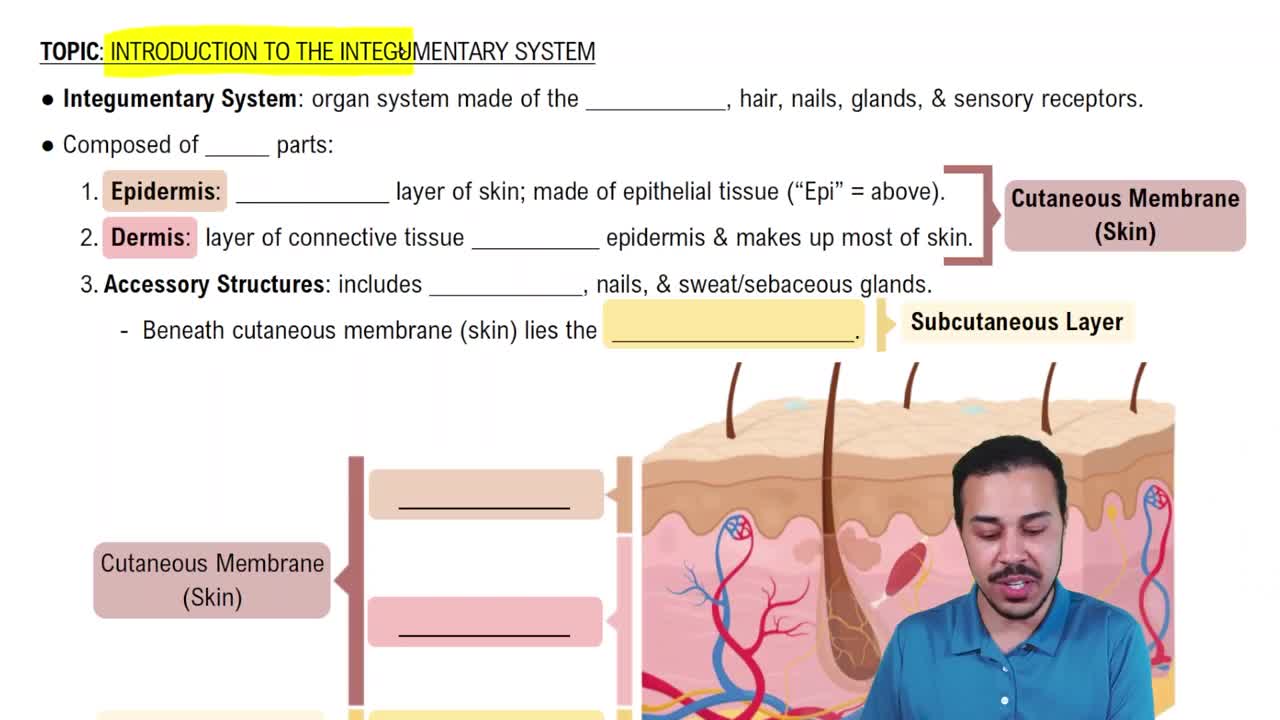
The skin consists of the superficial epidermis made of keratinized stratified squamous epithelium and the deep dermis made of loose and dense irregular connective tissue.
What accessory structures are included in the integumentary system?
Accessory structures include hair, nails, sweat glands, and sebaceous (oil) glands.
What is the hypodermis and is it part of the skin?
The hypodermis, also called superficial fascia or subcutaneous tissue, is not part of the skin. It contains loose connective and adipose tissue and is highly vascularized.
Define cellulite and its influencing factors.
Cellulite is the dimpled skin appearance caused by collagen bands around adipose tissue in the hypodermis. Influenced by genetics, sex, adipose distribution, and age.
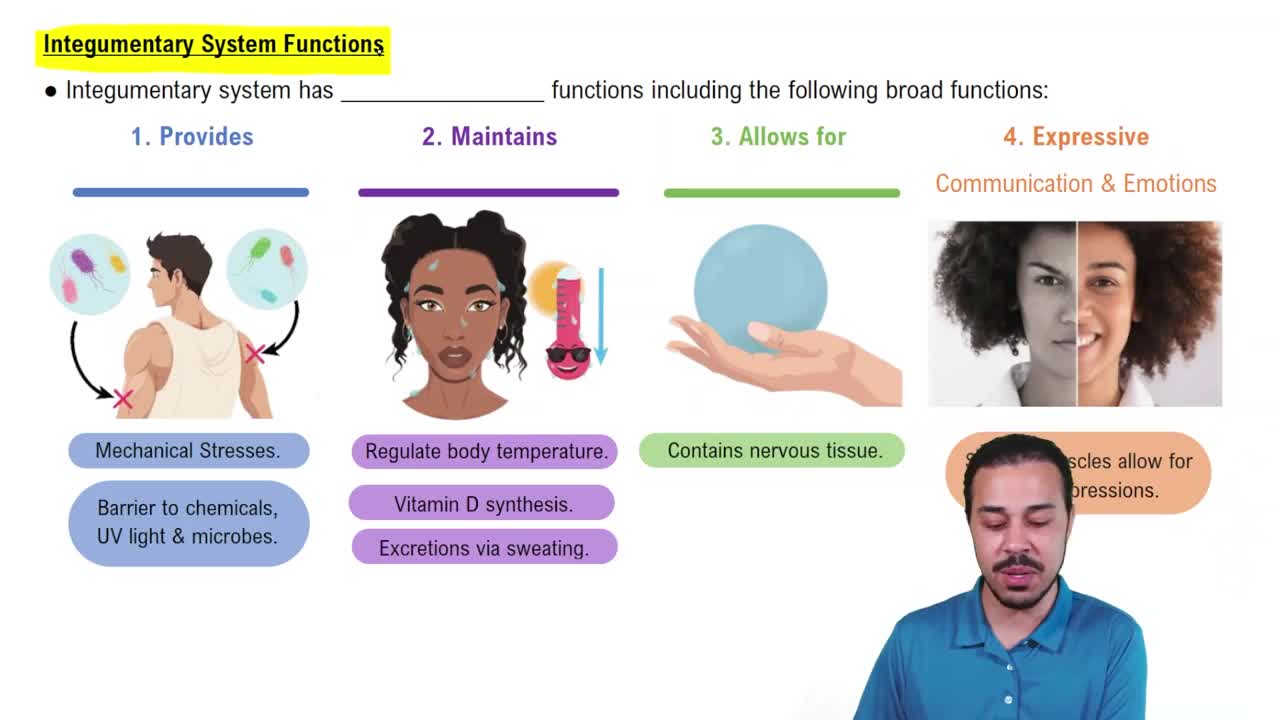
List the primary functions of the integumentary system.
Protection, sensation, thermoregulation, excretion, and synthesis of vitamin D.
How does the skin protect against pathogens?
The skin forms a continuous barrier, contains immune cells that destroy pathogens, and secretes antimicrobial substances creating an acid mantle that deters microbial growth.
Explain the skin's role in thermoregulation when body temperature rises.
Thermoreceptors detect increased temperature, the hypothalamus activates heat-loss center, causing sweating and vasodilation to release heat.
Explain the skin's role in thermoregulation when body temperature falls.
Thermoreceptors detect decreased temperature, the hypothalamus activates heat-promoting center, causing vasoconstriction to conserve heat.
What metabolic wastes are excreted through the skin?
Small amounts of lactic acid and urea are eliminated in sweat.
Describe the process of vitamin D synthesis in the skin.
A precursor in deep epidermal cells converts to cholecalciferol under UV radiation, then modified by liver and kidneys to form calcitriol, the active vitamin D.
What are keratinocytes and their function?
Keratinocytes make up about 95% of epidermal cells, producing keratin which strengthens and protects the skin.
Name the five layers (strata) of the epidermis from deep to superficial.
Stratum basale, stratum spinosum, stratum granulosum, stratum lucidum (only in thick skin), and stratum corneum.
What is the function of the stratum granulosum?
Contains granules that release contents forming a water barrier to prevent water loss.
Where is the stratum lucidum found and what is its characteristic?
Found only in thick skin, it is a narrow, clear layer of dead keratinocytes.
How long does it take for keratinocytes to be sloughed off and replaced?
The keratinocyte life cycle from basal layer to shedding takes approximately 40-50 days.
What are dendritic (Langerhans) cells and their role?
Immune phagocytes found in the stratum spinosum that protect skin and deeper tissues from pathogens.
What are tactile (Merkel) cells and where are they located?
Sensory receptors in the stratum basale that detect light touch and texture, abundant in fingertips, lips, and hair bases.
What distinguishes thick skin from thin skin?
Thick skin has all five epidermal layers including stratum lucidum, a thick stratum corneum, no hair follicles, and many sweat glands; thin skin lacks stratum lucidum and has hair follicles.
What is the papillary layer of the dermis?
The superficial dermis layer made of loose connective tissue with dermal papillae that supply blood to the epidermis and house tactile corpuscles.
What is the reticular layer of the dermis?
The deep dermis layer made of dense irregular connective tissue, containing blood vessels, sweat glands, hair follicles, sebaceous glands, and sensory receptors.
What are dermal papillae and their function?
Projections of the papillary layer that interlock with the epidermis, providing blood supply and housing tactile corpuscles.
What are tension (cleavage) lines and their clinical importance?
Gaps between collagen bundles in the reticular dermis forming lines that guide surgical incisions for better healing and less scarring.
What causes wrinkles in the skin?
Age-related decreases in collagen, elastic fibers, proteoglycans, and adipose tissue, accelerated by UV radiation and smoking.
Name some treatments to reduce the appearance of wrinkles.
Botox to paralyze muscles, fillers to add volume, peels to remove damaged skin layers, and topical creams with limited effectiveness.
 뒤로
 06:54