 뒤로
Integumentary System - Anatomy & Physiology
 06:54

이 집합의 용어 (20)
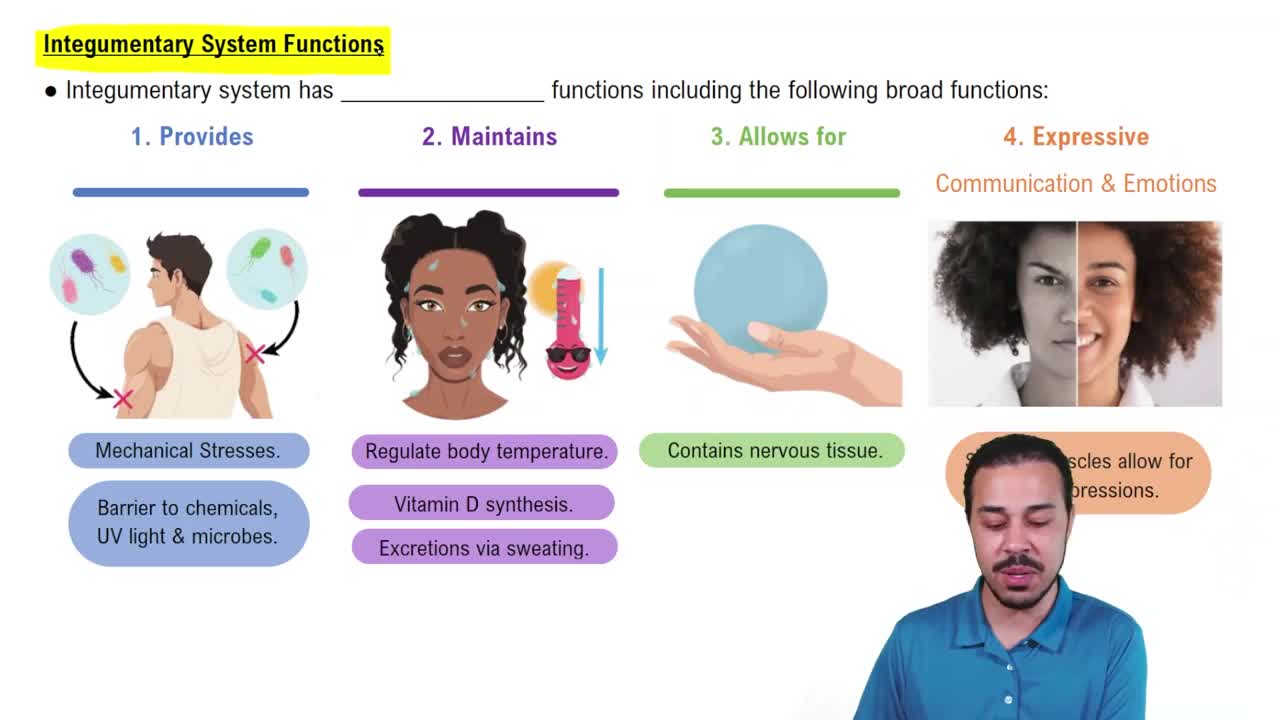
The integumentary system protects the body, regulates temperature, prevents water loss, and provides sensory information.
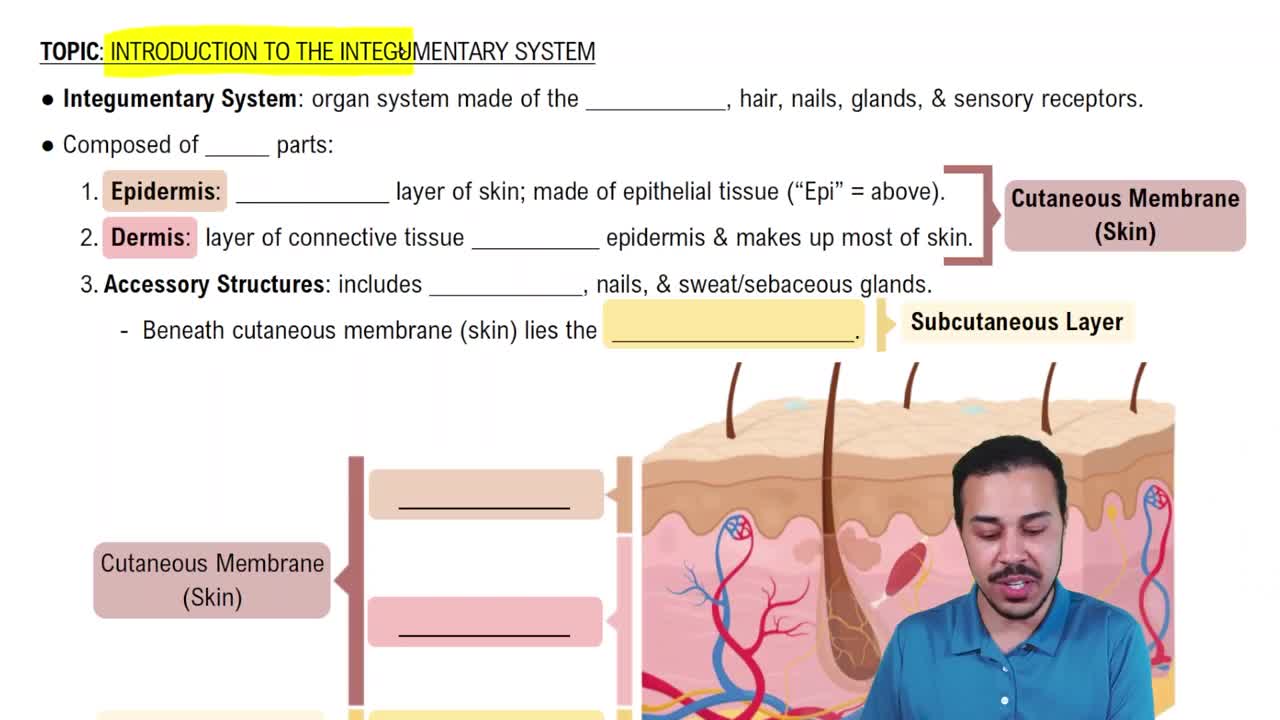
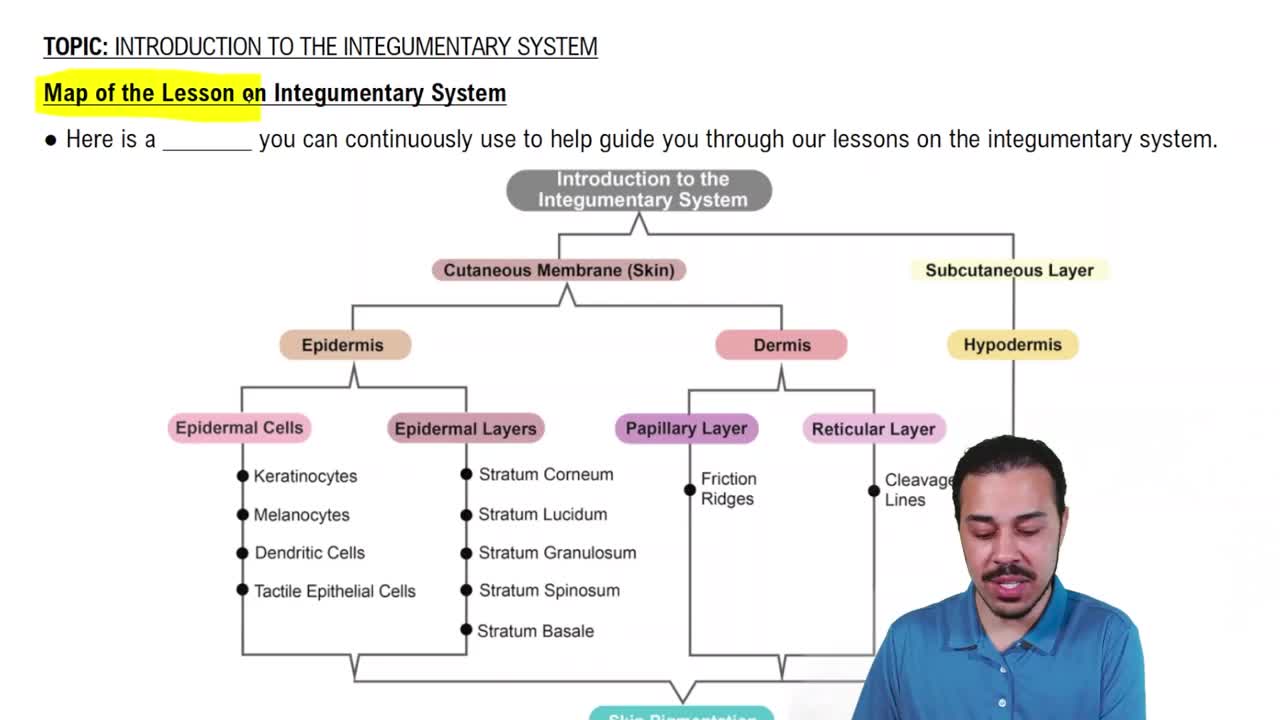
The epidermis, dermis, and hypodermis (subcutaneous layer).
Stratified squamous epithelial tissue.
Keratinocytes produce keratin, a protein that strengthens and waterproofs the skin.
The dermis contains blood vessels, nerves, hair follicles, and glands.
Melanocytes produce melanin, the pigment responsible for skin color and protection against UV radiation.
The hypodermis is composed mainly of adipose tissue and provides insulation and cushioning.
Sweat glands (eccrine and apocrine) and sebaceous (oil) glands.
To produce sweat for thermoregulation and excretion of waste.
They secrete sebum, an oily substance that lubricates and waterproofs the skin and hair.
The stratum corneum is the outermost epidermal layer, providing a tough, protective barrier of dead keratinized cells.
It contains sensory receptors that detect touch, pressure, pain, and temperature.
Hair provides protection, sensory input, and helps regulate body temperature.
It contracts to cause hair to stand up, producing 'goosebumps' and aiding in heat retention.
Through sweat production and blood vessel dilation or constriction in the dermis.
Keratinization is the formation of a layer of dead, protective cells filled with keratin in the epidermis.
Langerhans cells help detect and fight pathogens entering through the skin.
Melanin, produced by melanocytes, determines skin color and protects against UV damage.
It anchors the epidermis to the dermis and acts as a barrier and filter.
UV radiation converts a precursor in the skin to vitamin D, essential for calcium absorption.