 뒤로
Lymphatic System Anatomy & Physiology
 3:32

이 집합의 용어 (19)
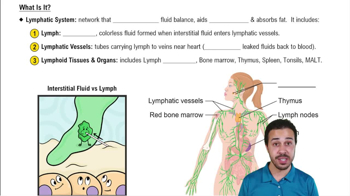
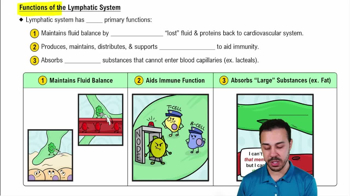
Transport excess interstitial fluid back to the bloodstream, absorb fats from the digestive tract, and filter pathogens through lymph nodes.
Thin-walled vessels with valves, similar to veins, that prevent backflow and ensure one-way lymph transport.
Widely distributed throughout the body, especially in connective tissues and near blood capillaries.
Lymph originates from interstitial fluid that enters lymphatic capillaries.
Movement aided by skeletal muscle contractions, respiratory movements, and valves preventing backflow.
Composed of reticular connective tissue with a large population of lymphocytes and macrophages.
Includes B cells, T cells, and macrophages.
Scattered lymphocytes without a defined structure, found in mucous membranes and organs.
Dense spherical clusters of lymphocytes called lymphoid follicles, often with germinal centers.
Located along lymphatic vessels, especially in the neck, armpits, and groin.
Encapsulated with an outer cortex containing follicles and an inner medulla with cords and sinuses.
Filter lymph to remove pathogens and debris, and provide sites for lymphocyte activation.
Encapsulated organ with white pulp (lymphoid tissue) and red pulp (blood filtration).
Filters blood, removes old red blood cells, and mounts immune responses.
Spleen filters blood; lymph nodes filter lymph. Both contain lymphocytes and macrophages for immune defense.
Mucosa-associated lymphoid tissue is lymphoid tissue in mucous membranes protecting against pathogens.
Includes tonsils, Peyer's patches in the intestines, and appendix lymphoid tissue.
Bi-lobed organ with an outer cortex and inner medulla, containing developing T cells.
Site of T cell maturation and differentiation, essential for adaptive immunity.