 뒤로
Membrane Potential and Ion Gradients in Neurons
 03:35

이 집합의 용어 (20)
Membrane potential is the electrical voltage difference across a cell's plasma membrane caused by the distribution of ions.
An electrical gradient is the difference in charge across a membrane that influences ion movement.
A chemical gradient is the difference in ion concentration across a membrane that drives ions from high to low concentration.
The electrochemical gradient combines both electrical and chemical gradients to determine ion movement across membranes.
A leak channel is an ion channel that is always open, allowing ions to move down their electrochemical gradient.
A ligand-gated channel opens in response to a specific chemical binding to it, allowing ions to pass.
A voltage-gated channel opens or closes in response to changes in membrane potential.
Equilibrium potential is the membrane voltage at which there is no net movement of a specific ion across the membrane.
Resting membrane potential is the stable voltage of a neuron at rest, typically around -70 mV.
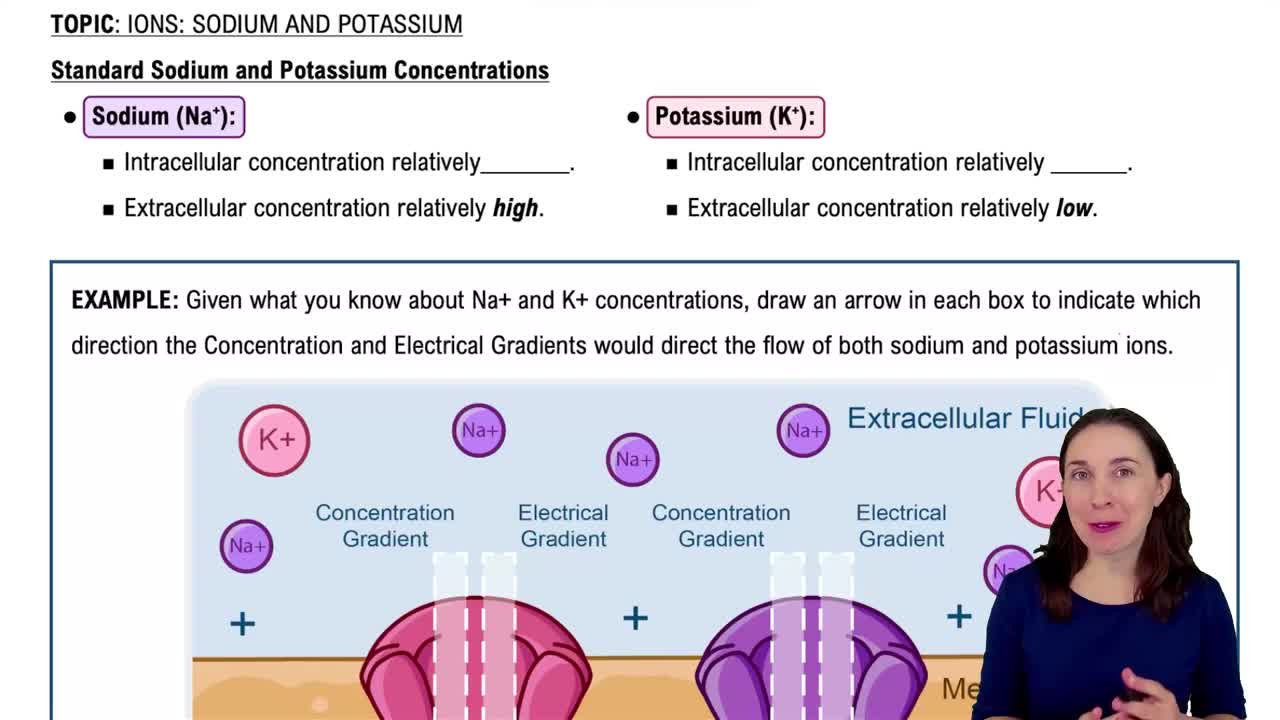
Na+ concentration is higher outside the cell than inside.
K+ concentration is higher inside the cell than outside.
Na+ moves into the cell driven by both its chemical gradient (high outside to low inside) and electrical gradient (negative inside).
K+ tends to move out of the cell down its chemical gradient but is pulled back in by the electrical gradient.
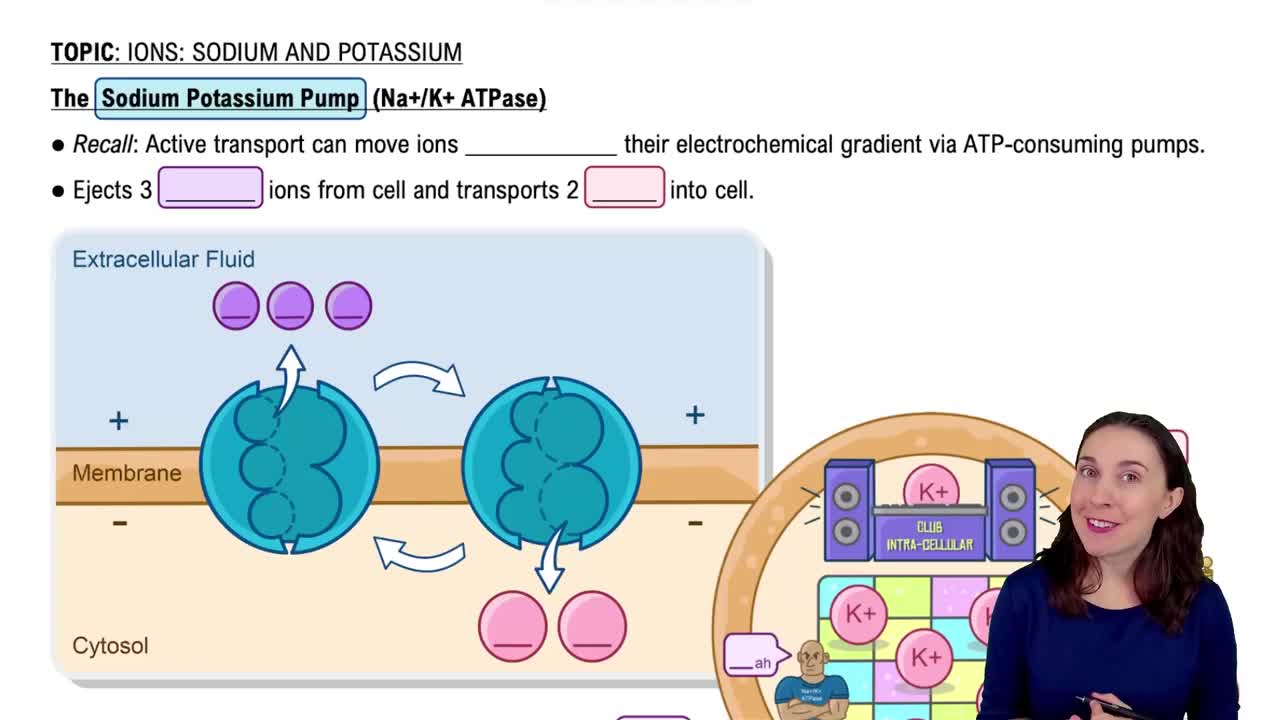
It is maintained mainly by the Na+/K+ pump and leak channels, keeping K+ high inside and Na+ high outside.
The typical resting membrane potential of a neuron is about -70 mV.
Because more positive ions (K+) leak out than Na+ leak in, leaving the inside more negative.
Leak channels allow K+ to move out, contributing to the negative resting membrane potential.
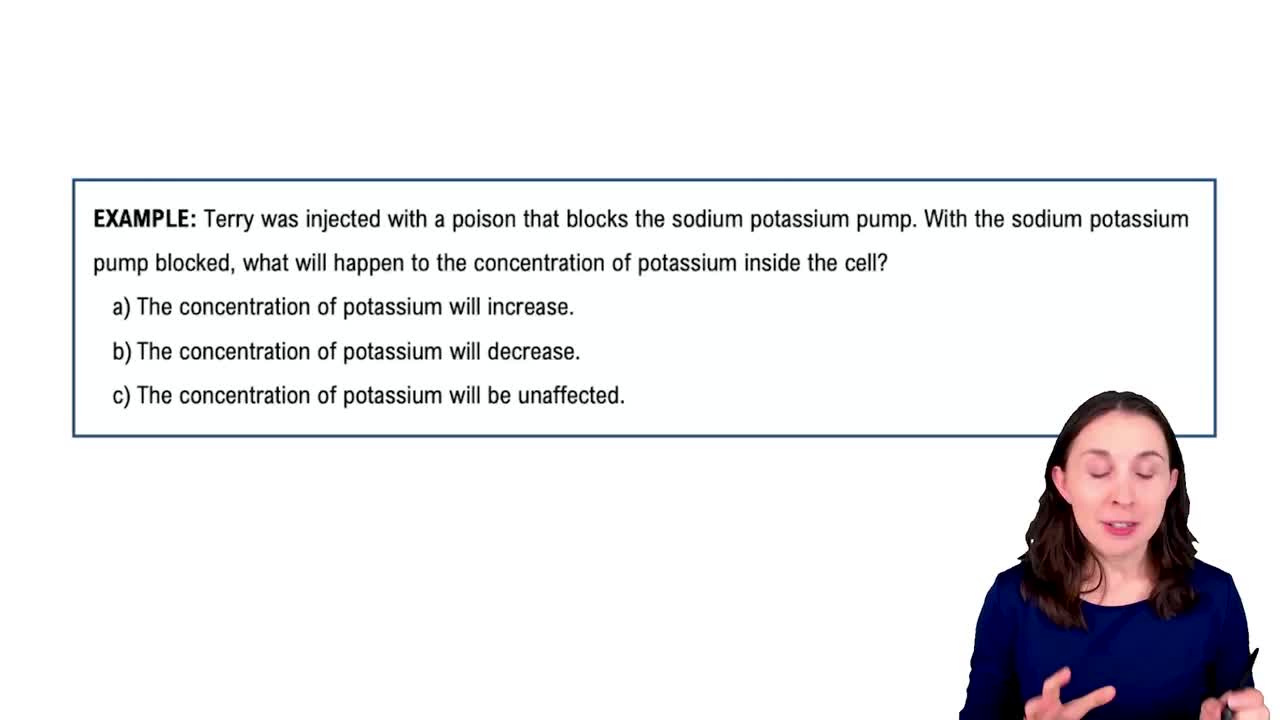
The Na+/K+ pump moves 3 Na+ out and 2 K+ in, using ATP to maintain ion gradients and resting potential.
At equilibrium potential, the electrical and chemical forces on an ion are balanced, so there is no net ion movement.
There is no net movement of Na+ ions across the membrane at this voltage.