The membrane potential is the voltage difference across a cell's plasma membrane caused by unequal ion distribution and selective membrane permeability.
What is resting membrane potential?
The resting membrane potential is the steady voltage of a cell at rest, typically about -70 mV in neurons, with the inside more negative than the outside.
What are the three main types of ion channels?
Leak channels are always open; ligand-gated channels open when a chemical binds; voltage-gated channels open or close in response to membrane potential changes.
How do leak channels function?
Leak channels are always open, allowing ions to move passively down their concentration gradients.
What triggers ligand-gated ion channels to open?
Ligand-gated channels open when a specific chemical messenger (ligand) binds to them.
How do voltage-gated ion channels operate?
Voltage-gated channels open or close in response to changes in the membrane potential.
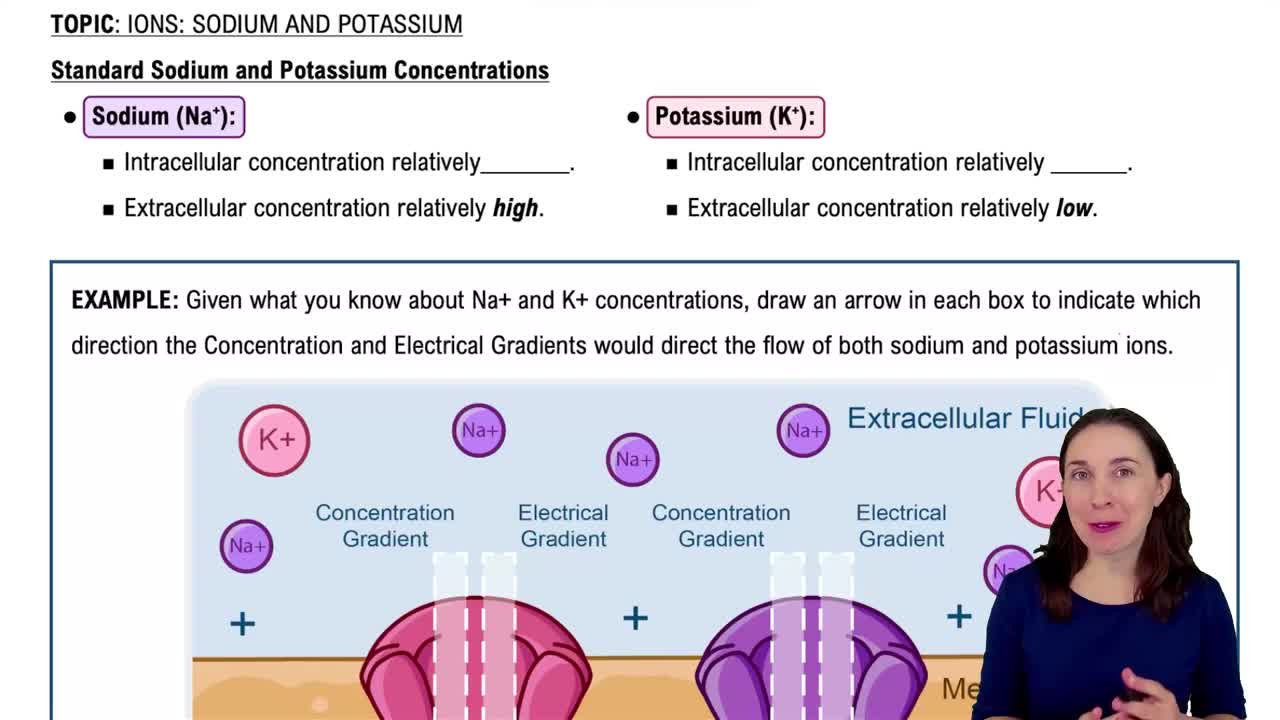
Describe the chemical gradient for Na+ and K+ at rest.
Na+ concentration is higher outside the cell, K+ concentration is higher inside, creating chemical gradients driving Na+ in and K+ out.
What is the electrical gradient across the membrane at rest?
The inside of the cell is negative relative to the outside, attracting positive ions inward.
What is the electrochemical gradient?
The electrochemical gradient combines chemical and electrical gradients to determine ion movement direction and force.
How does the electrochemical gradient affect Na+ at rest?
It strongly favors Na+ entry into the cell due to both chemical and electrical gradients.
How does the electrochemical gradient affect K+ at rest?
It is more balanced; chemical gradient pushes K+ out, electrical gradient pulls K+ in, with a slight tendency to leave the cell.
How does K+ movement contribute to the negative resting membrane potential?
K+ leaks out through channels, leaving behind negative charge inside, making the inside more negative.
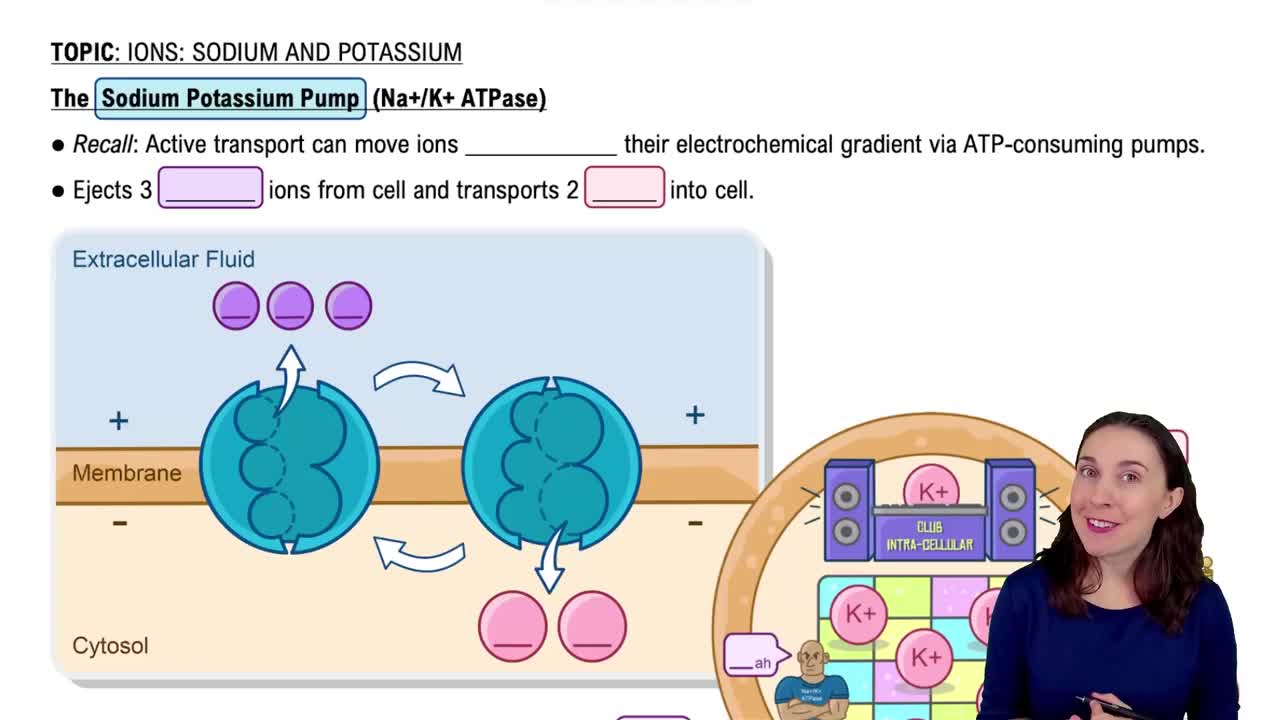
What role does the Na+/K+ ATPase pump play in resting potential?
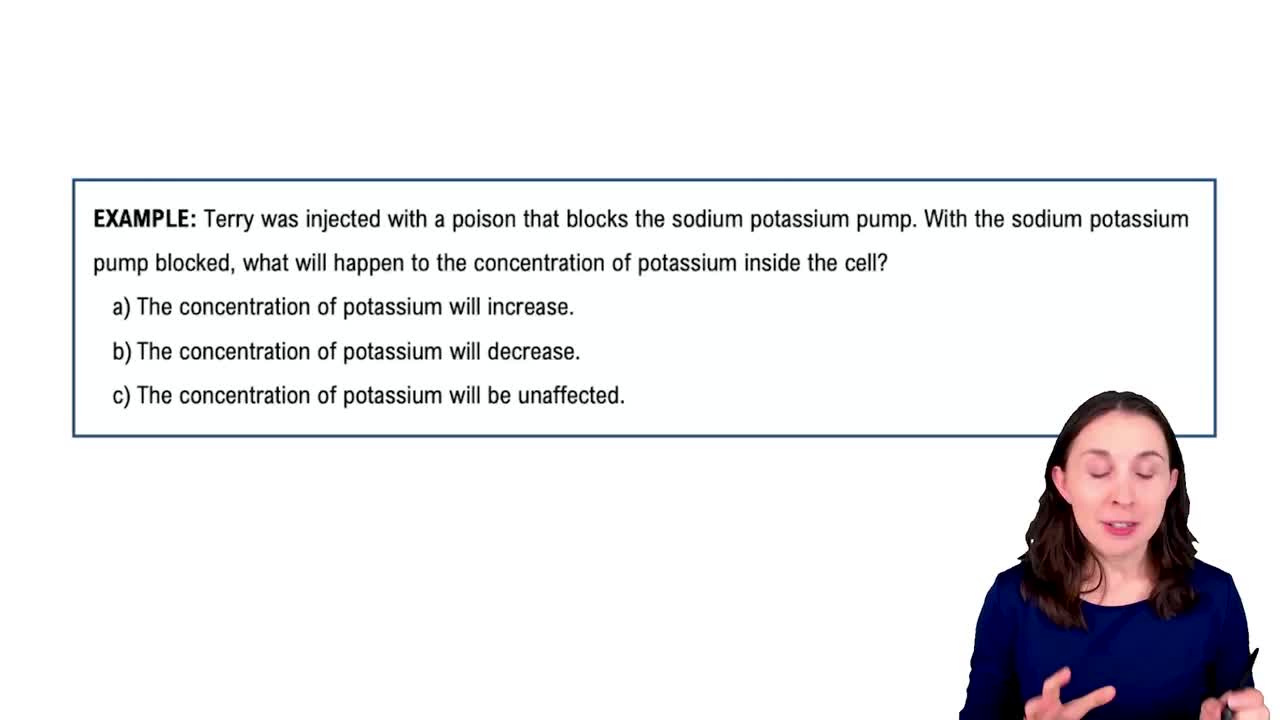
It maintains ion gradients by pumping 3 Na+ out and 2 K+ in, preserving the negative resting membrane potential.
What are the main parts of a neuron?
A neuron has a cell body (soma), dendrites, axon, axon terminals, and a myelin sheath.
Function of the neuron cell body (soma)?
Contains the nucleus and organelles; integrates incoming signals.
Function of dendrites?
Receive signals from other neurons.
Function of the axon?
Conducts action potentials away from the cell body.
Function of axon terminals?
Release neurotransmitters to communicate with other cells.
Role of the myelin sheath?
Insulates the axon and increases the speed of electrical signal conduction.
What is depolarization?
Membrane potential becomes less negative (more positive) than resting potential.
What is repolarization?
Membrane potential returns to resting value after depolarization.
What is hyperpolarization?
Membrane potential becomes more negative than the resting potential.
 뒤로
 03:35