 뒤로
Midterm Review
 1:59

이 집합의 용어 (76)
matter
anything that has mass or occupies space
chemistry
study of matter and it's interactions
protons
positively charged and reside in central core of atom, the atomic nucleus
neutrons
slightly larger than protons, neutral and reside in atomic nucleus
electrons
surround atomic nucleus, tiny, negatively charged
Proton, electron balance
protons and electrons are equal to keep atoms neutral
Bulk of atom
comes from protons and neutrons- 99.5% of mass is in nucleus
Atomic number
characteristic number or protons
4 elements that make of most of body mass
oxygen, carbon, hydrogen and nitrogen
7 main mineral elements in body
sodium, potassium, calcium, chorine, magnesium, phosphorous, sulfur
Mass number
neutrons+protons
Isotopes
atoms with same atomic number but different mass number
Radioisotopes
certain unstable and high energy isotopes release energy in the form of radiation (radioactive decay) to assume a more stable form
Suspension
liquid mixed with solid, solids will settle
ex- blood
Colloids
solids not visible with naked eye
particles are suspended and do not settle
ex- milk
Solutions
solid, liquid, gas mixed with a liquid
component dissolves
water is most important solvent
ex- glucose and water
Concentration
amount of solute present
Chemical bond
an energy relationship between atoms (attractive forces)
compound
2 or more atoms of different elements bonded, called molecules of a compound
macromolecules
large compounds composed of many atoms
valence shell
outermost shell ( electron ring)
valence electrons
electrons in outermost electron ring (valence shell)
octet rule
atom is most stable when it has 8 electrons in valence shell (dont forget about duet rule though)
ionic bond
electrons are transferred between a metal and a nonmetal (exception is hydrogen)
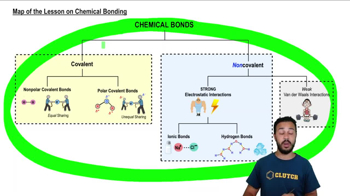
Covalent bond
sharing electrons between two or more nonmetals (much more stable than ionic)
nonpolar covalent bond
two nonmetals in a molecule have same electronegativity and tug on electrons with the same force until electrons are shared equally
polar covalent bonds
nonmetals of different electronegativities pull on electrons and the nonmetal that is more electronegative "wins" but only partially
winning atom isn't strong enough to completely take the electrons, they are just shared unequally
dipole
two opposite poles- polar covalent bonds
one side is slightly negative
one side is slightly positive
potential and kinetic energy
potential- stored energy
kinetic- energy in motion
forms of energy in body
chemical energy
electrical energy
mechanical energy
they may all be potential or kinetic
endergonic reaction
require chemical, electrical or mechanical energy from another source, produces more energy than reactants because energy was invested
exergonic reaction
reactants have more energy than product, excess energy stored in reactants released during reaction
reactants become more stable when energy is released
catabolic reaction
also called decomposition breakdown
larger substance breaks down (required to break down foods, break down old or damaged cells, defend body against invading organisms)
AB-> A+B
exchange reactions
one or more atoms from reaction are exchanged for another, bonds are broken and formed
AB+CD-> AD+BC
redox reaction
electrons are exchanged instead of atoms
reactants that lose electrons = oxidized
reaction that gains electrons= reduced
generally exergonic and release lots of energy
Anabolic reaction
reactions that create new chemical bonds (synthesis reactions)
A+B-> AB
energy that chemical reactions require to overcome repulsion of atoms electrons
activation energy
factors that increase rate of reaction by reducing activation energy or increasing chance of strong collision
concentration
temp
properties of reactants (size/state)
presence/absence of catalyst ( substance that lowers activation energy)
Enzymes
macromolecules
speed up reactions by lowering activation energy
specific to substrates
do not alter chem reaction
are not altered in reaction
"induced fit" mechanism
Proton donors
acids
Hydrogen ion have one lone proton in nucleus
Hydrogen Ion receptor
base (alkali)
Buffers
keep pH in check
consist of weak acid and corresponding anion
major buffer in body- carbonic acid-bicarbonate ion buffer system
acidosis
blood pH falls below 7.35
alkalosis
loss of hydrogen ions, causes blood pH to rise above 7.45
salt
any metal cation and nonmetal anion held together by ionic bonds
electrolytes
salt (ionic compound) dissolve in water, resulting cations and anion in solution are electrolytes
hydrocarbon
only contain hydrogen and carbon and can exist in a chain or a ring
carbon-hydrogen backbone forms basis for all organic compounds
monomer
single subunits that can combine to build larger structures
polymers
many monomers linked together
dehydration synthesis
2 monomers link by covalent bond to form polymers (anabolic reaction)
products are polymer compound and molecule of water
hydrolisis
molecule of water added to polymer, atoms in water molecule split, covalent bond between monomers are broken
monomer of carbohydrate
monosaccharide
carbohydrates
made of carbon hydrogen and oxygen
polar and hydrophilic
main role if fuel via catabolic and redox reactions freeing chemical energy stored in carbs, which is then used to drive synthesis of nucleotide adenosine triphosphate
isomer
same molecular formula but dif structure
lipids
contain carbon, hydrogen and oxygen
non polar and hydrophobic
lipid monomer
fatty acid
hydrocarbon chain bonded to carboxylic acid
saturated fatty acid
no double bond between carbons, carbons become saturated with hydrogen ions
solid at room temp
monounsaturated fatty acids
one double bond between carbons which causes chain to bend
liquid at room temp
polyunsaturated fat
two or more double bonds between carbon
liquid at room temp
triglycerides
fatty acids do not package into long chains, they are stored by linking 3 fatty acids via dehydration synthesis to a modified 3-carbon sugar called glycerol
produces triglyceride which are stored in fat cells
phospholipid
similar to triglyceride
in place of third fatty acid we find a phosphate group (4 O and 1 P atom)
head is polar and hydrophilic, tail is nonpolar and hydrophobic
steroids
class of lipids
4-ring hydrocarbon structure
cholesterol forms basis for other steroids
protein functions
enzymes
structural roles
body's defense
cell-cell communication
muscle contraction
oxidized as fuel
monomer of protein
amino acid
amino acid
each type of protein made up of combo of 21 dif amino acids
made of carbon, hydrogen, oxygen and nitrogen
R group makes it unique
peptide
amino acids linked by dehydration synthesis
peptide bond
two amino acids joined by polar covalent bond
fibrous proteins
long protein strand composed on nonpolar amino acids
globular proteins
polypeptide chain assembled` into "globe" and are polar
first 2 levels of protein structure
primary- amino acid sequence of its polypeptide
secondary- folds of polypeptide structure stabilized by H bonds between amino acids (alpha helix or beta pleated sheet)
last 2 levels of proteins structure
tertiary- final 3-D shape assumed, stabilized by H bonds, covalent bonds. Interactions between R groups. ( nearly the same to secondary )
quaternary- manner in which polypeptide chains assemble (each chain has its own 1-3 structure tho)
Protein denatruation
process that destroys proteins shape
heat
pH changes
chemicals
monomers of genetic code
nucleotides
nucleic acids (genetic code polymers) are not oxidized into fuel but nucleotides play a key role in energy systems (Nucleotide adenosine triphosphate)
nucletoide structure
nitrogenous base
5-carbon (pentose) sugar
phosphate group
ATP synthesis
synthesized by adding 3rd phosphate to ADP
highly endergonic due to neg charge in phosphate groups
polymers of nucleotides
nucleic acid
linked by dehydration synthesis