Skip to main content
Anatomy & Physiology
나의 코스
배우기
시험 준비
AI 튜터
학습 가이드
교과서적 해결책
플래시카드
탐험해 보세요
앱을 사용해 보세요
나의 코스
배우기
시험 준비
AI 튜터
학습 가이드
교과서적 해결책
플래시카드
탐험해 보세요
앱을 사용해 보세요
뒤로
Respiratory System Structures and Functions
카드를 뒤집기 위해 탭할 수 있습니다.
Trachea
카드를 뒤집기 위해 탭할 수 있습니다.
👆
Trachea
A tube that connects the larynx to the bronchi, allowing air passage to the lungs.
진행 상황 추적
컨트롤 버튼이 '내비게이션' 모드로 변경되었습니다.
1/19
추천 영상
VideoThumbView.guidedCourse
4:28
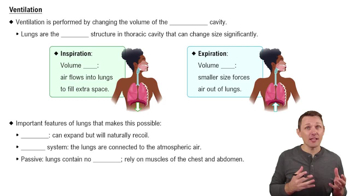
Ventilation
8385
views
195
rank
1
comments
VideoThumbView.guidedCourse
5:55
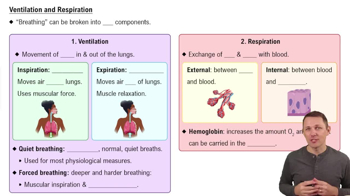
Ventilation and Respiration
12348
views
367
rank
1
comments
VideoThumbView.guidedCourse
1:37
Introduction to Lung Physiology Example 1
8393
views
223
rank
1
comments
이 집합의 용어 (19)
하이드의 정의
Trachea
A tube that connects the larynx to the bronchi, allowing air passage to the lungs.
Larynx
Also called the voice box; it produces sound and routes air and food into the proper channels.
Bronchi
Two main branches from the trachea that lead air into each lung.
Bronchioles
Smaller branches of the bronchi that distribute air throughout the lungs.
Alveoli
Tiny air sacs where gas exchange occurs between air and blood.
Nasal cavity
Warms, moistens, and filters air entering the respiratory system.
Pharynx
Passageway for air and food; connects nasal cavity to larynx and esophagus.
Diaphragm
Primary muscle of respiration that contracts to expand the thoracic cavity for inhalation.
Epiglottis
Flap that covers the trachea during swallowing to prevent food from entering the airway.
Function of the trachea
Provides a clear airway for air to enter and exit the lungs.
Function of the larynx
Produces sound and protects the lower respiratory tract.
Function of the bronchi
Distributes air to each lung.
Function of the alveoli
Facilitates oxygen and carbon dioxide exchange with the blood.
Function of the diaphragm
Contracts to increase lung volume and cause inhalation.
Major respiratory structures identifiable on fetal pig
Includes trachea, bronchi, lungs, diaphragm, and larynx.
Major respiratory structures identifiable on human models
Includes nasal cavity, pharynx, larynx, trachea, bronchi, bronchioles, alveoli, and diaphragm.
Role of the nasal cavity in respiration
Filters, warms, and humidifies incoming air.
Role of the pharynx in respiration
Serves as a pathway for air from the nasal cavity to the larynx.
Role of the epiglottis
Prevents food from entering the respiratory tract during swallowing.
 뒤로뒤로
 4:28