 뒤로
Skin Anatomy: Epidermis, Dermis, Glands, Hair, and Nails
 06:54

이 집합의 용어 (20)
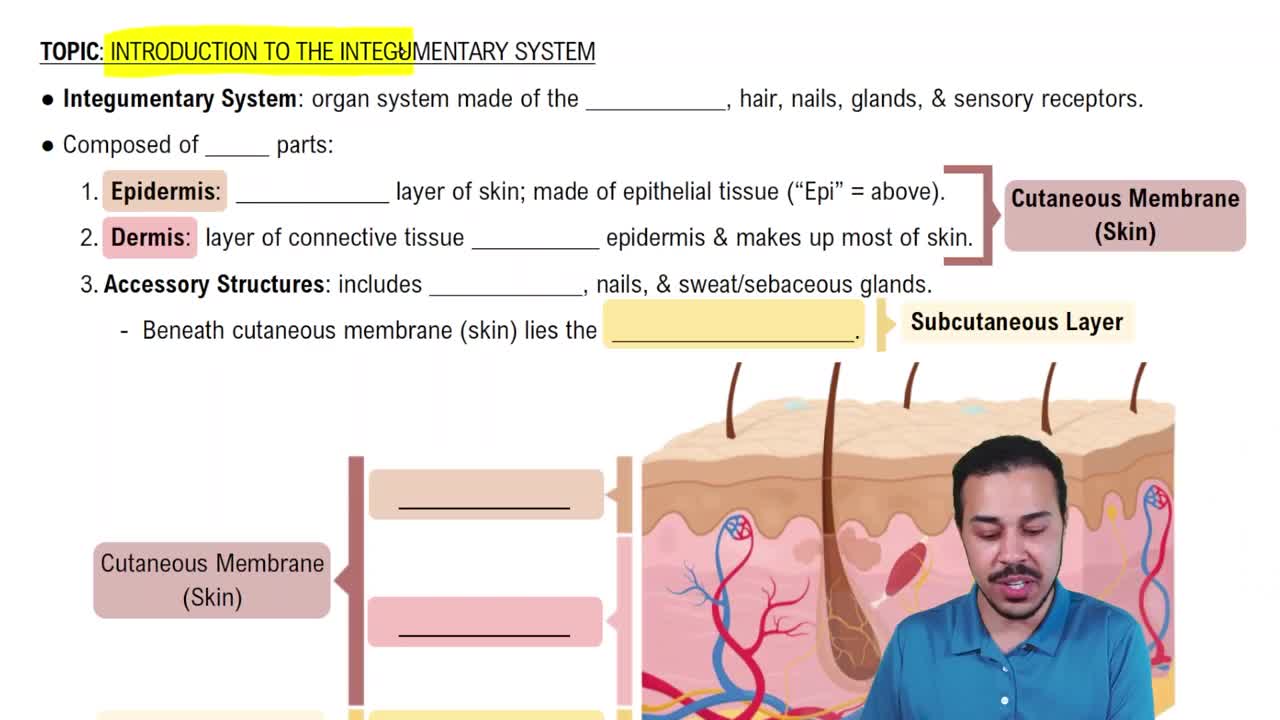
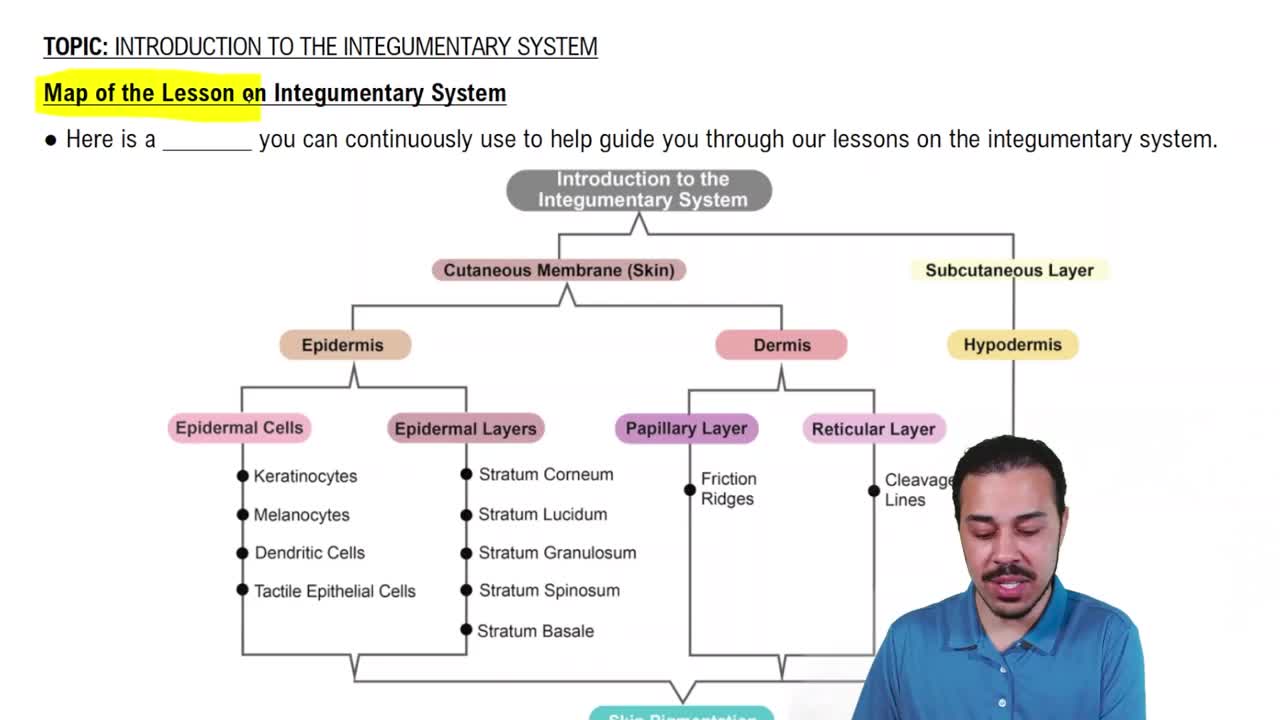
Stratum basale, stratum spinosum, stratum granulosum, stratum lucidum (only in thick skin), and stratum corneum.
It contains basal cells that continuously divide to produce new keratinocytes and contains melanocytes for pigment production.
The stratum granulosum produces keratohyalin granules that help form a waterproof barrier.
It is a thin, clear layer found only in thick skin areas like the palms and soles.
Dead, flattened keratinized cells that provide a tough, protective outer layer.
Papillary region (superficial) and reticular region (deep).
Loose areolar connective tissue with capillaries and sensory neurons.
It provides strength and elasticity with dense irregular connective tissue containing collagen and elastin fibers.
Eccrine sweat glands produce watery sweat to cool the body.
Apocrine glands secrete thicker sweat into hair follicles, usually in armpits and groin, and become active at puberty.
They secrete oily sebum that lubricates and waterproofs skin and hair.
Usually attached to hair follicles all over the body except palms and soles.
A tubular invagination of the epidermis that encloses the hair root and bulb where hair growth occurs.
Medulla (core), cortex (middle), and cuticle (outer layer).
It contracts to raise hair, causing 'goosebumps' and helping trap heat.
Hard keratinized plates formed from specialized epithelial cells.
The growth zone under the proximal nail fold where new nail cells are produced.
The visible white crescent-shaped area at the nail base, part of the nail matrix.
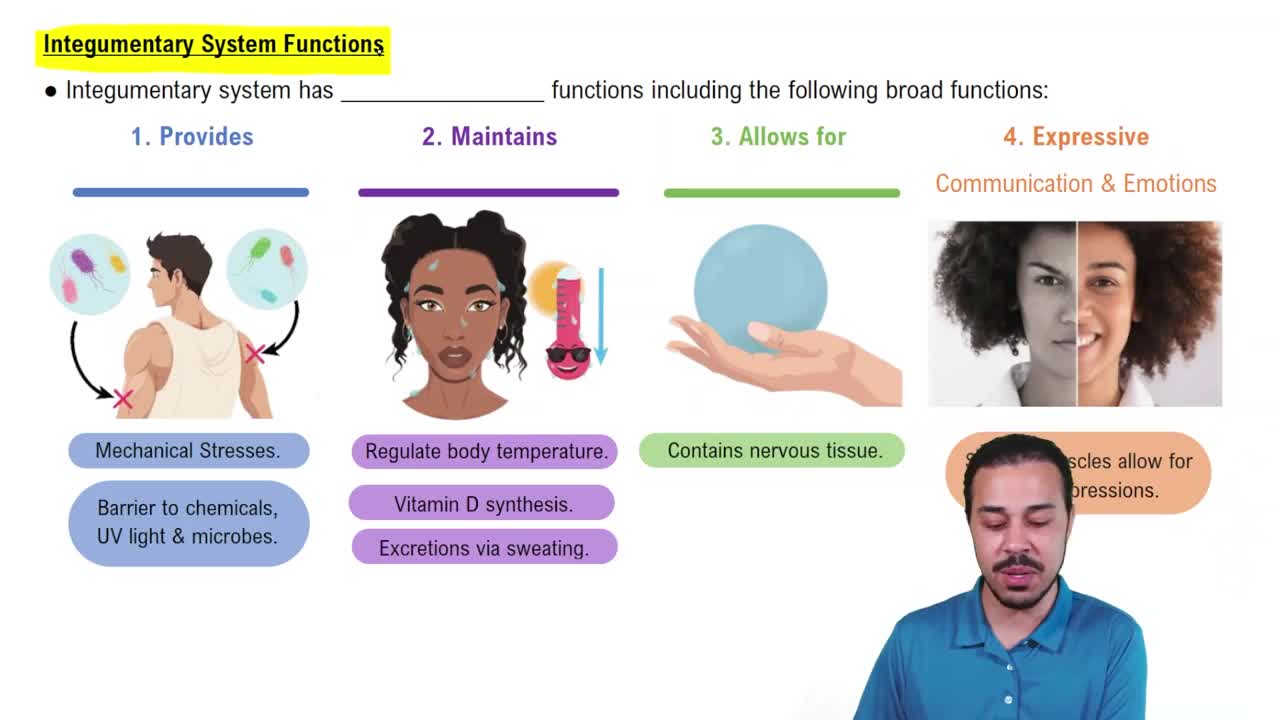
By providing a physical barrier, producing antimicrobial secretions, and preventing water loss.
They produce melanin pigment that protects against UV radiation.