 뒤로
Stomach Layers and Cells in Anatomy & Physiology
 4:39

이 집합의 용어 (20)
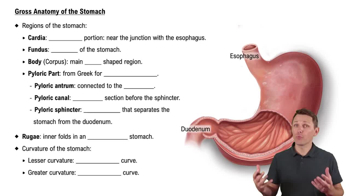
The four main layers are mucosa, submucosa, muscularis externa, and serosa.
The mucosa contains glands that secrete digestive enzymes and acid, and it protects the stomach lining.
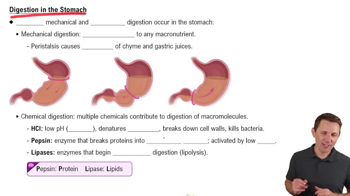
Parietal cells secrete hydrochloric acid (HCl) to aid digestion and kill bacteria.
Chief cells secrete pepsinogen, an inactive enzyme that converts to pepsin for protein digestion.
Mucous cells produce mucus to protect the stomach lining from acid and digestive enzymes.
The muscularis externa consists of smooth muscle layers that contract to mix and propel stomach contents.
The serosa is the outermost layer, a protective membrane that reduces friction with other organs.
Parietal cells secrete intrinsic factor, essential for vitamin B12 absorption in the small intestine.
Enteroendocrine cells release hormones like gastrin that regulate digestion and acid secretion.
It secretes a thick layer of alkaline mucus that neutralizes acid and protects epithelial cells.
The stomach mucosa is lined by simple columnar epithelium specialized for secretion and protection.
The submucosa contains blood vessels, nerves, and connective tissue supporting the mucosa.
There are three layers: longitudinal, circular, and oblique muscles for complex contractions.
The oblique muscle layer allows stronger churning and mixing of stomach contents.
Chief cells secrete pepsinogen, which converts to pepsin in acidic conditions to digest proteins.
G cells secrete gastrin, which stimulates acid secretion by parietal cells.
The mucus layer cushions and protects the lining from abrasion by food particles.
Through hormonal signals like gastrin and neural inputs that stimulate parietal cells.
Gastric pits are openings to glands that secrete acid, enzymes, and mucus into the stomach lumen.
It is essential for vitamin B12 absorption, preventing pernicious anemia.