Ch. 17 The Cardiovascular System I: The Heart
Amerman- Human Anatomy & Physiology 3e
Amerman3rd EditionHuman Anatomy & PhysiologyISBN: 9780138247201, 9780138247928, 9780138201814당신이 사용하는 게 아니라요?교과서 변경
17장, 문제 9

What are the effects of the plateau phase of the contractile cell action potential?

검증된 단계별 안내
1
Understand that the plateau phase is a unique feature of the action potential in cardiac contractile cells, which distinguishes it from the action potentials in skeletal muscle or neurons.
Recognize that the plateau phase is caused by the simultaneous influx of calcium ions (Ca²⁺) through voltage-gated calcium channels and the efflux of potassium ions (K⁺) through potassium channels. This balance maintains a prolonged depolarization.
Explain that the prolonged depolarization during the plateau phase ensures a longer contraction period for cardiac muscle cells, which is critical for effective blood pumping by the heart.
Discuss how the plateau phase prevents tetany (sustained contraction) in cardiac muscle by extending the refractory period, ensuring that the heart muscle relaxes between beats to allow proper filling of the chambers.
Highlight the importance of calcium ion influx during the plateau phase, as it triggers calcium-induced calcium release from the sarcoplasmic reticulum, which is essential for the contraction of cardiac muscle cells.

비슷한 문제에 대한 검증된 영상 답변:

이 영상 해법은 위 문제에 도움이 된다고 튜터들이 추천한 것입니다.

주요 개념

질문에 올바르게 답하기 위해 반드시 이해해야 하는 핵심 개념들은 다음과 같습니다.

Plateau Phase

The plateau phase is a unique part of the cardiac action potential, particularly in contractile cells, characterized by a prolonged depolarization. This phase occurs after the initial rapid depolarization and is primarily maintained by the influx of calcium ions through L-type calcium channels. It plays a crucial role in ensuring that the heart muscle contracts effectively and prevents tetany, allowing for a coordinated heartbeat.
추천 영상:
가이드 코스
03:21
Phases of Mitosis

Calcium Ions in Cardiac Function

Calcium ions are essential for muscle contraction in cardiac cells. During the plateau phase, the influx of calcium not only sustains depolarization but also triggers the release of more calcium from the sarcoplasmic reticulum, leading to muscle contraction. This calcium-induced calcium release is vital for the strength and duration of the cardiac contraction, influencing overall heart function.
추천 영상:
4:08
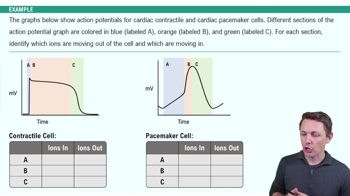
Cardiac Action Potentials Example 4

Refractory Period

The refractory period is the time during which a cardiac cell cannot be re-excited after an action potential. The plateau phase contributes to a longer refractory period, which is crucial for preventing arrhythmias by ensuring that the heart has enough time to relax and fill with blood before the next contraction. This mechanism is essential for maintaining a rhythmic and effective heartbeat.
추천 영상:
06:26
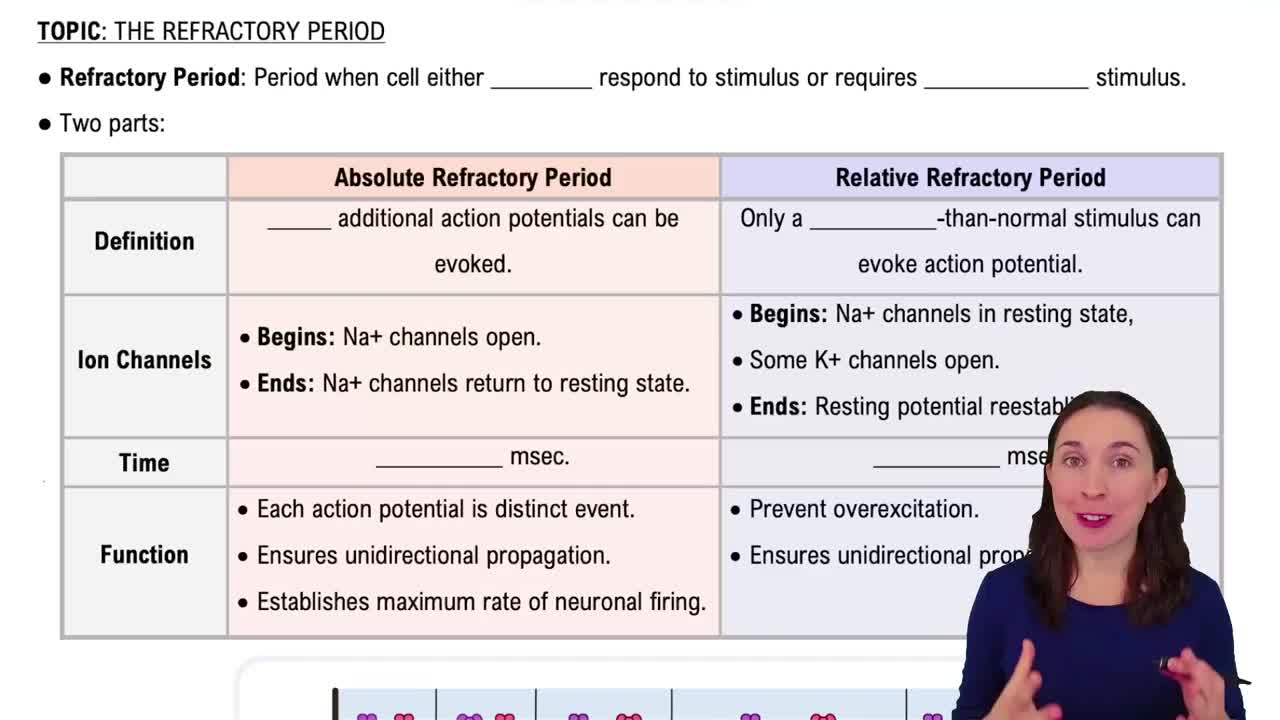
Refractory Period