Define cardiac cycle, and follow the events of one cycle.
Ch. 18 The Cardiovascular System: The Heart
Hoehn, Haynes, Abbott12th EditionMarieb Human Anatomy & PhysiologyISBN: 9780138242732당신이 사용하는 게 아니라요?교과서 변경
18장, 문제 10
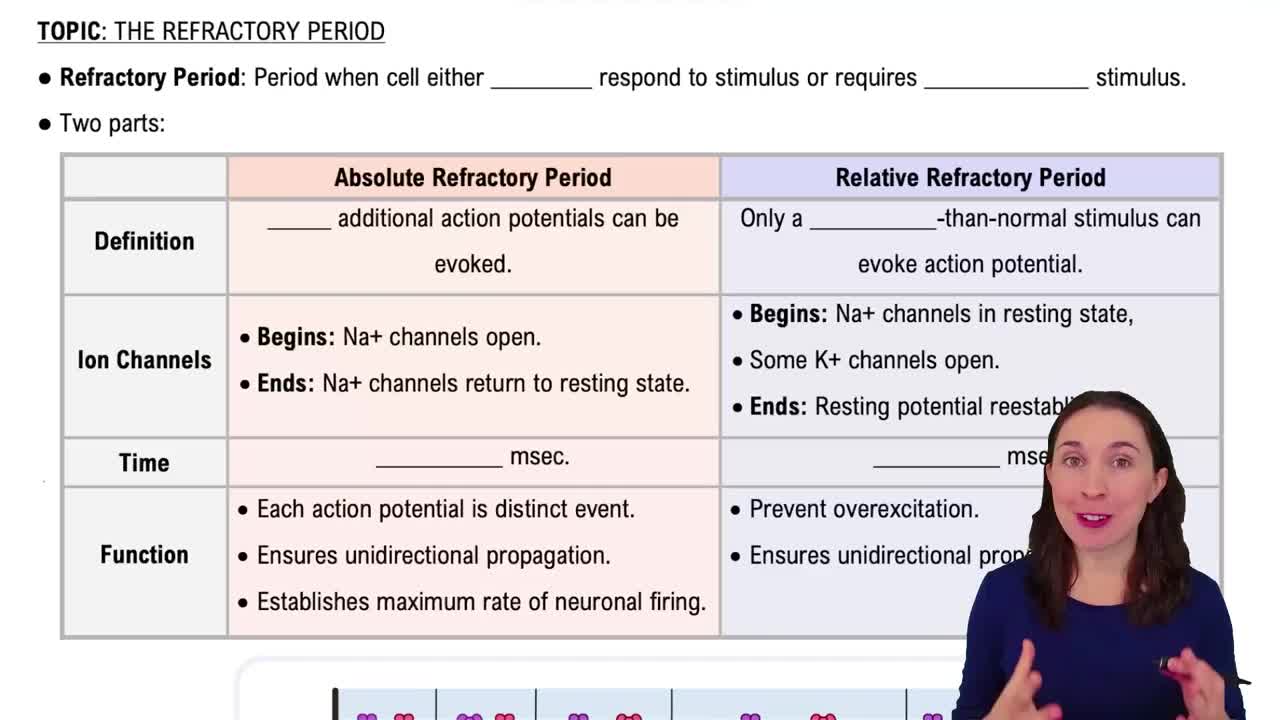
The refractory period of cardiac muscle is much longer than that of skeletal muscle. Why is this a desirable functional property?
검증된 단계별 안내1
Step 1: Understand what the refractory period is — it is the time during which a muscle cell cannot be re-excited after an action potential has occurred.
Step 2: Recognize that cardiac muscle cells have a much longer refractory period compared to skeletal muscle cells, meaning they remain unresponsive to new stimuli for a longer time.
Step 3: Consider the functional importance of this long refractory period in cardiac muscle — it prevents the muscle from undergoing tetanus, which is a sustained contraction.
Step 4: Realize that preventing tetanus in cardiac muscle is crucial because the heart needs to relax between beats to allow chambers to fill with blood properly.
Step 5: Conclude that the long refractory period ensures rhythmic, coordinated contractions and proper pumping function of the heart, which is essential for maintaining effective blood circulation.

비슷한 문제에 대한 검증된 영상 답변:
이 영상 해법은 위 문제에 도움이 된다고 튜터들이 추천한 것입니다.
영상 길이:
2m주요 개념
질문에 올바르게 답하기 위해 반드시 이해해야 하는 핵심 개념들은 다음과 같습니다.
Refractory Period
The refractory period is the time after an action potential during which a muscle cell cannot be re-excited. It ensures that the muscle has time to contract and relax before the next stimulus, preventing continuous or premature contractions.
추천 영상:
Refractory Period
Cardiac Muscle Contraction
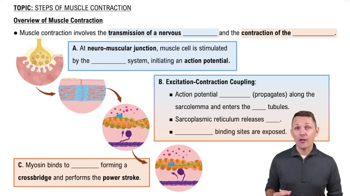
Cardiac muscle contractions are rhythmic and coordinated to pump blood effectively. A longer refractory period prevents tetanus (sustained contraction), allowing the heart chambers to fill and empty properly during each beat.
추천 영상:
Overview of Muscle Contraction
Functional Differences Between Cardiac and Skeletal Muscle
Skeletal muscle can sustain rapid, repeated contractions for movement, so it has a short refractory period. In contrast, cardiac muscle requires a longer refractory period to maintain a steady heartbeat and avoid arrhythmias, ensuring efficient blood circulation.
추천 영상:
Structure of a Skeletal Muscle Example 2
관련 실천
교과서 질문
1254
views
교과서 질문
Freshly oxygenated blood is first received by the:
a. Right atrium
b. Left atrium
c. Right ventricle
d. Left ventricle
933
views
교과서 질문
Describe the location and position of the heart in the body.
735
views
교과서 질문
What is cardiac output, and how is it calculated?
1377
views
교과서 질문
In the heart, which of the following apply?
(1) Action potentials are conducted from cell to cell across the myocardium via gap junctions
(2) The SA node sets the pace for the heart as a whole
(3) Spontaneous depolarization of cardiac cells can occur in the absence of nerve stimulation
(4) Cardiac muscle can continue to contract for long periods in the absence of oxygen
a. All of the above
b. 1, 3, 4
c. 1, 2, 3
d. 2, 3
1170
views
교과서 질문
Draw a normal ECG pattern. Label and explain the significance of its deflection waves.
1463
views