Local anesthetics block voltage-gated Na⁺ channels. General anesthetics are thought to activate chemically gated Cl⁻ channels, thereby rendering the nervous system quiescent while surgery is performed. What specific process do anesthetics impair, and how does this interfere with nerve impulse transmission?
Ch. 11 Fundamentals of the Nervous System and Nervous Tissue

11장, 문제 27
In the Netherlands a young man named Jan was admitted to the emergency room. He and his friends had been to a rave. His friends say he started twitching and having muscle spasms which progressed until he was 'stiff as a board.' On examination, staff found a marked increase in muscle tone and hyperreflexia involving facial and limb muscles. In his pocket, he had unmarked dark yellow tablets with dark flecks. Analysis of the tablets showed them to contain a mixture of ecstasy and strychnine. Ecstasy would not cause this clinical picture, but strychnine, which blocks glycine receptors, could. Explain how.
검증된 단계별 안내1
Understand the role of glycine in the nervous system: Glycine is an inhibitory neurotransmitter primarily found in the spinal cord and brainstem. It binds to glycine receptors on motor neurons, causing chloride ions (Cl⁻) to enter the neuron, which hyperpolarizes the cell and reduces its excitability.
Recognize the effect of strychnine on glycine receptors: Strychnine acts as a competitive antagonist at glycine receptors, meaning it blocks glycine from binding and prevents the inhibitory effect. This leads to decreased chloride influx and reduced inhibition of motor neurons.
Analyze the consequence of blocking glycine receptors: Without glycine-mediated inhibition, motor neurons become hyperexcitable. This results in increased muscle tone (rigidity), muscle spasms, and hyperreflexia, as the normal 'braking' effect on motor neuron firing is lost.
Connect the symptoms to the mechanism: The patient's stiffness ('stiff as a board'), muscle spasms, and hyperreflexia are explained by the loss of glycine inhibition due to strychnine, causing uncontrolled motor neuron activity and excessive muscle contraction.
Summarize the clinical picture: Although ecstasy does not cause these symptoms, the presence of strychnine in the tablets explains the observed neurological signs by blocking glycine receptors and disrupting inhibitory neurotransmission in the spinal cord and brainstem.

비슷한 문제에 대한 검증된 영상 답변:
이 영상 해법은 위 문제에 도움이 된다고 튜터들이 추천한 것입니다.
영상 길이:
2m주요 개념
질문에 올바르게 답하기 위해 반드시 이해해야 하는 핵심 개념들은 다음과 같습니다.
Role of Glycine as an Inhibitory Neurotransmitter
Glycine is a key inhibitory neurotransmitter in the spinal cord and brainstem that reduces neuronal excitability by opening chloride channels, leading to hyperpolarization of neurons. This inhibition helps regulate muscle tone and reflexes, preventing excessive muscle contraction and spasms.
추천 영상:
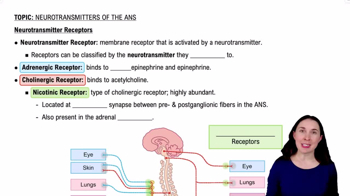
Neurotransmitter Receptors
Mechanism of Strychnine Toxicity via Glycine Receptor Blockade
Strychnine acts as a competitive antagonist at glycine receptors, blocking glycine's inhibitory effects. This disinhibition causes unchecked excitatory signals in motor neurons, resulting in increased muscle tone, hyperreflexia, and severe muscle spasms, explaining the 'stiff as a board' presentation.
추천 영상:
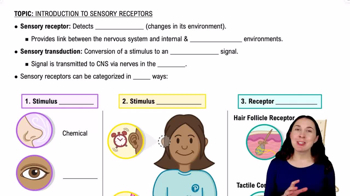
Sensory Receptors
Clinical Presentation of Strychnine Poisoning
Strychnine poisoning manifests as muscle rigidity, twitching, and heightened reflexes due to loss of inhibitory control over motor neurons. Unlike ecstasy, which primarily affects serotonin pathways, strychnine's blockade of glycine receptors leads to characteristic convulsions and muscle stiffness seen in this patient.
추천 영상:
가이드 코스
Free Antigens vs. Presented Antigens on APCs
관련 실천
교과서 질문
1168
views
교과서 질문
Rochelle developed multiple sclerosis when she was 27. After eight years she had lost a good portion of her ability to control her skeletal muscles. How did this happen?
1033
views
1
rank
교과서 질문
When admitted to the emergency room, Sean was holding his right hand, which had a deep puncture hole in its palm. He explained that he had fallen on a nail while exploring a barn. Sean was given an antitetanus shot to prevent neural complications. Tetanus bacteria fester in deep, dark wounds, but how do their toxins travel in neural tissue?
1075
views
1
rank
