Ch. 20 The Lymphatic System and Lymphoid Organs and Tissues
Marieb - Human Anatomy & Physiology 11th Edition
Marieb, Hoehn11th EditionHuman Anatomy & PhysiologyISBN: 9780136874034당신이 사용하는 게 아니라요?교과서 변경
20장, 문제 7

The red pulp areas of the spleen are sites of:
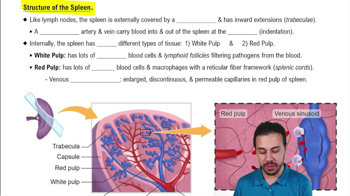
a. Splenic sinusoids, macrophages, and red blood cells
b. Clustered lymphocytes
c. Connective tissue septa

검증된 단계별 안내
1
Step 1: Understand the structure of the spleen, which is divided into two main types of tissue: red pulp and white pulp.
Step 2: Recall that the red pulp primarily functions in filtering the blood, removing old or damaged red blood cells, and housing macrophages that phagocytize cellular debris.
Step 3: Recognize that the red pulp contains splenic sinusoids, which are specialized blood vessels that allow blood cells to pass through slowly for inspection and removal of defective cells.
Step 4: Note that the white pulp consists mainly of clustered lymphocytes and is involved in immune responses, not the red pulp.
Step 5: Connective tissue septa are structural components that support the spleen but are not specifically part of the red pulp's functional areas.

비슷한 문제에 대한 검증된 영상 답변:

이 영상 해법은 위 문제에 도움이 된다고 튜터들이 추천한 것입니다.
영상 길이:
2m

주요 개념

질문에 올바르게 답하기 위해 반드시 이해해야 하는 핵심 개념들은 다음과 같습니다.

Red Pulp of the Spleen

The red pulp is a region in the spleen primarily involved in filtering the blood. It contains splenic sinusoids, which are specialized blood vessels, and is rich in macrophages that remove old or damaged red blood cells. This area plays a key role in blood filtration and immune response.
추천 영상:
가이드 코스
10:09
Structure of the Spleen

Splenic Sinusoids

Splenic sinusoids are wide, irregular blood vessels found in the red pulp. Their unique structure allows blood cells to pass through slowly, facilitating the removal of defective red blood cells by macrophages. They are essential for the spleen’s blood-filtering function.
추천 영상:
가이드 코스
10:09
Structure of the Spleen

Lymphoid Tissue in the Spleen

The spleen contains white pulp, which consists of clustered lymphocytes organized around central arteries. This area is responsible for immune surveillance and response, unlike the red pulp, which focuses on blood filtration and removal of old cells.
추천 영상:
가이드 코스
1:38
Secondary Lymphoid Organs: The Spleen Example 1