Ch. 24 Nutrition, Metabolism, and Energy Balance
Marieb - Human Anatomy & Physiology 11th Edition
Marieb, Hoehn11th EditionHuman Anatomy & PhysiologyISBN: 9780136874034당신이 사용하는 게 아니라요?교과서 변경
24장, 문제 14

What is cellular respiration? What is the common role of FAD and NAD⁺ in cellular respiration?

검증된 단계별 안내
1
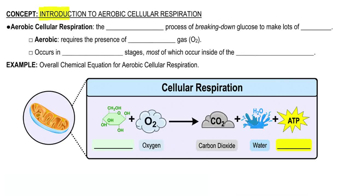
Cellular respiration is the process by which cells convert glucose and oxygen into energy in the form of ATP (adenosine triphosphate), along with byproducts such as carbon dioxide and water. It occurs in three main stages: glycolysis, the citric acid cycle (Krebs cycle), and oxidative phosphorylation.
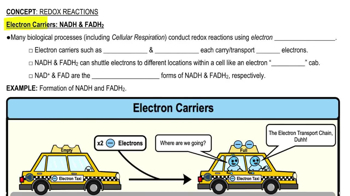
FAD (flavin adenine dinucleotide) and NAD⁺ (nicotinamide adenine dinucleotide) are coenzymes that play a critical role in cellular respiration by acting as electron carriers. They help transfer high-energy electrons from metabolic intermediates to the electron transport chain.
During glycolysis and the citric acid cycle, NAD⁺ is reduced to NADH, and FAD is reduced to FADH₂. This reduction involves the addition of electrons and hydrogen ions to these molecules, enabling them to store energy temporarily.
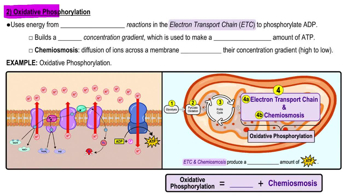
NADH and FADH₂ then transport the high-energy electrons to the electron transport chain located in the inner mitochondrial membrane. Here, the electrons are passed through a series of protein complexes, driving the production of ATP via oxidative phosphorylation.
The common role of FAD and NAD⁺ in cellular respiration is to facilitate the transfer of electrons and hydrogen ions, which are essential for generating ATP, the primary energy currency of the cell.

비슷한 문제에 대한 검증된 영상 답변:

이 영상 해법은 위 문제에 도움이 된다고 튜터들이 추천한 것입니다.
영상 길이:
3m

주요 개념

질문에 올바르게 답하기 위해 반드시 이해해야 하는 핵심 개념들은 다음과 같습니다.

Cellular Respiration

Cellular respiration is a biochemical process in which cells convert glucose and oxygen into energy, carbon dioxide, and water. This process occurs in three main stages: glycolysis, the citric acid cycle, and oxidative phosphorylation. It is essential for producing adenosine triphosphate (ATP), the energy currency of the cell, enabling various cellular functions.
추천 영상:
가이드 코스
03:38
Introduction to Cellular Respiration

FAD and NAD⁺

FAD (flavin adenine dinucleotide) and NAD⁺ (nicotinamide adenine dinucleotide) are coenzymes that play crucial roles in cellular respiration. They act as electron carriers, accepting electrons during metabolic reactions and transporting them to the electron transport chain. This transfer is vital for the production of ATP, as it helps establish the proton gradient necessary for ATP synthesis.
추천 영상:
가이드 코스
05:22
Electron Carriers: NADH & FADH2

Oxidative Phosphorylation

Oxidative phosphorylation is the final stage of cellular respiration, occurring in the mitochondria. It involves the transfer of electrons through a series of protein complexes in the electron transport chain, leading to the pumping of protons across the mitochondrial membrane. This creates a proton gradient that drives ATP synthesis through ATP synthase, ultimately producing the majority of ATP generated during cellular respiration.
추천 영상:
가이드 코스
06:27
Oxidative Phosphorylation