Ch. 6 The Muscular System
Marieb - Essentials of Human Anatomy & Physiology 13th Edition
Marieb13th EditionEssentials of Human Anatomy & PhysiologyISBN: 9780135624340당신이 사용하는 게 아니라요?교과서 변경
6장, 문제 20

Chemical A binds and blocks acetylcholine receptors of muscle cells. Chemical B floods the cytoplasm of muscle cells with calcium ions. Which chemical would make the best muscle relaxant, and why?

검증된 단계별 안내
1
Step 1: Understand the role of acetylcholine in muscle contraction. Acetylcholine is a neurotransmitter that binds to receptors on the muscle cell membrane, triggering an action potential that leads to calcium ion release and muscle contraction.
Step 2: Analyze the effect of Chemical A. Chemical A blocks acetylcholine receptors, preventing acetylcholine from binding. This stops the initiation of the action potential, thereby halting calcium ion release and muscle contraction.
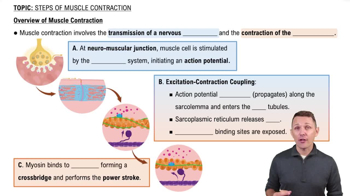
Step 3: Examine the role of calcium ions in muscle contraction. Calcium ions bind to troponin, causing a conformational change that exposes binding sites on actin for myosin, enabling muscle contraction.
Step 4: Evaluate the effect of Chemical B. Chemical B floods the cytoplasm with calcium ions, which would promote continuous muscle contraction rather than relaxation, as calcium is essential for the contraction process.
Step 5: Compare the two chemicals. Chemical A would be the better muscle relaxant because it prevents the initiation of muscle contraction by blocking acetylcholine receptors, whereas Chemical B would exacerbate contraction by increasing calcium ion levels.

비슷한 문제에 대한 검증된 영상 답변:

이 영상 해법은 위 문제에 도움이 된다고 튜터들이 추천한 것입니다.
영상 길이:
1m

주요 개념

질문에 올바르게 답하기 위해 반드시 이해해야 하는 핵심 개념들은 다음과 같습니다.

Acetylcholine Receptors

Acetylcholine receptors are proteins located on the surface of muscle cells that bind the neurotransmitter acetylcholine, leading to muscle contraction. When these receptors are activated, they allow sodium ions to enter the cell, triggering a cascade that results in muscle contraction. Blocking these receptors prevents muscle contraction, making it a key target for muscle relaxants.
추천 영상:
2:47
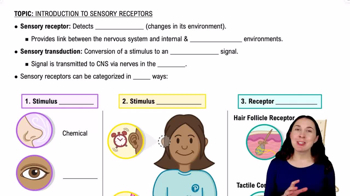
Sensory Receptors

Calcium Ions in Muscle Contraction

Calcium ions play a crucial role in muscle contraction by facilitating the interaction between actin and myosin filaments within muscle fibers. When calcium is released into the cytoplasm, it binds to troponin, causing a conformational change that allows myosin to bind to actin, resulting in contraction. Flooding the cytoplasm with calcium ions would enhance contraction rather than relaxation.
추천 영상:
4:53
Overview of Muscle Contraction

Mechanism of Muscle Relaxants

Muscle relaxants work by interfering with the neuromuscular transmission or by directly affecting the muscle fibers. Effective muscle relaxants typically block acetylcholine receptors or inhibit calcium release, leading to reduced muscle tone and relaxation. In this context, a chemical that blocks acetylcholine receptors would be more effective as a muscle relaxant compared to one that increases calcium levels.
추천 영상:
2:00
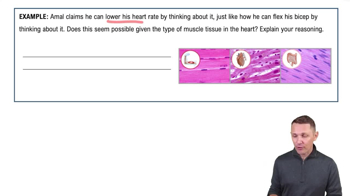
Introduction to Muscles and Muscle Tissue Example 1