


Ch. 16 The Autonomic Nervous System and Higher-Order Functions
Martini - Fundamentals of Anatomy & Physiology 11th Edition
Martini, Nath, Bartholomew11th EditionFundamentals of Anatomy & PhysiologyISBN: 9780136874089당신이 사용하는 게 아니라요?교과서 변경
16장, 문제 25

A possible side effect of a drug used to open the airways of someone suffering from an asthma attack is
(a) Decreased activity of the digestive system
(b) Diarrhea
(c) Profuse urination
(d) Increased blood pressure
(e) Decreased heart rate

검증된 단계별 안내
1
Step 1: Understand the mechanism of action of drugs used to open airways in asthma. These drugs are typically bronchodilators, such as beta-2 adrenergic agonists, which stimulate beta-2 receptors in the smooth muscle of the airways causing relaxation and dilation.
Step 2: Recognize that beta-2 adrenergic receptors are primarily found in the lungs but can also be present in other tissues, including blood vessels and the heart, which can lead to systemic effects.
Step 3: Consider the systemic effects of beta-2 agonists: stimulation of beta-2 receptors can cause vasodilation, but also may indirectly increase heart rate (a reflex tachycardia) and increase blood pressure due to increased cardiac output.
Step 4: Evaluate each option in the context of these effects: (a) decreased digestive activity is more related to parasympathetic inhibition, (b) diarrhea is increased digestive motility, (c) profuse urination is related to kidney function, (d) increased blood pressure can result from increased cardiac output, and (e) decreased heart rate is unlikely because beta-2 agonists tend to increase heart rate.
Step 5: Conclude that the most plausible side effect among the options, based on the pharmacology of bronchodilators, is increased blood pressure due to their cardiovascular effects.

비슷한 문제에 대한 검증된 영상 답변:

이 영상 해법은 위 문제에 도움이 된다고 튜터들이 추천한 것입니다.

주요 개념

질문에 올바르게 답하기 위해 반드시 이해해야 하는 핵심 개념들은 다음과 같습니다.

Mechanism of Bronchodilators in Asthma Treatment

Bronchodilators are drugs that relax the muscles around the airways, helping to open them and ease breathing during an asthma attack. They often act on beta-2 adrenergic receptors, causing smooth muscle relaxation in the lungs but can also affect other systems due to receptor distribution.
추천 영상:
3:02
Internal Regulation - The Myogenic Mechanism

Systemic Side Effects of Beta-2 Agonists

Beta-2 agonists, commonly used bronchodilators, can cause side effects beyond the lungs, such as increased heart rate and blood pressure, because they may stimulate beta receptors in the heart and blood vessels. Understanding these systemic effects is key to predicting possible side effects.
추천 영상:
가이드 코스
1:32
Effects of the Complement System

Autonomic Nervous System and Drug Effects

The autonomic nervous system controls involuntary body functions, including heart rate, digestion, and urination. Drugs affecting adrenergic receptors can alter these functions, leading to side effects like increased blood pressure or changes in digestive activity.
추천 영상:
1:50
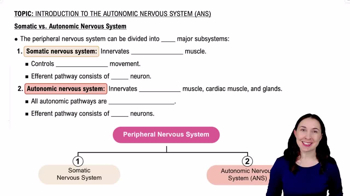
Somatic vs. Autonomic Nervous System