
Ch. 21 Blood Vessels and Circulation
Martini - Fundamentals of Anatomy & Physiology 11th Edition
Martini, Nath, Bartholomew11th EditionFundamentals of Anatomy & PhysiologyISBN: 9780136874089당신이 사용하는 게 아니라요?교과서 변경
21장, 문제 21

Which of the following is greater?
(a) The osmotic pressure of the interstitial fluid during inflammation
(b) The osmotic pressure of the interstitial fluid during normal conditions
(c) Neither is greater

검증된 단계별 안내
1
Step 1: Understand what osmotic pressure is — it is the pressure exerted by solutes (like proteins) in a fluid that tends to draw water across a semipermeable membrane.
Step 2: Recall that under normal conditions, the interstitial fluid has a relatively low concentration of proteins, so its osmotic pressure is lower compared to plasma.
Step 3: During inflammation, the permeability of capillaries increases, allowing more proteins to leak into the interstitial fluid, which raises the protein concentration there.
Step 4: Since osmotic pressure depends on solute concentration, the increased protein content in the interstitial fluid during inflammation leads to a higher osmotic pressure compared to normal conditions.
Step 5: Therefore, compare the osmotic pressures by considering the protein concentration changes in the interstitial fluid between normal and inflamed states to determine which is greater.

비슷한 문제에 대한 검증된 영상 답변:

이 영상 해법은 위 문제에 도움이 된다고 튜터들이 추천한 것입니다.

주요 개념

질문에 올바르게 답하기 위해 반드시 이해해야 하는 핵심 개념들은 다음과 같습니다.

Osmotic Pressure

Osmotic pressure is the pressure exerted by solutes in a fluid that drives water movement across a semipermeable membrane. It depends on the concentration of solutes like proteins and ions, influencing fluid balance between compartments such as blood plasma and interstitial fluid.
추천 영상:
6:12
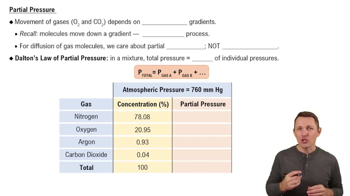
Partial Pressure

Interstitial Fluid Composition

Interstitial fluid surrounds tissue cells and normally has a lower protein concentration than plasma, resulting in lower osmotic pressure. Changes in protein content or solute concentration in this fluid can alter its osmotic pressure and affect fluid exchange.
추천 영상:
가이드 코스
7:49
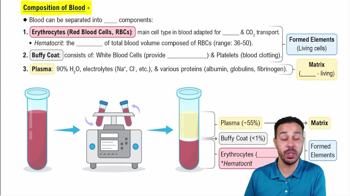
Composition of Blood

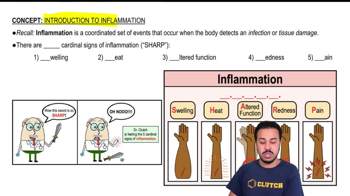
Inflammation and Vascular Permeability

During inflammation, blood vessel permeability increases, allowing proteins and immune cells to leak into the interstitial space. This raises the protein concentration and osmotic pressure of the interstitial fluid compared to normal conditions, promoting fluid accumulation and swelling.
추천 영상: