 뒤로
뒤로Cell Structure and Function
 02:37
02:37
이 집합의 용어 (31)
Basic units of life.
1.All living things are made of cells.
2. cells are the basic units of structure and function.
3. new cells come from existing cells.
Membrane surrounding a cell to regulate what enters and leaves the cell.
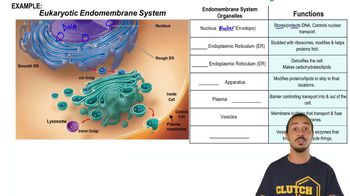
Structure in a cell that contains DNA (genetic material).
Single-celled organism that lacks a nucleus.
Cells that contain a nucleus.
Part of the cell outside the nucleus.
Specialized structures within cells that act like organs.
Organelle that stores water, salts, proteins, and carbohydrates.
Organelles that contain enzymes for digestion and removal of worn-out organelles.
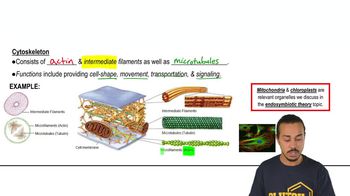
Filaments that give eukaryotic cells their shape and organization.
Organelle that helps organize cell division.
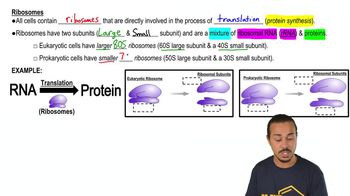
Organelle where proteins are made.
Membrane that makes proteins and lipids.
Modifies, sorts, and packages materials from the endoplasmic reticulum for storage or release outside the cell.
Uses sunlight as energy for photosynthesis.
Creates power for the cell from chemical energy.
Structure in plant cells to support and protect the cell.
Structure of the cell membrane made of lipids.
Allows some substances to pass through but not others.
Movement of particles from areas of high concentration to low concentration.
Facilitated Diffusion
Use of cell channels to cross the cell membrane.
Aquaporin
Water channel protien in a cell.
Osmosis
Diffusion of water across a membrane.
Isotonic
The concentration of two solutions are the same.
Hypertonic
The more concentrated of two solutions
Hypotonic
The less concentrated of two solutions
Osmotic Pressure
Pressure that must be exerted to prevent movement of water across a selectavly permeable membrane.
Homeostasis
Maintaning a constant internal enviroment.
Plasmid
small circular DNA that replecates independantly of chromosomal DNA ( Found in bacteria ).
Flagella
Appendage that allows many microbes to move.