 뒤로
AP Biology Unit 1: Biochemistry and Cell Structure
 02:09


이 집합의 용어 (26)
The four major macromolecules are carbohydrates, lipids, proteins, and nucleic acids.
Carbohydrates are made of carbon, hydrogen, and oxygen atoms, typically in a 1:2:1 ratio, forming monosaccharides like glucose.
Glycosidic bonds link monosaccharides to form disaccharides and polysaccharides.
Lipids store energy, make up cell membranes, and act as signaling molecules.
Saturated fats have no double bonds and are solid at room temperature; unsaturated fats have one or more double bonds and are liquid at room temperature.
The primary structure is the linear sequence of amino acids in a polypeptide chain.
Primary, secondary, tertiary, and quaternary structures describe protein folding and assembly.
Peptide bonds link amino acids together in proteins.
Nucleic acids are polymers of nucleotides, each containing a sugar, phosphate group, and nitrogenous base.
DNA contains deoxyribose sugar and thymine; RNA contains ribose sugar and uracil.
The cell membrane is a fluid phospholipid bilayer with embedded proteins that move laterally.
Membrane proteins assist in transport, signal transduction, cell recognition, and structural support.
Cholesterol stabilizes membrane fluidity by preventing tight packing of phospholipids.
Prokaryotes lack a nucleus and membrane-bound organelles; eukaryotes have both.
The nucleus stores genetic material and controls cell activities.
Ribosomes synthesize proteins by translating mRNA.
The ER is a membrane network; rough ER has ribosomes and synthesizes proteins, smooth ER synthesizes lipids and detoxifies.
The Golgi modifies, sorts, and packages proteins and lipids for transport.
Lysosomes contain enzymes that digest macromolecules and recycle cellular components.
The cytoskeleton provides structural support, aids in cell movement, and organizes organelles.
Osmosis is the diffusion of water across a selectively permeable membrane from low to high solute concentration.
Passive transport requires no energy and moves substances down their concentration gradient; active transport requires energy to move substances against the gradient.
An enzyme is a biological catalyst that speeds up chemical reactions without being consumed.
Temperature, pH, substrate concentration, and inhibitors affect enzyme activity.
ATP stores and transfers energy for cellular processes.
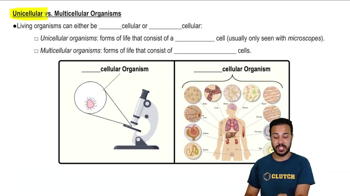
The cell is the basic unit of life in all living organisms.