 뒤로
Bacteria and Archaea - General Biology
 01:37

이 집합의 용어 (22)
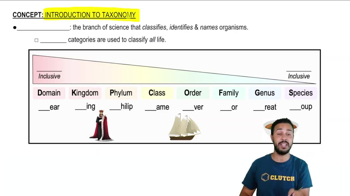
The three domains are Bacteria, Archaea, and Eukarya.
Prokaryotes lack a nucleus and membrane-enclosed organelles, and have a single circular DNA molecule in the nucleoid region.
Stromatolites are fossilized bacterial mats dating back 3.5 billion years, representing some of Earth's oldest known life forms.
Prokaryotes live in diverse environments including acidic, salty, cold, and hot habitats, often where other organisms cannot survive.
Extremophiles are archaea that thrive in extreme conditions such as high salinity (halophiles) or high temperature (thermophiles).
They recycle chemicals, decompose organic matter, fix nitrogen, and increase soil nutrients for plants.
Bacteria can be pathogens or beneficial, aiding digestion and playing roles in agriculture, industry, and research.
Most prokaryotic cells range from 0.5 to 5 micrometers, much smaller than eukaryotic cells.
Prokaryotes commonly have spherical (cocci), rod-shaped (bacilli), or spiral shapes.
Peptidoglycan is a polymer of sugars and peptides found in bacterial cell walls, providing structural support.
Archaeal cell walls lack peptidoglycan and instead contain glycoproteins.
The capsule stabilizes cells, helps form colonies, limits dehydration, and protects against host immune responses.
Endospores are metabolically inactive, highly resistant structures formed by some prokaryotes to survive harsh conditions.
Fimbriae are hair-like structures that allow prokaryotes to attach to surfaces or other cells, aiding in colony formation.
Chemotaxis is the movement of bacteria toward or away from chemical stimuli.
Bacterial and archaeal flagella are made of different proteins than eukaryotic flagella, indicating independent evolutionary origins.
Prokaryotes have a single circular chromosome and may have smaller DNA rings called plasmids.
Rapid reproduction, mutation, and genetic recombination (transformation, transduction, conjugation) promote diversity.
Horizontal gene transfer is the movement of genes between individuals of different species.
Phototrophs (light energy), chemotrophs (chemical energy), autotrophs (CO2 carbon source), and heterotrophs (organic carbon source).
Obligate aerobes require oxygen, obligate anaerobes are poisoned by oxygen, facultative anaerobes can survive with or without oxygen.
Nitrogen fixation is the conversion of atmospheric nitrogen (N2) to ammonia (NH3) by some prokaryotes, making nitrogen available to other organisms.