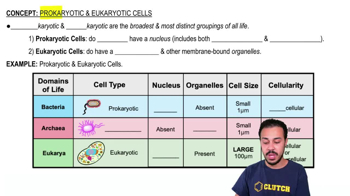
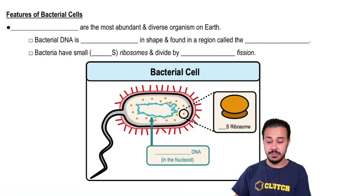
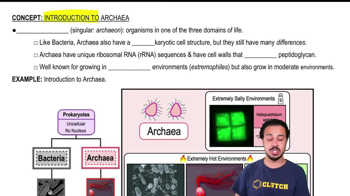
What are the two largest branches on the Tree of Life that are unicellular and prokaryotic?
Bacteria and Archaea are the two largest branches, both unicellular and prokaryotic.
What distinguishes Bacteria and Archaea at the molecular level?
Differences in membrane and cell wall molecular components, and methods to transcribe DNA and synthesize proteins from mRNA.
What is the significance of endospores in bacteria?
Endospores are dormant structures formed during stress, resistant to temperature, UV radiation, and antibiotics.
Define virulence in bacteria.
Virulence is the heritable ability of bacteria to cause disease.
What is a biofilm in bacterial colonies?
A biofilm is a colony of bacteria entangled in a polysaccharide-rich matrix that shields them from antibiotics.
Name a bacterium responsible for the Bubonic Plague.
Yersinia pestis causes the Bubonic Plague, leading to tissue necrosis.
What are zoonoses?
Diseases originating in animals that can infect humans.
What is MRSA and why is it dangerous?
MRSA is methicillin-resistant Staphylococcus aureus, a multi-drug resistant strain causing common staph infections.
How do bacteria contribute beyond causing disease?
They explain the origin of life, aid in bioremediation, produce enzymes for industry, and create food products.
What are antibiotics and their natural source?
Antibiotics kill or inhibit bacteria and are naturally produced by soil bacteria and fungi.
What are extremophiles?
Microorganisms adapted to extreme environments like acidophiles, halophiles, hyperthermophiles, and psychrophiles.
What is metagenomics in studying bacteria?
Environmental DNA sequencing used to identify new organisms without culturing.
What role does the human microbiome play?
Contains trillions of bacteria and archaea that produce vitamins, boost immunity, and can also cause disease.
Difference between Gram-positive and Gram-negative bacteria cell walls?
Gram-positive have thick peptidoglycan layers and stain purple; Gram-negative have thin peptidoglycan and an outer phospholipid bilayer, staining pink.
What are the three main energy acquisition modes in bacteria?
 뒤로
 04:39