 뒤로
Biotechnology and Its Applications - General Biology
 03:12

이 집합의 용어 (21)
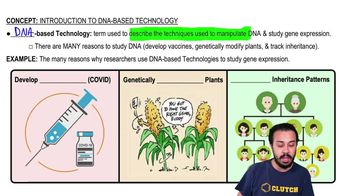
Biotechnology is the use or alteration of organisms, cells, or biological molecules to achieve specific goals.
Traditional biotechnology includes selective breeding and fermentation; modern biotechnology involves gene cloning, genetic modification, recombinant DNA, and transgenic organisms.
Cloning is the process of creating identical copies of a gene or an entire organism.
Recombinant DNA is DNA that has been altered to contain genes or portions of genes from different organisms.
Transgenic organisms express DNA that has been modified or derived from other species.
Sexual reproduction, transformation (bacteria uptake DNA), and transduction (virus-mediated gene transfer).
Plasmids are small circular DNA molecules that carry genes and can be taken up by bacteria during transformation.
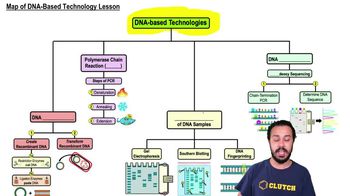
Polymerase Chain Reaction (PCR) is a method to amplify small amounts of DNA into large quantities.
1. Denaturation (90–95°C): separates DNA strands.
2. Annealing (50°C): primers bind target sequences.
3. Extension (70–72°C): DNA polymerase synthesizes new strands.
A heat-stable DNA polymerase (from hot-spring microbes) withstands high temperatures during denaturation without denaturing itself.
CRISPR-Cas9 is a molecular tool for precise gene editing derived from bacterial immune defenses, using the Cas9 enzyme guided by RNA.
Restriction enzymes cut DNA at specific nucleotide sequences, often creating sticky ends for gene insertion.
DNA ligase seals nicks in DNA, joining different DNA segments together.
DNA fragments move through an agarose gel toward a positive electrode; smaller fragments move faster, separating by size.
STRs are short DNA sequences (2–5 base pairs) repeated multiple times; their number varies among individuals.
STR patterns create unique DNA profiles, making it highly unlikely for two unrelated individuals to share the same profile.
Isolate the desired gene, clone the gene (often using plasmids), and insert the gene into the host organism (transformation).
Crops modified for herbicide or insect resistance, such as the Bt gene producing a protein toxic to insect digestive tracts but safe for mammals.
Gene therapy treats disease by altering or replacing defective genes.
White blood cells were removed, infected with a virus carrying a functional gene, then returned to the patient.
Risks include allergic reactions, gene flow to wild populations, embryo screening ethics, and privacy of genetic information.