 뒤로
Cell Transport Mechanisms in General Biology
 02:33

이 집합의 용어 (9)
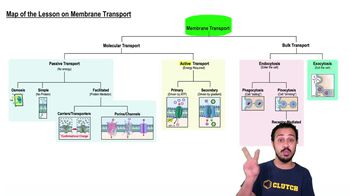
Passive transport does not require energy and moves substances down their concentration gradient.
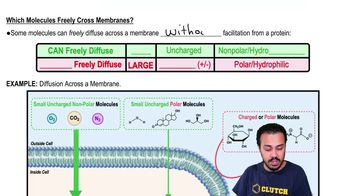
Diffusion is the movement of substances from an area of high concentration to low concentration.
Facilitated transport uses channel or carrier proteins to move substances across the membrane without energy.
Active transport requires energy (usually ATP) to move substances against their concentration gradient.
The sodium-potassium pump maintains electrochemical gradients in animal cells by moving sodium and potassium ions against their gradients.
Exocytosis is the process of expelling materials from the cell by vesicle fusion with the plasma membrane.
Endocytosis is the process of bringing materials into the cell via vesicle formation from the plasma membrane.
Pinocytosis is the uptake of fluids and solutes into the cell through vesicles.
Phagocytosis is the uptake of large particles or cells by engulfing them into vesicles.