 뒤로
Cellular Respiration and Metabolism in General Biology
 01:53

이 집합의 용어 (20)
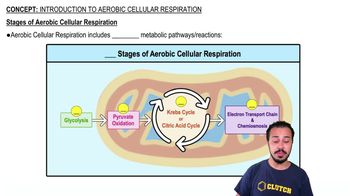
Cellular respiration is a catabolic pathway that breaks down glucose to produce ATP in three main stages: glycolysis, citric acid cycle, and oxidative phosphorylation.
Glycolysis, citric acid cycle, and oxidative phosphorylation.
Glycolysis occurs in the cytoplasm and splits glucose into two molecules of pyruvate.
Energy investment phase (uses ATP) and energy payoff phase (produces ATP and NADH).
Pyruvate enters the mitochondria and is converted to Acetyl CoA.
It occurs in the mitochondrial matrix and produces NADH, FADH2, ATP, and CO2 by combining Acetyl CoA with oxaloacetate to form citrate.
It occurs in the cristae of mitochondria where the electron transport chain and chemiosmosis produce most of the ATP.
Direct transfer of a phosphate group to ADP to form ATP during glycolysis and the citric acid cycle.
ATP is produced via the electron transport chain and ATP synthase using a proton gradient.
ATP synthase is an enzyme in the mitochondrial cristae that uses the proton gradient to synthesize ATP.
The movement of protons across a membrane that drives ATP synthesis by ATP synthase.
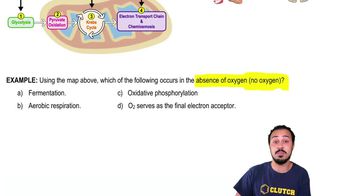
Oxygen acts as the final electron acceptor in the electron transport chain, essential for aerobic respiration.
Fermentation is an anaerobic process that produces ATP without oxygen, resulting in lactic acid or ethanol.
Aerobic respiration uses oxygen; anaerobic respiration does not and often involves fermentation.
Pyruvate, which can enter either aerobic or anaerobic pathways.
Yes, carbohydrates, fats, and proteins can also be metabolized to produce ATP.
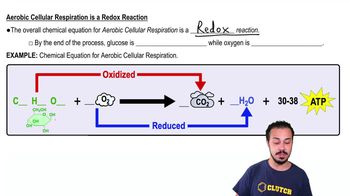
A redox reaction involves the transfer of electrons: oxidation is loss of electrons, reduction is gain of electrons.
NADH is an electron carrier that stores energy for ATP production by donating electrons to the electron transport chain.
A series of proteins in the mitochondrial membrane that transfer electrons to generate a proton gradient for ATP synthesis.
Accumulation of ATP or NADH inhibits respiration to regulate energy production.