Skip to main content
General Biology
나의 코스
배우기
시험 준비
AI 튜터
학습 가이드
교과서적 해결책
플래시카드
탐험해 보세요
앱을 사용해 보세요
나의 코스
배우기
시험 준비
AI 튜터
학습 가이드
교과서적 해결책
플래시카드
탐험해 보세요
앱을 사용해 보세요
뒤로
Ecosystem Energetics and Primary Production
카드를 뒤집기 위해 탭할 수 있습니다.
What are the three main points of view to describe complex terrestrial and aquatic ecosystems?
카드를 뒤집기 위해 탭할 수 있습니다.
👆
What are the three main points of view to describe complex terrestrial and aquatic ecosystems?
Trophic interactions, nutrient cycling, and energy flow.
진행 상황 추적
컨트롤 버튼이 '내비게이션' 모드로 변경되었습니다.
1/20
추천 영상
05:01
Levels of Ecological Study
3485
views
37
rank
02:31
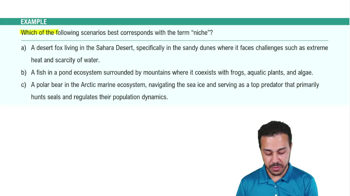
Introduction to Ecology Example 1
3554
views
37
rank
01:57
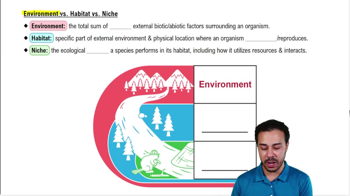
Environment vs. Habitat vs. Niche
3725
views
52
rank
이 집합의 용어 (20)
하이드의 정의
What are the three main points of view to describe complex terrestrial and aquatic ecosystems?
Trophic interactions, nutrient cycling, and energy flow.
What is the main source of energy in natural ecosystems?
Light from the sun provides energy in the form of photons.
What role do photosynthetic organisms play in energy transformation?
They transform light energy into chemical bond energy stored in carbon-based compounds.
State the first law of thermodynamics in the context of ecosystems.
Energy is neither created nor destroyed; it can change forms and move, but total energy remains constant.
What does the second law of thermodynamics imply about energy transfers in ecosystems?
Energy transfers increase entropy; some energy is lost as heat and cannot do work.
Define Gross Primary Productivity (GPP).
The total rate of photosynthesis by autotrophs, including energy used for their own respiration.
Define Net Primary Productivity (NPP) and its formula.
NPP is the energy stored as organic molecules after autotroph respiration; \(\mathrm{NPP} = \mathrm{GPP} - R\).
How is NPP commonly measured in aquatic ecosystems?
Using the light/dark bottle method to measure oxygen production and consumption.
What are the primary controls on net primary productivity in terrestrial ecosystems?
Climate factors (temperature and precipitation) and nutrient availability.
How does precipitation affect primary productivity in terrestrial ecosystems?
More precipitation increases water availability for transpiration, supporting photosynthesis and leaf growth.
What is Liebig's Law of the Minimum in relation to nutrient availability?
Primary productivity is limited by the scarcest essential nutrient, even if others are abundant.
What limits net primary productivity in aquatic ecosystems?
Light availability (photosynthetically active radiation) and nutrient availability.
What is the compensation depth in aquatic ecosystems?
The depth where gross primary productivity equals respiration, so net primary productivity is zero.
What is the difference between autochthonous and allochthonous organic carbon in aquatic ecosystems?
Autochthonous carbon is produced within the ecosystem by photosynthesis; allochthonous carbon comes from outside, such as terrestrial inputs.
How does energy allocation to plant tissues affect primary production?
Greater allocation to photosynthetic tissues (leaves) increases net carbon gain and plant growth.
How does primary production vary with time in ecosystems?
It varies seasonally and with ecosystem age, influenced by climate and plant life span.
What limits secondary production in ecosystems?
Primary productivity limits secondary production by controlling the energy available to consumers.
What is secondary production?
The net energy allocated to growth and reproduction of heterotroph biomass over time.
What are the two major food chains in ecosystems?
The grazing food chain (energy from living plants) and the detrital food chain (energy from dead organic matter).
What is trophic efficiency and its typical value?
The ratio of productivity between trophic levels; typically about 10% of energy is transferred to the next level.
 뒤로뒤로

 05:01