 뒤로
Exam 2
 01:53

이 집합의 용어 (27)
Metabolism refers to all chemical reactions within living organisms that sustain life, organized into metabolic pathways.
Catabolic pathways break down complex molecules, releasing energy. Anabolic pathways build complex molecules, requiring energy input.
Kinetic, thermal, potential, and chemical energy are key forms relevant to biological systems.
ΔG determines if a reaction is spontaneous (negative ΔG) or non-spontaneous (positive ΔG).
First law: Energy cannot be created or destroyed. Second law: Energy transfers increase entropy (disorder).
Exergonic reactions release energy (ΔG negative). Endergonic reactions require energy input (ΔG positive).
ATP is the cell's energy currency, coupling exergonic reactions to drive endergonic ones via hydrolysis.
A molecule with a phosphate group attached, making it more reactive during energy coupling.
Enzymes lower the activation energy needed to start a reaction, increasing reaction rate.
The region on the enzyme where the substrate binds and the reaction occurs.
The enzyme changes shape to better fit the substrate, enhancing catalysis.
When the end product of a metabolic pathway inhibits an earlier enzyme to regulate the pathway.
Enzymes function best at specific pH and temperature; e.g., pepsin in acidic stomach, trypsin in basic intestine.
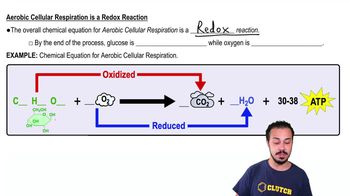
\(\mathrm{C_6H_{12}O_6 + 6O_2 \rightarrow 6CO_2 + 6H_2O + ATP}\)
Reactions involving electron transfer: oxidation is loss of electrons, reduction is gain of electrons.
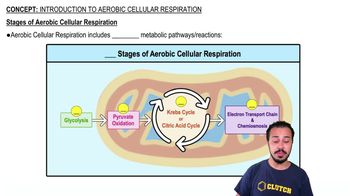
Glycolysis (cytosol), pyruvate oxidation (mitochondrial matrix), citric acid cycle (mitochondrial matrix), oxidative phosphorylation (inner mitochondrial membrane).
NAD+ accepts electrons (oxidized form), NADH carries electrons to the electron transport chain (reduced form).
Transfers electrons from NADH and FADH2 to oxygen, pumping protons to create a gradient for ATP synthesis.
Movement of protons down their gradient through ATP synthase to produce ATP.
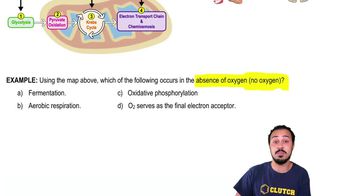
In absence of oxygen, glycolysis continues and pyruvate is converted to lactate or ethanol, producing 2 ATP per glucose.
In the chloroplasts, light reactions capture sunlight to produce ATP and NADPH.
Also called dark reactions, it uses ATP and NADPH to fix CO2 into organic molecules in the chloroplast stroma.
Rubisco is the enzyme that catalyzes carbon fixation in the Calvin cycle.
Chlorophyll a (main pigment), chlorophyll b, and accessory pigments absorb light for photosynthesis.
Photosystem II and I capture light energy, transfer electrons, and produce ATP and NADPH.
A particle of light energy absorbed by photosynthetic pigments.
Light excites electrons in chlorophyll, electrons transfer to primary acceptor, electron transport chain generates ATP and NADPH.