 뒤로
General Biology: Basic Chemistry and Water Properties
 02:13

이 집합의 용어 (23)
Matter is anything that has mass and takes up space. An atom is the smallest unit of an element. An ion is an atom or molecule with a charge. A molecule is two or more atoms bonded together. A compound is a molecule made of different elements.
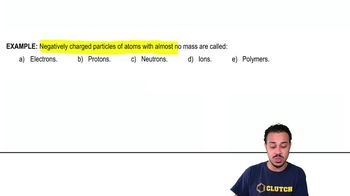
Protons are positive and in the nucleus, neutrons have no charge and are in the nucleus, electrons are negative and orbit the nucleus.
The periodic table shows atomic number (protons), atomic mass (protons + neutrons), and electronegativity (atom's ability to attract electrons).
Emergent properties arise from interactions of parts, not present in individual parts alone. Example: water's ability to moderate temperature emerges from hydrogen bonding.
Essential elements are required for life. The four main ones are carbon (C), hydrogen (H), oxygen (O), and nitrogen (N).
Atomic number is the number of protons. Mass number is the sum of protons and neutrons in the nucleus.
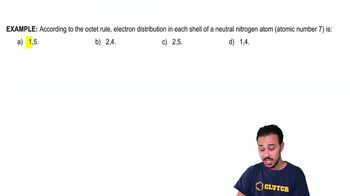
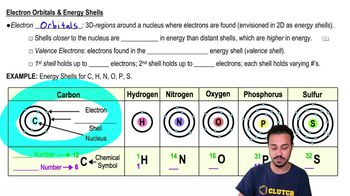
Valence electrons are electrons in the outer shell; they determine an atom's chemical reactivity and bonding.
Ionic bonds transfer electrons, covalent bonds share electrons, and hydrogen bonds are weak attractions between polar molecules.
Electronegativity is an atom's ability to attract shared electrons in a bond.
Atoms react to fill their outer electron shells and achieve a stable electron configuration.
Water is polar because oxygen is more electronegative than hydrogen, creating partial charges.
Cohesion is water molecules sticking to each other, adhesion is water sticking to other surfaces, and surface tension is the resistance of water's surface to breaking.
Water has a high specific heat, so it absorbs/releases heat slowly, stabilizing temperatures.
Ice is less dense than liquid water because hydrogen bonds form a lattice that spaces molecules apart.
A solution is a homogeneous mixture, the solvent dissolves the solute, and the solute is dissolved.
Hydrophobic molecules repel water (nonpolar), hydrophilic molecules attract water (polar or charged).
Acids increase hydrogen ion concentration, bases decrease it. pH scale measures acidity; lower pH means more H+.
Buffers resist pH changes by accepting or donating H+ ions to maintain stability.
Presence of polar covalent bonds makes molecules hydrophilic; nonpolar covalent bonds make them hydrophobic.
It has both polar and nonpolar covalent bonds, often forming amphipathic molecules with distinct regions.
Carbon has 4, hydrogen 1, oxygen 6, and nitrogen 5 valence electrons.
Hydrocarbons are molecules of only carbon and hydrogen; they store energy and form the backbone of organic molecules.
Functional groups are specific groups of atoms that give organic molecules distinct properties and reactivity.