 뒤로
General Biology: Cell Structure and Function
 06:35

이 집합의 용어 (48)
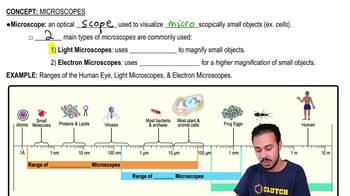
A microscope that uses visible light to magnify specimens, allowing observation of living cells and basic cell structures.
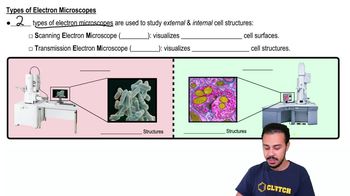
A microscope that scans a specimen with electrons to produce detailed 3D images of the surface structure.
A microscope that transmits electrons through a thin specimen to reveal internal ultrastructure at high resolution.
A technique to separate cellular components by centrifugation for detailed study of organelles.
A chemical process that breaks bonds by adding water, important in digestion and metabolism.
Cells without a nucleus or membrane-bound organelles, typically bacteria and archaea.
Cells with a nucleus and membrane-bound organelles, found in plants, animals, fungi, and protists.
A selectively permeable membrane composed of a phospholipid bilayer that encloses the cell.
The aqueous component of the cytoplasm where organelles and molecules are suspended.
The entire contents within the plasma membrane excluding the nucleus, including cytosol and organelles.
Cellular structures that synthesize proteins by translating messenger RNA.
A double layer of phospholipids forming the plasma membrane, with hydrophilic heads and hydrophobic tails.
The region in prokaryotic cells where the circular DNA chromosome is located, not membrane-bound.
Specialized structures within eukaryotic cells that perform distinct functions.
A group of membranes and organelles including the nuclear envelope, ER, Golgi apparatus, lysosomes, and vesicles involved in protein and lipid processing.
An organelle in plant cells where photosynthesis occurs, containing chlorophyll.
Organelles that generate ATP through cellular respiration, known as the cell's powerhouse.
A double membrane that encloses the nucleus, controlling passage of materials in and out.
A dense region within the nucleus where ribosomal RNA (rRNA) is synthesized.
Structures composed of DNA and proteins that carry genetic information.
The complex of DNA and proteins in the nucleus, which condenses into chromosomes during cell division.
Small membrane-bound sacs that transport materials within the cell.
Part of the ER studded with ribosomes; involved in protein synthesis and modification.
ER lacking ribosomes; involved in lipid synthesis and detoxification.
Flattened membrane sacs that make up the Golgi apparatus and ER.
A protein with carbohydrate chains attached, often found on the cell surface or secreted.
A membrane-bound organelle containing digestive enzymes to break down macromolecules and old organelles.
A process where cells engulf large particles or other cells to form a food vacuole.
A membrane-bound sac formed by phagocytosis that stores ingested food.
An organelle in some protists that expels excess water to maintain osmotic balance.
An organelle that breaks down fatty acids and detoxifies harmful substances using hydrogen peroxide.
The hypothesis that mitochondria and chloroplasts originated from free-living prokaryotes engulfed by ancestral eukaryotic cells.
The green pigment in chloroplasts that captures light energy for photosynthesis.
A network of protein fibers that maintain cell shape, enable movement, and organize organelles.
Hollow tubes of tubulin proteins that provide structural support and tracks for organelle movement.
Fibers that provide mechanical support and help maintain cell shape.
Thin actin filaments involved in cell movement and shape changes.
A region near the nucleus that organizes microtubules and contains centrioles in animal cells.
Cylindrical structures in the centrosome involved in organizing microtubules during cell division.
Long, whip-like structures that propel cells through fluid.
Short, hair-like projections that move fluid over cell surfaces or enable cell movement.
A structure that anchors cilia and flagella to the cell and organizes their microtubules.
A rigid outer layer in plant, fungal, and some prokaryotic cells that provides support and protection.
Channels between plant cell walls that allow transport and communication between cells.
A network of proteins and carbohydrates outside animal cells that provides structural support and signaling.
Cell junctions that create a watertight seal between adjacent animal cells.
Anchoring junctions that mechanically attach adjacent animal cells.
Channels between animal cells that allow direct communication and passage of small molecules.