 뒤로
General Biology: Cell Structure and Function
 06:35

이 집합의 용어 (31)
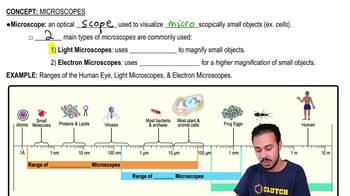
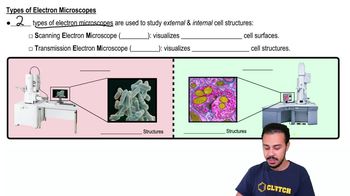
Light microscopes use light to magnify up to ~1000x; scanning electron microscopes (SEM) provide 3D surface images with high resolution; transmission electron microscopes (TEM) show internal cell structures with very high resolution but require thin samples.
Magnification is how much larger an image appears; resolution is the ability to distinguish two close points as separate.
All living organisms are made of cells, cells are the basic unit of life, and all cells come from pre-existing cells.
Cells are small to maintain a high surface area-to-volume ratio, allowing efficient nutrient uptake and waste removal.
Prokaryotes lack a nucleus and membrane-bound organelles; eukaryotes have a nucleus and organelles.
Cytosol is the fluid inside the cell; cytoplasm includes cytosol plus all organelles except the nucleus.
Chromosomes are condensed DNA structures; chromatin is uncondensed DNA-protein complex; both are found in the nucleus.
Ribosomes synthesize proteins; found free in cytosol or attached to rough ER.
Provides shape, protection, and prevents bursting in hypotonic environments.
1. Genetic control, 2. Manufacture/Distribution/Breakdown of molecules, 3. Energy processing, 4. Structural support, movement, and communication.
Membranes and membrane-bound organelles partition eukaryotic cells into compartments.
Animal cells have lysosomes and centrosomes; plant cells have chloroplasts, cell walls, and central vacuoles; both have nucleus, ER, Golgi, mitochondria.
The nucleus stores DNA and controls cell activities; surrounded by nuclear envelope; nucleolus produces ribosomal RNA.
A network of membranes including nuclear envelope, ER, Golgi apparatus, lysosomes, vesicles, and plasma membrane involved in synthesis and transport.
Rough ER has ribosomes and synthesizes proteins; smooth ER lacks ribosomes and synthesizes lipids and detoxifies.
Modifies, sorts, and packages proteins and lipids for storage or transport out of the cell.
Lysosomes contain digestive enzymes to break down macromolecules and recycle cellular components.
Vacuoles store nutrients, waste products, and help maintain turgor pressure in plant cells.
Peroxisomes break down fatty acids and detoxify harmful substances using enzymes.
Mitochondria generate ATP via cellular respiration; cristae are folds of the inner membrane that increase surface area.
Chloroplasts conduct photosynthesis; key structures include thylakoids, grana, and stroma.
States mitochondria and chloroplasts originated from prokaryotic cells engulfed by ancestral eukaryotes.
The cytoskeleton provides structure and movement; includes microtubules (largest), intermediate filaments, and microfilaments (smallest).
A centrosome organizes microtubules and is important in cell division.
Both have a 9+2 microtubule pattern; flagella are longer and fewer, cilia are shorter and numerous; both aid in movement.
A microtubule arrangement with 9 pairs surrounding 2 central microtubules found in cilia and flagella.
Motor proteins that cause bending of cilia and flagella by walking along microtubules.
ECM provides structural support and signaling; integrins are proteins that connect ECM to the cytoskeleton.
Tight junctions seal cells; anchoring junctions attach cells; gap junctions allow communication via channels.
Cell wall provides protection and support; plasmodesmata are channels for communication between plant cells.
Gap junctions in animal cells serve a similar communication role as plasmodesmata in plants.