 뒤로
General Biology: Cell Structure, Metabolism, and Reproduction
 02:21

이 집합의 용어 (28)
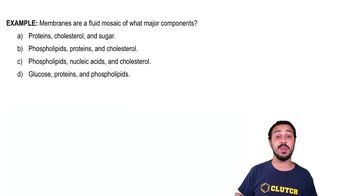
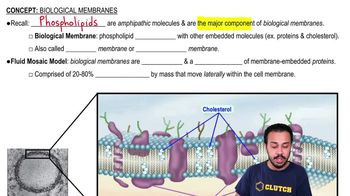
Biological membranes define cell boundaries and compartmentalize functions, mainly composed of a phospholipid bilayer with proteins, carbohydrates, and cholesterol.
The phospholipid bilayer provides membrane fluidity and selective permeability.
Membrane proteins include integral and peripheral types, responsible for transport, signaling, and structural support.
Carbohydrates attach to lipids (glycolipids) or proteins (glycoproteins) and are important for cell recognition.
Cholesterol modulates membrane fluidity and stability.
Passive transport moves substances down their concentration gradient without energy, including diffusion and facilitated diffusion.
Active transport requires ATP to move substances against their concentration gradient.
Osmosis is the diffusion of water across a selectively permeable membrane.
Metabolism includes all chemical reactions in a cell, divided into catabolic (energy-releasing) and anabolic (energy-consuming) pathways.
Catabolic pathways break down complex molecules to release energy, e.g., cellular respiration.
Anabolic pathways consume energy to build complex molecules, e.g., protein synthesis.
ATP is the primary energy currency of the cell.
Enzymes are biological catalysts that speed up reactions by lowering activation energy.
The active site is the region where the substrate binds on an enzyme.
Enzyme regulation includes feedback inhibition and allosteric control to modulate activity.
Cellular respiration includes glycolysis, Krebs cycle, and electron transport chain stages.
Fermentation produces ATP without oxygen, e.g., lactic acid fermentation in animals and alcoholic fermentation in yeast.
Photosynthesis converts light energy into chemical energy in plants, algae, and some bacteria.
Light reactions occur in thylakoid membranes and produce ATP and NADPH.
The Calvin cycle occurs in the stroma and uses ATP and NADPH to fix CO2 into glucose.
The cell cycle includes Interphase (G1, S, G2) and M phase (mitosis and cytokinesis).
Checkpoints and proteins like cyclins and CDKs regulate cell cycle progression.
Meiosis reduces chromosome number by half, producing four genetically unique gametes.
Meiosis consists of Meiosis I (homologous chromosomes separate) and Meiosis II (sister chromatids separate).
Genetic variation arises from crossing over and independent assortment during meiosis.
Haploid cells have one chromosome set (n), diploid cells have two sets (2n).
Fertilization is the fusion of haploid gametes restoring the diploid chromosome number.
Sexual life cycles alternate between sporophyte (diploid) and gametophyte (haploid) generations, as in flowering plants.